Non-bank home loan lenders in Australia

Non-bank lenders include specialised finance providers, entirely online lenders or digital startups. Non-bank lender home loans often have lower rates than products from major banks.

$
years
15 of 1,773 results
Finder Score Interest Rate p.a. Comparison Rate p.a. Fees Custom Badges Monthly Payment
Finder score
Interest Rate
5.19%
Comparison Rate
5.10%
Fees
  • Application: $0
  • Ongoing: $0 p.a.
Principal & Interest20% min. equityOwner-occupierNo LMI
Monthly Payment
$2,746
per month
This loan comes with no application fee, no ongoing fees and no exit fees. The best news? Borrowers get a 0.01% rate discount for every year they hold the loan.
Go to siteMore info
Compare product selection
Finder score
Interest Rate
5.48%
Comparison Rate
5.54%
Fees
  • Application: $345
  • Ongoing: $0 p.a.
Principal & Interest20% min. equityOwner-occupierPointsNo LMI
Monthly Payment
$2,836
per month
Points: Earn Qantas Points in your first year and 0.05% rate discount at time of loan approval for loans $700k+. Plus 100k points every year after. Submit before 11 Dec 2025 and settle by 11 Jun 2026. T&Cs apply.
Go to siteMore info
Compare product selection
Finder score
Interest Rate
5.29%
Comparison Rate
5.33%
Fees
  • Application: $0
  • Ongoing: $0 p.a.
Principal & Interest10% min. equityOwner-occupierOffset accountLMI
Monthly Payment
$2,777
per month
Go to siteMore info
Compare product selection
Unloan logo
Finder score
Unloan Variable Home Loan
Finder score
Interest Rate
5.39%
Comparison Rate
5.30%
Fees
  • Application: $0
  • Ongoing: $0 p.a.
Principal & Interest20% min. equityInvestmentNo LMI
Monthly Payment
$2,808
per month
Go to siteMore info
Compare product selection
Unloan logo
Finder score
Unloan Variable Home Loan
Finder Award
Finder score
Interest Rate
5.19%
Comparison Rate
5.10%
Fees
  • Application: $0
  • Ongoing: $0 p.a.
Principal & Interest20% min. equityOwner-occupierNo LMI
Monthly Payment
$2,746
per month
Go to siteMore info
Compare product selection
loans.com.au logo
Finder score
loans.com.au Variable Home Loan
Finder score
Interest Rate
5.59%
Comparison Rate
5.63%
Fees
  • Application: $0
  • Ongoing: $0 p.a.
Principal & Interest10% min. equityInvestmentOffset accountLMI
Monthly Payment
$2,871
per month
Go to siteMore info
Compare product selection
loans.com.au logo
Finder score
loans.com.au Investor Package Home Loan
Finder score
Interest Rate
5.49%
Comparison Rate
5.53%
Fees
  • Application: $0
  • Ongoing: $0 p.a.
Principal & Interest20% min. equityInvestmentOffset accountNo LMI
Monthly Payment
$2,839
per month
Go to siteMore info
Compare product selection
Qantas Money logo
Finder score
Qantas Money Basic Variable Home Loan
Finder score
Interest Rate
5.64%
Comparison Rate
5.70%
Fees
  • Application: $345
  • Ongoing: $0 p.a.
Principal & Interest20% min. equityInvestmentPointsNo LMI
Monthly Payment
$2,887
per month
Points: Earn Qantas Points in your first year and 0.05% rate discount at time of loan approval for loans $700k+. Plus 100k points every year after. Submit before 11 Dec 2025 and settle by 11 Jun 2026. T&Cs apply.
Go to siteMore info
Compare product selection
loans.com.au logo
Finder score
loans.com.au Investor Package Home Loan
Finder score
Interest Rate
5.69%
Comparison Rate
5.78%
Fees
  • Application: $0
  • Ongoing: $0 p.a.
Interest only20% min. equityInvestmentOffset accountNo LMI
Monthly Payment
$2,902
per month
Go to siteMore info
Compare product selection
Qantas Money logo
Finder score
Qantas Money Basic Variable Home Loan
Finder score
Interest Rate
5.89%
Comparison Rate
5.80%
Fees
  • Application: $345
  • Ongoing: $0 p.a.
Interest only20% min. equityInvestmentPointsNo LMI
Monthly Payment
$2,966
per month
Points: Earn Qantas Points in your first year and 0.05% rate discount at time of loan approval for loans $700k+. Plus 100k points every year after. Submit before 11 Dec 2025 and settle by 11 Jun 2026. T&Cs apply.
Go to siteMore info
Compare product selection
loans.com.au logo
Finder score
loans.com.au Fixed
Finder score
Interest Rate
5.34%
Comparison Rate
5.49%
Fees
  • Application: $0
  • Ongoing: $0 p.a.
Principal & Interest 3Y Fixed10% min. equityOwner-occupierSpecialLMI
Monthly Payment
$2,793
per month
Go to siteMore info
Compare product selection
Qantas Money logo
Finder score
Qantas Money Basic Variable Home Loan
Finder score
Interest Rate
6.54%
Comparison Rate
5.99%
Fees
  • Application: $345
  • Ongoing: $0 p.a.
Interest only20% min. equityOwner-occupierPointsNo LMI
Monthly Payment
$3,177
per month
Points: Earn Qantas Points in your first year and 0.05% rate discount at time of loan approval for loans $700k+. Plus 100k points every year after. Submit before 11 Dec 2025 and settle by 11 Jun 2026. T&Cs apply.
Go to siteMore info
Compare product selection
loans.com.au logo
Finder score
Loans.com.au Bridging Loan
Finder score
Interest Rate
7.50%
Comparison Rate
5.83%
Fees
  • Application: $0
  • Ongoing: $0 p.a.
Interest only20% min. equityOwner-occupierNo LMI
Monthly Payment
$3,499
per month
Go to siteMore info
Compare product selection
Easy Street logo
Finder score
Easy Street Fixed Home Loan
Finder score
Interest Rate
4.89%
Comparison Rate
5.26%
Fees
  • Application: $500
  • Ongoing: $0 p.a.
Principal & Interest 3Y Fixed20% min. equityInvestmentOffset accountNo LMI
Monthly Payment
$2,654
per month
More info
Compare product selection
ME logo
Finder score
ME Flexible Home Loan Fixed with Members Package
Finder score
Interest Rate
5.55%
Comparison Rate
5.94%
Fees
  • Application: $0
  • Ongoing: $395 p.a.
Principal & Interest 2Y Fixed20% min. equityInvestmentCashbackNo LMI
Monthly Payment
$2,858
per month
Cashback: Eligible refinancers switching to ME Bank can get $3,000 cashback for loans of at least $700k. T&Cs apply.
More info
Compare product selection
loading
Showing 15 of 1,773 results

What is a non-bank lender?

A non-bank lender is an institution other than a bank that offers loan products to consumers.

These lending institutions do not hold a banking licence and therefore cannot hold your money in a bank account.

This doesn't mean they are less trustworthy. They are tightly regulated, as defined by the Consumer Credit Code, which governs all credit transactions in Australia, and by the Australian Securities and Investments Commission (ASIC).

Banks and credit unions are regulated by the Banking Act and are listed by the Australian Prudential Regulation Authority (APRA) as authorised deposit-taking institutions (ADIs). You can see the full list of these institutions on APRA's website.

How does a non-bank lender work?

Non-bank lenders are privately owned, typically relying on wholesale sources to get their funding. While non-bank lenders may not offer all the financial products that a bank does, many have a wide selection of products.

Non-bank lenders come in several forms, including the following:

  • Online only lenders. These companies are credit providers operating online, with no branches, usually offering cheap deals.
  • Fintech lenders. Similar to an online lender, but these types of home loan providers tend to emphasise their speed and ease of approval as well as their low rates.
  • Specialist lenders. Another type of non-bank is lenders with a specialised focus, such as lenders to older Australians or borrowers with bad credit.
Julian Finch's headshot
Expert insight

"The main difference is that non-bank lenders are not subject to the same lending rules as applied by APRA. This enables customers with less than perfect credit histories and standard income types to still avail of a loan. It may also enable some borrowers additional borrowing capacity through the variations of lender policy that become available outside of the APRA lending guidelines. For example, you may be able to get a loan with less than 3% servicing buffer; Liberty offer 1% and Pepper and Resimac offer a 2% buffer."

Julian Finch's headshot
Founder and principal financial specialist, Finch Financial

How to compare a non-bank lender

These basic home loan comparison tips are true for non-bank lenders and any other financial institution.

  • Interest rates. A lower interest rate will always save you money – but remember, it's not the most important thing to consider.
  • Loan type. What type of loan do you need? You can get a fixed rate home loan or a variable rate one. You can also consider an interest-only repayment option, but most borrowers go for principal-and-interest repayments.
  • Loan fees. Fees on home loans matter less than the interest rate, but it's always good to avoid more fees if you can.
  • Loan features. The ability to make extra repayments can help you get out of debt faster and pay less interest. However, not all loans allow this. An offset account is another useful feature that lets you save money in a bank account while also reducing your interest costs

What are examples of non-bank lenders?

Here is a list of many prominent small and non-bank lenders operating in Australia.

Finder survey: How many Australians say that lender reputation is important when considering a home loan?

Response
Lender reputation17.72%
Source: Finder survey by Pure Profile of 1112 Australians, December 2023

What's the difference between a bank and a credit union?

Definitions here can be tricky. There are credit unions, building societies and similar customer-owned banks. Some of these institutions call themselves banks and are certainly APRA-regulated like the big banks. But these institutions are customer-owned, meaning they don't pay dividends to shareholders and reinvest profits to members and their local communities.

You can visit the Customer Owned Banking Association website to find a list of all its member institutions, some of which do call themselves banks.

These definitions can get technical and rarely matter to the ordinary borrower. Many digital lenders look like small non-banks but are owned by one of the Big Four banks or another Australian retail bank. Some of Australia's newer neobanks are independently owned companies that don't call themselves banks but have banking licences or are in the process of gaining full banking licences.

Can I get a lower rate with a non-bank lender?

Borrowers have experienced rising interest rates between 2021 and 2024, so looking for a lower rate has become more important. Non-bank lenders are actually providing some of the most competitive rates as interest rates rise. They are more likely to have personalised interest rates that change relative to your risk as a borrower.

Online lenders in particular often have cheap deals. They have lower operating costs that allow them to compete with the banks by undercutting the cost of their products. In doing so, the banks have to respond to the competitive market and lower theirs as well.

If you really want to get a sense of which rates are the lowest on the market now, check out our cheapest home loans page. Non-bank lenders typically dominate the list of lowest rates each month.

Aaron Christie-David's headshot
Expert insight

"Don't be afraid to consider using a non-bank lender. Some borrowers are concerned that they are not familiar with the name of the lender, it's deemed "risky" to deal with. They are lending their money to you and sometimes by being small, they have certain advantages over big banks. They may have policies that are helpful to your circumstances or [be] more willing to consider your loan application, as they can be more nimble. They also run a leaner operation which could help to provide you with a sharper interest rate. While they may not offer all the bells and whistles, such as credit cards, you could keep your home loan with a non-bank lender and then keep your day to day banking with your preferred lender."

Aaron Christie-David's headshot
Mortgage broker and managing director, Atelier Wealth

What are the advantages of a non-bank lender?

  • Competitive interest rates. Non-banks don't have the same overhead costs as banks and are able to pass on their savings in the form of lower interest rates.
  • Faster turnaround. Non-banks often have more digital processes. This means they can work through applications in a much faster time frame.
  • Complex lending situations. Also thanks to their less rigid digital processes, non-banks are able to assess a wider variety of borrowers, such as those who are self-employed, have had bad credit or have multiple jobs.
  • Personalised service. Because non-banks don't have the same big teams and processes, they can provide much more personalised customer service. They might not have physical branches but they will have other easy ways to get in touch.

Are there any disadvantages to using a non-bank lender?

The potential downsides of a non-bank lender are small and might not apply to every lender.

  • Fewer services. Many non-bank lenders offer only a handful of financial products, making it harder to do all your banking in one place.
  • No physical branches. If you prefer to do your banking in person, then a more traditional bank would probably be better for you.
  • Fewer options. The larger banks offer a broad suite of mortgages that suit most borrowers. Non-bank lenders may have fewer options, and this can be harder if you're a self-employed borrower or if you have bad credit history.
  • No deposit guarantee. If a bank is regulated by APRA as an authorised deposit-taking institution, then a customer's savings are protected up to the value of $250,000 if the bank collapses. Non-bank lenders may not fall under this scheme, although some do because they are operating under the banking licence of a bigger bank. As a borrower, this doesn't affect you unless you have money in an offset account, which is essentially a form of savings.

What is Finder Score?

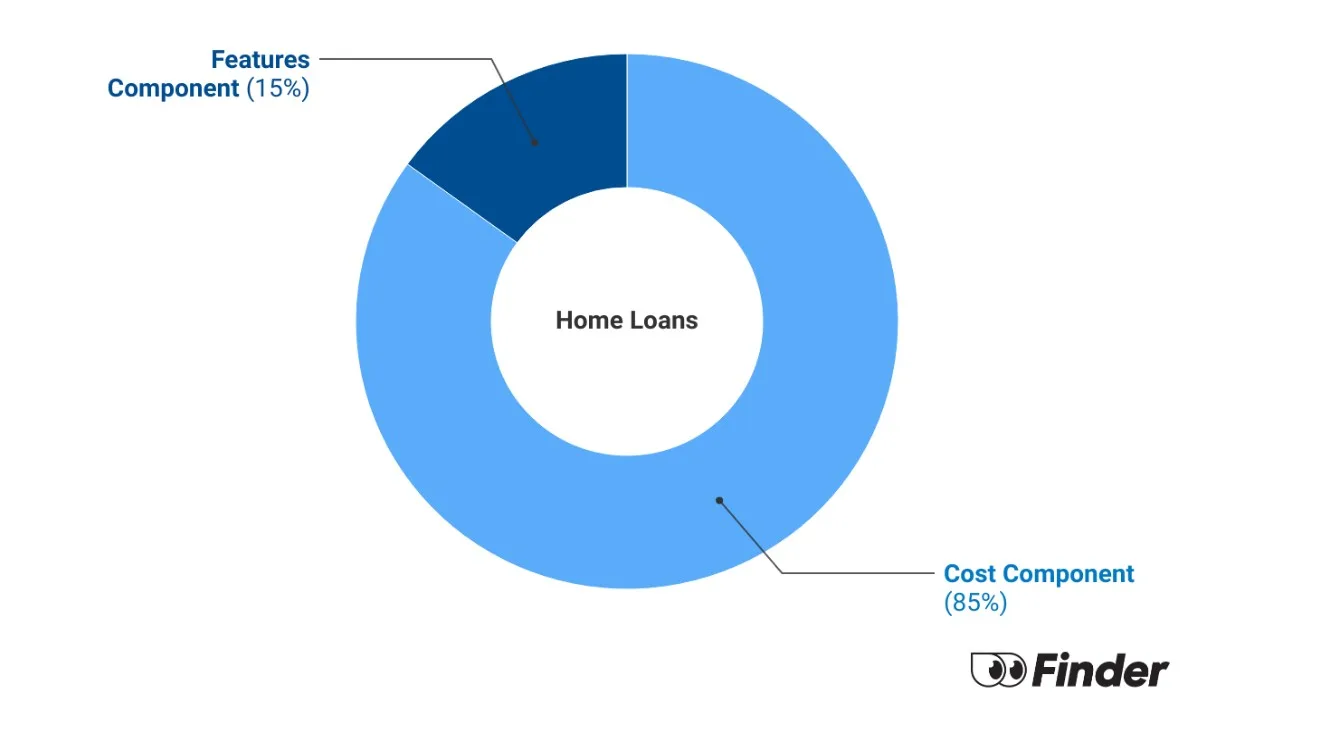
The Finder Score crunches 7,000 home loans across 120+ lenders. It takes into account the product's interest rate, fees and features, as well as the type of loan eg investor, variable, fixed rate - this gives you a simple score out of 10.

To provide a Score, we compare like-for-like loans. So if you're comparing the best home loans for cashback, you can see how each home loan stacks up against other home loans with the same borrower type, rate type and repayment type. We also take into consideration the amount of cashback offered when calculating the Score so you can tell if it's really worth it.


Read the full breakdown

Frequently asked questions about non-bank lenders

Sources

Joselle Delos Reyes's headshot
Aaron Christie-David's headshot
To make sure you get accurate and helpful information, this guide has been edited by Joselle Delos Reyes and reviewed by Aaron Christie-David, a member of Finder's Editorial Review Board.
Richard Whitten's headshot
Senior Money Editor

Richard Whitten is Finder’s Senior Money Editor, with over eight years of experience in home loans, property, credit cards and personal finance. His insights appear in top media outlets like Yahoo Finance, Money Magazine, and the Herald Sun, and he frequently offers expert commentary on television and radio, helping Australians navigate mortgages and property ownership. Richard started his career in education and textbook publishing in South Korea. He holds multiple industry certifications, including a Certificate IV in Mortgage Broking (RG 206) and Tier 1 and Tier 2 certifications (RG 146), as well as a Bachelor of Education from the University of Sydney and a Graduate Certificate in Communications from Deakin University. See full bio

Richard's expertise
Richard has written 687 Finder guides across topics including:
  • Home loans
  • Credit cards
  • Personal finance
  • Money-saving tips

Get rewarded $$ for switching with Finder Rewards

Find a better deal, save on your bills and get a free gift card. Sign up to be the first to hear about new Finder Rewards.

Ask a question

You are about to post a question on finder.com.au:

  • Do not enter personal information (eg. surname, phone number, bank details) as your question will be made public
  • finder.com.au is a financial comparison and information service, not a bank or product provider
  • We cannot provide you with personal advice or recommendations
  • Your answer might already be waiting – check previous questions below to see if yours has already been asked

Finder only provides general advice and factual information, so consider your own circumstances, or seek advice before you decide to act on our content. By submitting a question, you're accepting our Terms Of Service and Finder Group Privacy & Cookies Policy.

This site is protected by reCAPTCHA and the Google Privacy Policy and Terms of Service apply.

19 Responses

    Default Gravatar
    MarkFebruary 13, 2023

    Hi Chris,
    I wish to buy a block of land its small but I like it and I can afford it and can pay it off in quick time, I lost my portfolio during the belated GFC and want to start again, is it possible ? Is there a non bank lender that will give people a break or are the big four banks in control of it all?
    Kind regards
    Mark

      Richard Whitten's headshotFinder
      RichardFebruary 20, 2023Finder

      Hi Mark,

      It’s a tough one, and I can’t really give you a strong answer without knowing more about you (and even then, at Finder we can’t give personalised financial advice, just general information).

      I’d suggest talking to a mortgage broker, they can help borrowers in difficult or complicated situations.

      All the best,
      Richard

    Default Gravatar
    ChrisJuly 5, 2022

    I’m looking for a home loan to purchase my ex-wife’s share of our jointly-owned unit.

      Richard Whitten's headshotFinder
      RichardJuly 9, 2022Finder

      Hi Chris,

      Several factors need to be considered when transferring someone’s share of a property. You can read our guide about this here as a reference.

      For lender options, you can check our home loan comparison page.

      It’s also worth seeking legal advice from a solicitor for help and to get personalised advice regarding your situation.

      Regards,
      Richard

    Default Gravatar
    PaulOctober 20, 2018

    Hi,

    We have a home loan in joint names. I have been made redundant the last 18 months and we were going to consolidate our debt by combining our credit card debt but have been told because I am not working and my wife not earning enough they would not refinance our loan. Is it possible to refinance with another bank, we have around $300,00 equity in our current loan but was told that did not matter.

      Default GravatarFinder
      JeniOctober 26, 2018Finder

      Hi Paul,

      Thank you for getting in touch with Finder.

      Sorry to hear that.

      You could try to refinance with your current lender to consolidate debt (same lender but maybe you can get a lower rate, or same rate but roll card debt into the mortgage, it’s still cheaper that way). It is also best to speak to a mortgage broker, who can help guide refinancers in tough situations.

      I hope this helps.

      Please feel free to reach out to us if you have any other enquiries.

      Thank you and have a wonderful day!

      Cheers,
      Jeni

    Default Gravatar
    RoseMarch 19, 2018

    Hi

    We have been declined for a refinance loan by a big four bank, it doesn’t make sense as we are consolidating debt incurred from renovations. And they said we spend too much. Go fingers. Anyway we had a great valuation from the bank and feel we may not get another bank val of the same value if we have to go to another lender, we are looking at non bank lenders now, and want to know if there is any way we ca use the bank val that we already have at another institution?

      Default GravatarFinder
      JeniMarch 19, 2018Finder

      Hi Rose,

      Thank you for getting in touch with Finder.

      When it comes to refinancing home loans, comparing your loan options is the obvious starting point. This requires that you compare interest rates as well as a range of loan features. Comparison is by no means a difficult procedure, but it can be time-consuming. And if you have a complex set of circumstances, you may need some guidance to find the lender best suited to your situation. You may still show or bring your bank valuation, lenders might look into it for reference as well.

      A good mortgage broker can help you determine the best possible options for your needs. You can benefit from the expert opinion your broker imparts. So I suggest that you speak with a mortgage broker to assist you further.

      I hope this helps.

      Have a great day!

      Cheers,
      Jeni

    Default Gravatar
    JennyJune 30, 2017

    Six months ago before we sold our home, the bank informed me that I would be eligible for a loan if needed to purchase our next home. We have total equity in our existing home.

    When we sold and asked for a small loan they declined it hinting that the more we enquire about a loan, it would mean we would get a bad credit rating. We are an elderly and require just enough to make up for the sharp upswing in the market and is confused by the threat of a ” bad credit rating”

    As far as I am aware we have always paid our bills, maybe sometimes not on time because of the sudden switch from paper bills to email ones.

    Any explanation would be a relief thank you.

      Default Gravatar
      JonathanJuly 1, 2017

      Hi Jenny!

      A home loan application is considered a “hard inquiry” which may make your credit score lower especially if done within a short period of time.

      If you wish to get other options on applying for a home loan that can be offered to pensioners, you may consider the lenders offered on our page that lists home loans for pensioners.

      Try to speak to a mortgage broker as well. A mortgage broker is a professional who compares and helps you apply for home loans on your behalf. A good mortgage broker will give you personalized service all the way through to settlement.

      Hope this helps.

      Cheers,
      Jonathan

      Default Gravatar
      JennyJuly 1, 2017

      Thanks Jonathon I’ll do that, sorry about enquiring again but I couldn’t find this page!

More guides on Finder

Go to site