Key takeaways
- Benefits for hearing aids are available on some mid- and top-tier extras policies.
- Hearing aids are not covered by Medicare, but the Australian Government Hearing Services Program provides them for some people.
- Extras cover for hearing aids starts from around $11 a week.
Compare health insurance for hearing aids
Here are some policies from Finder partners that cover hearing aids. They all have either a 12 or 36 month waiting periods, and most let you claim once every 3 years. All prices are based on a single individual with less than $105,000 income and living in Sydney.
Finder Score - Health Insurance Extras
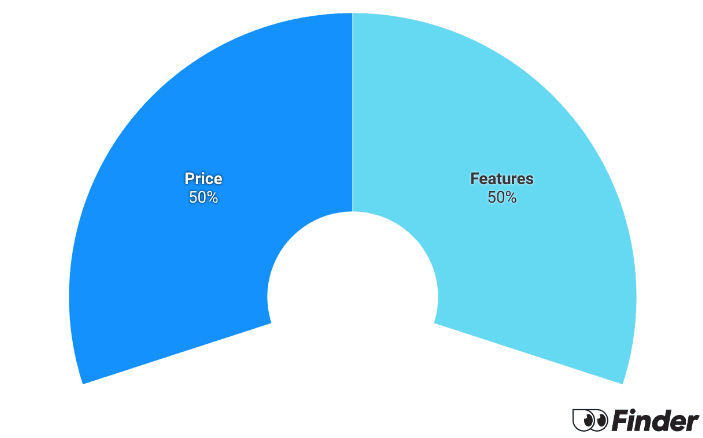
Each month we analyse over 10,000 extras insurance products and rate each one on price and features. What we end up with is a nice round number out of 10 that helps you compare extras cover a bit faster.
We want to compare apples to apples, not apples to apple pie. It doesn't make sense to compare a top extras policy with coverage for hearing aids and braces against a policy designed only for dental. So we've separated all the extras policies on the market into pools and categories. Once in their pools and categories, each product gets a price score and a features score, which are then combined to give the Final Score.
How does private health insurance cover hearing aids and audiology?
Many private health insurance funds will include hearing aids and audiology on their extras policies. You'll generally need to be on a mid- or top-tier extras policy in order to be covered.
Private health insurance and hearing aids
- Hearing aids are typically only covered by the highest level extras policies.
- Policies will typically pay a set cost, rather than cash-back rebates. This is because the cost of hearing aids can vary widely.
- Private health insurance generally pays out for a single device. However, most funds have a specified limit for how many times you can claim, such as one device every five years.
- Some health funds offer benefits for repairing damaged hearing aids.
Health insurance benefits for audiology
- Benefits will either take the form of cash-back offers, where you get a certain percentage of costs paid, typically 60-100%, or set costs such as $35 for each audiology session.
- Initial audiology consultations and diagnoses usually take longer than subsequent follow-up sessions. As such, set cost policies generally pay more for initial sessions and less for follow-ups.
How much do hearing aids cost?
A pair of hearing aids without insurance or subsidies will cost you between *$1,495 and $11,000. Here are a few prices from Australian audiologists:
- Attune Audiology says a pair of hearing aids cost between $2,000 and $11,000 a pair.
- The Specsavers in-house brand cost between $1,495* and $3,495 a pair.
- Specsavers also sells devices from Phonak and Signia for between $4,495 and $5,495 a pair.
A set of hearing aids that are well adjusted and looked after should last you between 3 and 6 years. If you only need a single hearing aid, it should cost you half the price of a pair.
*Most hearing aids priced at $1,495 per pair are the basic devices available free on the Australian Government Hearing Services Program, as this is the benefit offered on that program. These devices tend to be very basic, without modern features like adaptive noise reduction and adaptive directional microphones - you often get what you pay for. To get a pair of hearing aids with modern features, you should expect to pay at least $3,000 to $5,000 a pair.
Behind-the-ear vs In-the-ear devices
Most models of hearing aids are available in either an behind-the-ear or in-the-ear configuration. For most people behind-the-ear is the best choice: they offer more natural sound as they don't block the ear canal, they allows for better placement of multiple microphones so you get better sound separation, and they generally look more slick and hi-tech.
Typical hearing aid benefits from Aussie health funds
If you have an extras policy that covers hearing aids, then you can claim part of the cost of your device back from your health fund. The size of your benefit will depending on your extras policiy.
- Mid-tier extras: Some mid-tier extras policies (around $40 a month) have a small benefit for hearing aids, generally around the $500 mark.
- Comprehensive extras: Comprehensive extras policies (around $70 a month) have a larger benefit, typically around $800.
- Top extras: Top extras policies ($90+ a month) generally offer the highest benefits for hearing aids, often ranging from $1,000 to $2,000.
3 things you should know
Extras policies typically have a 12 or 36 month waiting period before you can claim on hearing aids, and a benefit is generally only available every 3 years.
Hearing aids benefits generally can't be claimed through HICAPS, so you'll need to pay the full cost of your hearing aids, then claim the benefit later.
Your health fund's benefit will normally apply to a pair of hearing devices, one for each ear. If you only need a single device, ask your fund if you'll get to the full benefit, or only half.
-
Health fund Extras policies and annual benefit limits* Waiting periods ahm - Super Extras. $1,600 per person
- Family Extras. $1,200 per person
- 12 months
Australian Unity - Advanced 80% Extras. $600 per person
- Classic Extras. $550 per person
- 12 months
Bupa - Super Extras. $500 per person
- Top Extras. $1,000 per person
- 12 months
CUA Health - Total Extras. $800 per person
- Classic Extras. $600 per person
- 12 months
GMHBA - Top Extras. $1,500 per person
- Mid Extras. $1,200 per person
- 12 months
HBF - Top 70. $700 per person.
- Complete 60. $600 per person.
- 12 months
HCF - HCF Top Extras. $800 per person
- HCF Vital Extras. $600 per person
- 12 months
Health Care Insurance - Premier Extras. $3,320 per person
- 24 months
hif - Premium Options. $600 per person
- Super Options. $550 per person
- 36 months
Latrobe Health Services - Premier Singles & Couples. $500 per person
- Premier Extras. $1,000 per person
- Core Extras. $500 per person
- 12 months
Medibank - Top Extras. $400 per person
- 36 months
Mildura Health Fund - Five Star Extras. $1,000 per person
- Mid Extras. $700 per person
- Base Ancillary. $450 per person
- 36 months
nib - Top Extras. $1,200 per person.
- 36 months
onemedifund - Gold Hospital - $250 Excess & Comprehensive Extras. $1,500 per person
- 24 months
Peoplecare - Premium Extras. $1,500 per person
- High Extras. $1,000 per person
- 24 months
Phoenix Health Fund - Complete Extras 70. $2000 per person
- 12 months
Transport Health - Top Extras. $1,000 per person
- 24 months
Westfund - Ultimate Extras. $2,000 per person
- High Extras. $1,400
- 36 months
ACA Health - Restricted health fund
- Complete Ancillary. $1,500 per person
- 12 months
CBHS health fund - Restricted health fund
- Top Extras. $1,600 per person
- 12 months
Defence Health - Restricted health fund
- Premier Extras. $1,500 per person
- Value Extras. $1,000 per person
- 12 months
Doctors Health Fund - Restricted health fund
- Total Extras. $800 per person
- Essential Extras. $200 per person
- 24 months
Navy Health - Restricted health fund
- Premium Extras. $1,300 per person
- Healthy Living Extras. $900 per person
- 12 months
Police Health - Restricted health fund
- Rolling Extras. $1,200 per person
- 12 months
Reserve Bank Health Society - Restricted health fund
- Premium Extras. $5,440 per person
- 12 months
RT Health - Restricted health fund
- Premium Extras. $1,200 per person
- Smart Extras. $900 per person
- 24 months
Teachers Health Fund - Restricted health fund
- Top Extras. $1,200 per person
- 12 months
TUH - Restricted health fund
- Comprehensive Extras. $2,000 per person $1,000/ear
- 12 months
*The majority of the policies listed in this table are extras only. However, in most cases these can be combined with hospital cover.
Average amount of hearing aid costs covered by funds
The below table shows the average amount of cost covered toward hearing aids by fund. All figures are taken from extras cover.
Fund name (abbreviated) Hearing aids & audiology Open membership funds Australian Unity 15.20% BUPA 18.30% CUA Health 34.80% GMHBA 24.70% GU Corporate 17.00% HBF 29.50% HCF 28.10% HCI 40.60% Health Partners 31.30% HIF 29.20% Latrobe 13.80% MDHF 17.30% Medibank (includes ahm) 25.30% NIB 19.00% Onemedifund 23.40% Peoplecare 31.70% Phoenix 42.00% QCH 37.60% St Lukes 45.00% Transport Health 23.40% Westfund 38.10% Restricted membership funds ACA 40.80% CBHS 35.20% Defence Health 30.50% Doctors' Health 21.60% Navy Health 27.40% Nurses and Midwives 42.90% Police Health 33.90% Reserve Bank 77.20% RT Health Fund 35.10% Teachers Health 34.90% TUH 41.40% For some funds, the data does not take account of discounts at some providers or fund Dental / Optical centres.
Note: All percentages based on health fund reporting to APRA. 'n/a' signifies no activity and 100 per cent is likely to indicate small numbers (eg. only 1 episode).
The Australian Government Hearing Services Program
While Medicare doesn't cover the cost of hearing aids or audiology services like hearing tests, certain people can get their devices paid for under the Australian Government Hearing Services Program (HSP). The HSP will cover the cost of a hearing test and a basic hearing aid every 5 years. To be eligible for the HSP, you'll need to be:
- A Pensioner Concession Card holder (A Seniors Health Card doesn't count)
- A Department of Veterans' Affairs Gold Card holder
- A Department of Veterans' Affairs White Card holder (with hearing specific conditions)
- A dependent of someone in the above categories
- A member of the Australian Defence Force
- Referred by the Disability Employment Services Program
You can check your eligibility on the HSP website. It's not the greatest site in the world, so you can also contact any local audiologist and they should be able to walk you through your options.
Frequently asked questions
-
While Medicare does not cover the cost of hearing tests, many audiology clinics offer free or low cost initial assessments. For a comprehensive private hearing test, you might expect to pay between $80 and $150. If you are eligible for the Australian Government Hearing Services Program, the cost of your hearing test will be fully covered.
-
Some private health insurance extras policies may offer benefits for hearing aid repairs, as listed in the details of specific policies. However, it is rare for health insurance to cover the ongoing cost of hearing aid batteries. Always check your specific policy documents or contact your health fund to confirm what is included in your cover.
-
No, you generally cannot combine benefits from the Australian Government Hearing Services Program (HSP) with private health insurance for the same hearing device. The HSP provides a subsidy for basic hearing aids for eligible individuals. If you receive a device through the HSP, you cannot then claim additional benefits for that same device from your private health insurance. You must choose to utilise either the government program or your private health insurance for your hearing aids.
-
Claiming for hearing aid benefits typically involves paying the full cost of your hearing aids upfront then submitting a claim to your private health fund. Unlike many other extras services, hearing aid purchases are generally not processed through HICAPS at the point of sale. You will need to provide your health fund with the original invoice or receipt from your audiologist or hearing aid provider. Ensure the invoice clearly details the service or item purchased, the date of purchase and the cost. Your health fund will then reimburse you the eligible benefit amount according to your policy limits and waiting periods.
Sources
A seasoned journalist with over 10 years of experience in news, politics and finance reporting, Tim has previously held roles at the ABC, SBS and Fairfax Media. Tim’s expert insights have been quoted in The Australian, The Daily Telegraph, The Courier Mail and more. He regularly appears on TV and radio, and has been interviewed on 7 News, Sunrise, SBS News, ABC Local, 3AW and 5AA. Tim is passionate about simplifying complex insurance topics for Australian consumers. He holds a Bachelor of Arts (Politics) from Macquarie University and a Tier 1 General Insurance (General Advice) certification, which meets the requirements of ASIC Regulatory Guide 146 (RG146). If you’re interested in a media interview with Tim, please reach out to our PR team at aupr@finder.com. See full bio
- Personal finance
- Financial comparison
- Health insurance
- General insurance
- Life insurance
Andrew Munro was the global cryptocurrency editor at Finder. During his time he covered all aspects of cryptocurrency and the blockchain. Before he became cryptocurrency editor, he was a content writer for Finder covering various topics over his nearly 5 years in the role. Prior to joining Finder he was a web copywriter. Andrew has a Bachelor of Arts from the University of New South Wales. See full bio
Get rewarded $$ for switching with Finder Rewards
Find a better deal, save on your bills and get a free gift card. Sign up to be the first to hear about new Finder Rewards.
More guides on Finder
-
Health insurance for chiropractic treatment
Get discounts on your chiropractic treatment with private extras cover.
-
Health insurance for remedial massage
Remedial massage can help ease pain from general wear and tear as well as specific injuries. This treatment isn’t covered by Medicare but is included in private health insurance extras cover. Find out how private health insurance can cover you for remedial massage therapy.
-
Does health insurance cover prescription medication?
How can you make a claim for prescription medication on your private health insurance policy? Find out in this comprehensive guide.
-
When do health insurance benefits reset?
What do the annual benefit limits on your health insurance extras cover actually mean? Find out here.
-
No-gap optical
Some health funds offer no-gap optical schemes and this guide looks at what these cover and which health funds are providing them to their members.
-
Optical health cover
Optical health cover can ensure you get the care you need to protect your eye health. Compare health insurance policies with optical cover.
-
Health insurance for non-PBS pharmaceuticals
If you're wondering what pharmaceutical costs are covered by private health insurance, we've got a guide to health cover for non-PBS pharmaceuticals here.
-
Health insurance for laser eye surgery
finder.com.au explains how the private and public health system in Australia handles optical procedures and services.
-
Is naturopathy covered by health insurance?
Discover more about accessing naturopathy, herbal remedies, traditional Chinese medicine and other alternatives with coverage through your health insurance.