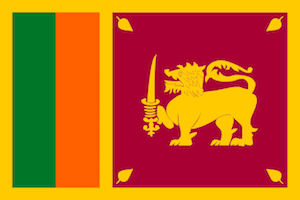
Travel insurance is crucial for Sri Lanka to cover medical expenses, cancellations and theft.
Be aware of Sri Lankan risks like road accidents and monsoon season requiring specific policy inclusions.
Average insurance costs often rise with age; ensure your policy covers planned adventure activities.
From white sand beaches to lush rainforests and arid plains, Sri Lanka has in recent years established itself as one of the most popular tourist destinations of South East Asia. However, travelling is never without its risks, and travellers are advised to get travel insurance before leaving Australia to help ensure their safety. This guide will outline some of the risks that you should be wary of when travelling in Sri Lanka and what to look for when comparing travel insurance options.
Compare travel insurance quotes for your trip to Sri Lanka
Got a quote before?
Do I need travel insurance in Sri Lanka?
It's not mandatory for travellers to Sri Lanka to purchase travel insurance but the Australian Government strongly suggests you have a policy that covers at least overseas medical costs. A comprehensive travel insurance policy will provide protection against the specific risks of travelling in Sri Lanka and common travel mishaps including:
Emergency medical expenses for any hospital costs and medical repatriation that can add up to thousands of dollars of up-front costs
Cancellations and lost deposits insurance for when you have to cancel non-refundable flights or accommodation due to circumstances out of your control
Theft and stolen items cover for your personal belongings including your passport, expensive items and cash
Keep reading this guide for further information on finding travel insurance for Sri Lanka and if you'd like to compare travel insurance quotes.
What are some travel risks and cover specific to Sri Lanka?
It's been a long time since the Sri Lankan Civil War ended and the country's overall safety and security has dramatically improved since. There are still, however, certain risks that travellers should be aware of when considering what cover you'll need for your trip.
Civil unrest
Large demonstrations and public gatherings have been known to turn violent. Avoid protests and demonstrations and be aware that the legal liability cover included in your travel insurance will not necessarily cover legal fees incurred if you're detained for being caught near a demonstration.
Vehicle accidents
Intercity buses, three-wheeler taxis and many other vehicles are not maintained or driven to the same standards as in Australia, and fatal accidents are frequent on Sri Lankan roads. Consider rental car excess insurance if you'll be driving a hire car, overseas health cover in the event of an accident and death benefits for the worst-case scenario.
Natural disasters
During the monsoon season, there's a much higher risk of flooding, landslides and tsunamis. Consider travel cancellation cover in the event of you being delayed or needing to reschedule due to blocked roads, poor weather or other circumstances beyond your control.
Average cost of travel insurance for Sri Lanka
Here are the prices for different policies and age groups for an individual who’s travelling in Sri Lanka for one month. Note that prices will vary between insurers and a higher or lower price usually means more or less cover or a higher or lower excess.
Age
60
65
70
75
Basic
$114.46
$134.61
$195.77
$500.04
Comprehensive
$169.25
$188.29
$243.35
$529.26
Note that there are fewer policies available as you get older. This is because some insurance policies have age limits and aren’t available to people over a certain age.For cover if you're 80 years old and over, check out our Seniors Travel Insurance guide.
These prices are not indicative of all policies and are to be taken as a rough guide. Note: prices are correct as of September 2017
Five activities you should consider getting cover for
Snorkelling and diving are popular pastimes for Sri Lankan visitors on account of the colour and diversity surrounding the island but you should make sure you are covered for watersports.
Mountain biking in Sri Lanka’s adventure capital, Kitulgala, should satisfy any adrenaline junkie but not all travel insurance policies will cover it.
Rainforest trekking is one of the best ways to experience Sri Lanka’s great outdoors on foot but travellers have been known to twist ankles and break legs while traversing the landscape. Trekking insurance will ensure you're covered for helicopter evacuations and high altitudes.
Whitewater rafting and kayaking in Kelani Riveris exhilerating whether you’re a beginner or a pro. Whatever your skill level, remember to get cover for any adventure activities you're likely to sign up for.
Surfing in Talalla on the south coast and Hikkaduwa, Midigama and Arugam Bay on the east draws many people to Sri Lanka. Just make sure you read the terms and conditions of your travel insurance for surfing.
If I have a medical emergency, am I covered in Sri Lanka?
Sri Lankan healthcare punches above its weight, considering how relatively little has been invested in it. The Sri Lankan government provides universal healthcare to all its citizens, although public hospitals can be crowded and waiting times long.
With the right overseas health cover, however, your travel insurance should allow you to access private hospitals in Sri Lanka in the event of a medical emergency. When looking for a travel insurance policy, consider:
Medical expenses: Your policy will pay for necessary medical costs incurred overseas, such as if you get sick and have to go see a doctor, or if you have to pay for prescription medication. Because these aren’t emergencies you’ll typically have to pay up front yourself and then claim the costs back later.
Emergency health care: This is the extent to which your policy can pay for emergency medical expenses including hospital accommodation and treatments. Most policies will pay up front for emergencies.
Medical evacuation: Evacuation from an isolated spot can be cost-prohibitive without travel insurance. This inclusion covers you for necessary medical evacuations.
Medical repatriation: If you are injured and doctors recommend you return home with special medical attention, then this is medical repatriation. It can cost tens of thousands, or even hundreds of thousands of dollars in the event of particularly serious or complex health issues and depending on location.
Worried about COVID-19?
You're not the only one. Travel insurance companies are now offering some cover for coronavirus. So you can travel with more peace of mind.
Travel insurance exclusions to watch out for in Sri Lanka
Watch out for certain exclusions in your travel insurance policy and make sure you're covered for what you need.
Failure to obey signs and warnings: While travelling in Sri Lanka, you may come across warning signs for hazardous spots, cliffs and dangerous animals, but also minefields and other extreme dangers. Failing to obey all clearly posted signs and warnings can be used as a reason not to pay benefits.
Failure to obey local laws: Police in Sri Lanka do not need a warrant to arrest you and certain things like blasphemy and homosexual behaviour are illegal. Regardless of whether you feel the local laws are just, or properly applied, your insurer can refuse to pay a benefit if you've broken them.
Reckless behaviour: If your own reckless behaviour puts yourself or others at risk, or if you experience loss because of demonstrably poor decision-making, then your insurer may refuse to pay out. The defining marker for this decision is usually whether or not reasonable care was taken.
Under the influence of drugs or alcohol: If you fail to pay attention to your belongings or personal safety, behave irresponsibly or otherwise suffer loss while travelling and under the influence of drugs or alcohol, your insurer may not pay out.
Who do I contact in the event of an emergency?
You should have the contact details of three parties while travelling:
The local embassy or consulate: In Sri Lanka, this is the Australian High Commission.
The Australian embassy in Sri Lanka is located at 21 Gregory’s Rd, Colombo 7, Sri Lanka.
Call +94 11 246 3200 for general enquiries or help while in Sri Lanka.
Call +94 11 246 3270 for visa enquiries.
Your insurer: When you take out a travel insurance policy, carry your insurer’s details with you. You need to be able to reach them quickly if you have to make a claim.
Friends and family: Share your travel plans with friends and family and try to make sure that someone knows where you’re going and what your schedule is like. Arrange regular check ins so that they can alert the embassy and other authorities if you go missing.
What are the entry requirements for Sri Lanka?
Short-stay visitors to Sri Lanka need to get an electronic travel authorisation (ETA) prior to arrival. This serves the same purpose as a visa. Once you have your ETA you must submit it for approval to be allowed into Sri Lanka.
Once your ETA is submitted and processed, you will receive an approval, which lets you enter Sri Lanka within 3 months of the date of issue.
If you've been in a country affected by yellow fever or cholera, you'll need a yellow fever vaccination certificate, even if you've only transited through.
Tips for travelling in Sri Lanka
Don’t measure travel times by distance. Bad weather, unmaintained roads and shifting traffic can make travel times unpredictable. As a general rule you should expect it to take longer than you’d think and shouldn’t assume that something’s quick to get to just because it’s nearby.
Expect hot, humid and sticky weather all year round. Even in winter Sri Lanka doesn’t cool down much.
Take the mosquitoes seriously. They are much more likely to be carrying diseases than the ones back in Australia. Apply and reapply insect repellants, wear loose fitting long sleeves and long pants and ensure your sleeping arrangements are protected if possible.
Don’t expect a big party scene. Naturally you can still find it if you know where to look, but Sri Lanka is predominantly a family holiday spot.
Expect locals to, on the whole, be welcoming and friendly. Do not, however, accept invitations of guided tours or anything else unless you’re certain of what exactly the arrangement is and what kind of payment your “guide” will want.
Got yourself covered? Time to have some fun.
Your adventures in Sri Lanka are just a few clicks away. Find savings on accommodation, holiday packages and tours.
It is highly recommended that you consult your doctor or a travel health clinic at least 6 to 8 weeks before your trip to discuss vaccinations. Common recommendations for travel to Sri Lanka often include vaccinations for Hepatitis A, Typhoid, Tetanus, Diphtheria, Pertussis (whooping cough), Polio, and Measles, Mumps, and Rubella. Depending on your travel plans and activities, your doctor may also recommend vaccinations for Japanese Encephalitis, Rabies, and Hepatitis B.
Sri Lanka experiences two monsoon seasons affecting different parts of the island at various times of the year. Generally, the best time to visit the west and south coasts, plus the hill country, is from December to March. For the east coast, the ideal time is from April to September. Planning your trip during these periods typically offers drier weather, clearer skies, and more comfortable conditions for sightseeing and activities.
Cover for pre-existing medical conditions varies significantly between travel insurance policies and insurers. Some policies may offer automatic cover for certain common conditions, while others require you to declare all conditions and undergo a medical assessment. It is crucial to disclose any pre-existing medical conditions when you apply for your policy. Failure to do so could result in your claim being denied if it is related to an undeclared condition. Always read the Product Disclosure Statement carefully and contact the insurer if you are unsure about cover for your specific health needs.
The official currency of Sri Lanka is the Sri Lankan rupee (LKR). While major credit cards like Visa and Mastercard are accepted in larger hotels, restaurants, and shops in urban areas, it is advisable to carry some local currency for smaller purchases, markets, and transport, especially in more rural regions. ATMs are widely available in cities and larger towns. Currency exchange services can be found at the airport, banks, and licensed money changers.
If your passport is lost or stolen, you should report it immediately to the local police and obtain a police report. Then contact the Australian High Commission in Colombo as soon as possible to apply for an emergency travel document or a new passport. Your travel insurance may cover the costs associated with replacing your passport and any additional expenses incurred due to the loss, such as accommodation or an extended stay. Keep all receipts and documentation to support your claim.
Many travel insurance policies allow you to extend your cover while you are still overseas, provided your original policy has not yet expired. You will typically need to contact your insurer directly before your policy ends to request an extension and pay any additional premiums.
It is generally not recommended to drink tap water in Sri Lanka. To avoid stomach upsets and waterborne illnesses, it is best to drink bottled water, which is widely available, or use a water filter or purification tablets. Be cautious with ice in drinks and avoid salads or fruits that may have been washed with tap water unless you are certain of the source.
Jessica Prasida brings a decade of experience in the travel industry, including over four years as a travel agent and branch manager at STA Travel. She holds a Bachelor of Business and a Master of Marketing from the University of Technology, Sydney, as well as a Tier 1 General Insurance qualification that complies with ASIC guidelines. An avid traveller herself, Jessica combines her professional expertise with a passion for ensuring safe and enjoyable journeys for all travellers. Jessica was a Travel Insurance Publisher at Finder from 2019 to 2024.
See full bio
Our verdict: AllClear Travel Insurance covers globetrotters of any age and more than 1,300 pre-existing medical conditions, including heart complications and diabetes.
If you need a policy that covers the risk of medical expenses when you travel outside of Australia, then it is pivotal that you look beyond your Medicare cover. Compare the medical coverage of travel insurance policies online.
Planning a holiday is a lot of work. Webjet Travel Insurance makes the job easy with its range of policies, including comprehensive.
Important information about this website
Finder is a comparison service. We do not compare every product or every provider in the market.
We make money through commercial arrangements with some of the providers on this site. Products marked 'Sponsored', 'Promoted', 'Featured' or 'Advertisement' appear as a result of a commercial arrangement.
Our editorial content, product reviews and any 'Top Pick' designations are prepared independently of these commercial arrangements.
The default order of products in our tables can be influenced by commercial arrangements. You can re-sort or filter using the controls above each table.
Some content on this site may be generated or supported by AI tools. You should verify details directly with the provider.
Finder is one of Australia's leading comparison websites. We are committed to our readers and stand by our editorial principles.
Our comparison service does not include every product or every provider in the market. Some product issuers offer their products under multiple brands or through associated companies. Where we can, we identify the underlying issuer so you can compare like with like, but you should always check with the provider directly to confirm which brand you are dealing with.
Finder is a comparison website and an intermediary. We are not a product issuer and we do not provide personal financial or credit advice. When you click a link to a product, or apply for a product through our site, you deal directly with the product issuer. We may receive a referral fee, commission or other payment from the issuer if you click through, apply or take out a product. We describe these arrangements in more detail under 'How we make money' below.
Product features, fees, terms and eligibility criteria are set by the product issuer and may change. We rely on information supplied by issuers when we present product details on our site. Before you apply for or take out any product, you should confirm the details directly with the issuer.
We earn revenue from Finder in four principal ways:
Referral fees and commissions. When you click a product link, complete an enquiry form or apply for a product through our site, we may receive a referral fee, commission or other payment from the product issuer. We may also receive payment based on the volume of leads or conversions we send to an issuer.
Sponsored placements. Products marked 'Sponsored', 'Promoted', 'Featured' or 'Advertisement' appear as a result of a commercial arrangement between Finder and the issuer. These labels always indicate a paid placement. We do not use them for editorial choices.
Display advertising. Banner advertising, newsletter advertising and similar display ads on our site are paid by advertisers.
Content sponsorship. Some articles, videos and social media posts are sponsored by an issuer and are clearly labelled as such.
Our editorial opinions, product reviews and any 'Top Pick' designations are prepared independently of these commercial arrangements. A 'Top Pick' is an editorial choice made by our writers and editors based on the criteria described on each comparison page. A 'Top Pick' is not a personal recommendation and does not mean the product is appropriate for your circumstances.
If you would like to know whether we have a commercial arrangement with a specific product issuer, please contact us.
When products are grouped in a table or list, the default order can be influenced by commercial arrangements we have with product issuers. In some categories, sponsored or featured products appear in the top positions of the table by default, and are always labelled as such.
Other factors that influence default order include price, fees and features, and (where relevant) our editorial view of the product.
You can re-sort every comparison table using the controls above the table. You can filter by product features that matter to you. The order you see after re-sorting or filtering is not influenced by commercial arrangements.
Some content on this site is generated or supported by artificial intelligence tools, including our AI-powered assistant FinderBot. AI-generated content may contain errors. Please verify important information directly with the product issuer before making a financial decision. For more information about FinderBot, see the FinderBot Terms of Use and FinderBot Privacy Collection Notice.
Please read our website terms of use and privacy policy for more information about our services and our approach to privacy.
We update our data regularly, but information can change between updates. Confirm details with the provider you're interested in before making a decision.
Our goal is to create the best possible product, and your thoughts, ideas and suggestions play a major role in helping us identify opportunities to improve.