
An important note. Whichever policy you choose, you should consider adding accidental damage insurance to your policy. Usually an optional benefit rather than a standard feature, it can cover furniture that's damaged in an unforeseeable accident. Examples could include wine or coffee spills, child-related food stains and accidental burns.
Key takeaways
- Contents insurance covers furniture for renters, while home and contents protects both home and furniture.
- Accidental damage cover is an important optional extra for spills, stains and unforeseeable furniture damage.
- Accurately value all your furniture; check specific policy exclusions for items like pet damage or business use.
Have you splurged on furnishing your home? A lot of us have. Think about your sofa, dining table, chairs and bed. How much is all of that worth?
If something happens that damages or destroys our furniture, we have a lot to lose. Good news, then, that insurance can cover home furniture against the unexpected.
How do I insure my furniture?
There are a few different ways to insure your furniture. Which policy is right for you will depend on your living situation and the furniture you want to insure:

Contents insurance
Can give your furniture the same protection as home insurance, against the same insured events, but minus the benefit of cover for your home itself. It can be a good choice if you're renting or in a less permanent living situation. If you only have a few things you want to insure, you can also cover furniture as part of a single item insurance policy.

Home and contents insurance
Can give you the broadest possible protection by covering not only your furniture but also plenty of other things around it in your home, including the home itself.
You might not want to take out a home insurance policy if your main priority is to cover your furniture, but if you already have home insurance, check your policy to see if you already have cover. You might even take the time to compare other home insurance options.
Finder survey: What extra features would influence people in choosing a home & contents insurance policy?
| Response | Female | Male |
|---|---|---|
| Temporary accommodation cover | 30% | 25% |
| High-value items cover | 19.31% | 21.43% |
| Removal of debris | 19.31% | 14.47% |
| None of the above | 17.07% | 19.17% |
| Flood cover | 17.76% | 13.16% |
| Preventative programs | 8.1% | 10.15% |
| Asbestos removal | 6.72% | 5.83% |
| Other | 1.21% | 1.32% |
Compare home furniture insurance and get a quote
Looking for other options? Check out these similar products.
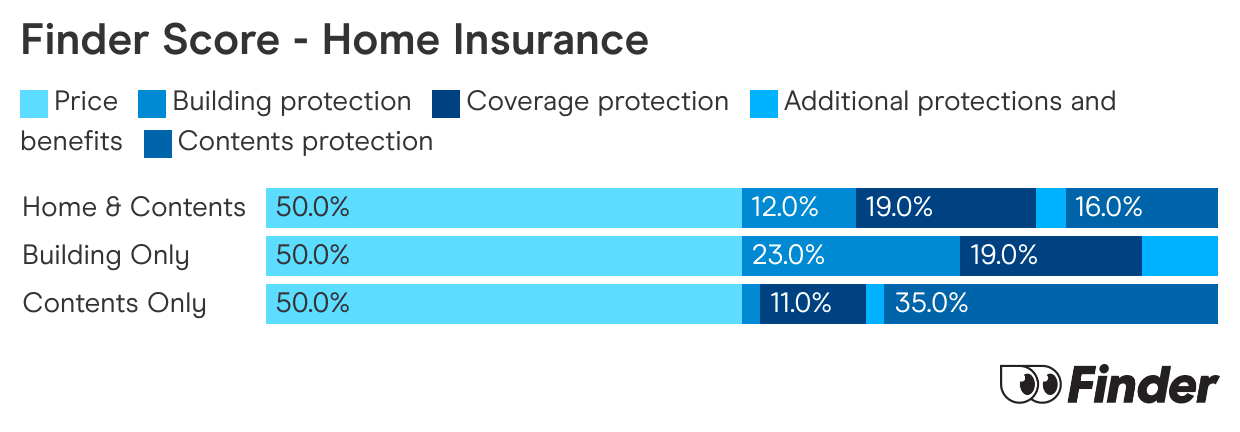
How we picked theseFinder Score - Home insurance
We crunch eligible home insurance products in Australia to see how they stack up. We rank over 50 products on 16 different features, including price. We end up with a single score out of 10 that helps you compare home insurance a bit faster. We assess home and contents, building only and contents only products individually.
Why do I need home furniture insurance?
Between your bed and mattress, lounge or lounges, tables and chairs, wardrobes and cabinets, rugs and carpets and mirrors and lighting, the total value of your home furniture is likely higher than you'd guess.
Furniture is a common casualty when homes are damaged badly in fire, flood, storm and other events – and new and antique furniture doesn't come cheap.
Accidental scratches, spills and stains also happen. Cleaning, repair or replacement costs can be high when they do. Home furniture insurance (with accidental damage cover) can make those moments less painful.
Should I add "accidental damage" cover to my policy?
If you want to protect your furniture, you'll probably conclude, given sofas and other furniture are prone to accidents, that it's a good idea to add accidental damage cover for your policy. If you don't, you might be disappointed later on to learn that unsightly stain, scratch or chip isn't covered.
Which brands offer accidental damage cover?
| Brand | Does it offer accidental damage? |
|---|---|
![]() | Optional |
| Optional | |
![]() | Optional |
How is home furniture insurance different to warranty?
- Warranties and product care plans focus on failures and imperfections in the design, structure and features of the product itself – for example, a manufacturing defect in a bed frame.
- A warranty generally won't cover any of the insured events a home and/or contents policy will, including water damage, fire damage, theft and so on.
- A warranty only lasts for a finite period of time after purchase, whereas insurance will last as long as your policy is active.
Will my outdoor furniture be included?
Yes. As long as it lives at the insured address, outdoor furniture can be included in either a home and contents policy or a straight contents policy. This can include things like statues and ornaments.
You just have to remember to account for your outdoor furniture when you're setting up your policy. Again, you might need to specify the value of any very-high-value items that are worth more than the upper limits the insurer pays out in a standard policy.
When will my furniture be covered?
Here are some situations where home and/or contents policies will generally cover your furniture:
- In insured events like fire, flood, escape of liquid from your plumbing system, impact damage (e.g. from a falling branch or tree) and theft.
- If fixed glass in a piece of furniture gets smashed in an insured event (depending on what happened, you might need accidental damage cover).
- If you stain your couch with food or drink (again, you may need accidental damage cover).
- Many (but not all) insurers classify rugs, and often carpets, as furniture.
When won't home furniture insurance cover me?
Every insurance policy has exclusions. Here are some furniture-related things you may not be covered for:
- Not all policies will cover "permanent" furniture like fittings, built-in wardrobes and kitchen cupboards (unless you're taking out landlord insurance), though others will.
- You shouldn't assume your insurance will cover pet damage, which is an exclusion in lots of home and contents policies and may or may not be included in accidental damage insurance. If you have an unpredictable pet that could cause havoc, check the fine print and ask the insurer.
- If you're working from home or running a business out of home, some policies will insure your (home) office furniture as a standard, while others won't. Let your insurer know about any furniture you use as part of your business, in case you need to insure it separately.
- If you have items of furniture with values higher than the relevant maximum sums insured in your policy, you might need to designate their value in a specified contents policy. Before committing to anything, be sure to cross-check the relevant values against the policy's product disclosure statement.
Frequently Asked Questions
-
To accurately value your furniture for insurance, create a detailed inventory of all your items. Include descriptions, purchase dates and original costs. For newer items, keep receipts and invoices. For older, antique or custom made pieces, consider getting a professional appraisal. The goal is to estimate the current replacement value so you are adequately covered if you need to make a claim.
-
Standard home and contents insurance policies typically cover furniture only at your insured address. If you are moving house, you might need to arrange transit insurance, often offered by removalist companies or as an optional extra on some home insurance policies. For furniture in storage, a separate storage insurance policy is usually required. Always check with your insurer about specific cover for items outside your home.
-
If your furniture is damaged or stolen, report thefts to the police immediately and obtain a police report number. Document the damage or loss with photos, videos and a written account. Gather any relevant purchase receipts or valuations. Then, contact your insurance provider as soon as possible to lodge your claim. They will guide you through the specific requirements and next steps.
-
No, standard home contents insurance generally does not cover normal wear and tear on your furniture. This includes deterioration that occurs naturally over time with everyday use, such as fading, minor scratches or sagging. Insurance policies are designed to cover sudden, unexpected damage or loss caused by insured events, not gradual depreciation.
-
For high value items like antiques or custom made furniture, you will typically need to specify them individually on your home contents insurance policy. This means listing each item and its value separately. Insurers often have sub-limits for general contents, so specifying high value items ensures they are covered for their full replacement cost. An up to date professional appraisal or valuation may be required by your insurer.
Here's the bottom line
Whether your furniture collection is brand-new or antique, home furniture insurance that reflects its true value will quickly pay for itself in peace of mind.
Jessica Prasida brings a decade of experience in the travel industry, including over four years as a travel agent and branch manager at STA Travel. She holds a Bachelor of Business and a Master of Marketing from the University of Technology, Sydney, as well as a Tier 1 General Insurance qualification that complies with ASIC guidelines. An avid traveller herself, Jessica combines her professional expertise with a passion for ensuring safe and enjoyable journeys for all travellers. Jessica was a Travel Insurance Publisher at Finder from 2019 to 2024. See full bio
Get rewarded $$ for switching with Finder Rewards
Find a better deal, save on your bills and get a free gift card. Sign up to be the first to hear about new Finder Rewards.
More guides on Finder
-
Strata Insurance Comparison
Learn what strata insurance is and what to look for in a policy.
-
Moving insurance: How your contents policy covers moving house
Use this guide to help you decide whether you need to insure your household contents while they’re being moved to your new home.
-
How much does home insurance cost in Australia?
Discover what impacts the cost of home insurance and how to get the right protection with this handy guide.
-
Home insurance QLD
Compare home insurance providers in Queensland. Protect your home from cyclones, floods, fire and more.
-
Coles Home Insurance review
Coles Home Insurance is convenient and generous with its rewards. Just don’t forget to read the fine print.
-
Youi home insurance review
Youi is one of the more expensive insurers we compare, but has a good range of benefits
-
Allianz Home Insurance reviewÂ
Allianz's Home & Contents insurance includes higher benefit limits than some other popular providers, but it can be lacking in optional extras.
-
Cheapest home insurance in Australia 2026
Follow these steps to find affordable home insurance that won't leave you stranded.
-
Best home insurance October 2026
What you need to know about finding the best home insurance for you. Compare policies and learn what questions to ask when researching insurance policies.
-
Compare home and contents insurance
Compare home and contents insurance - our research shows you can save up to $1,653 by switching.