Compound interest and your savings account
Interested in more interest? Compound interest lets you earn interest on your interest.

We currently don't have that product, but here are others to consider:
How we picked theseThe Finder Score is a simple score out of 10. The higher a savings account's score, the better we think it is for the average customer.
We score each savings account in our database of hundreds based on a data-driven methodology with 2 main criteria: Does the account offer a high interest rate? And is it easy for savers to actually earn that rate?

"Compounding is like a magic trick that makes your money grow faster, or your debt grow bigger. Either way, it means that small, consistent efforts – even as little as paying $20 extra into your mortgage, super or savings each week – can make a big impact down the track."
The best way to explain how compound interest works is with an example using Finder's compound interest calculator:
The longer your timeline ahead of you, the more your balance grows. In our fictional example, after 10 years, you'd have $34,621.53 and after 20 years, $59,932.51. This is without ever adding an extra cent of your own money.
To get the most benefit out of compound interest, deposit as much as you can into your account and restrict the number of withdrawals you make. The more money that is in your account at the end of the month, the more interest you will earn.
Want to see how much you could earn?
Use our compound interest calculator
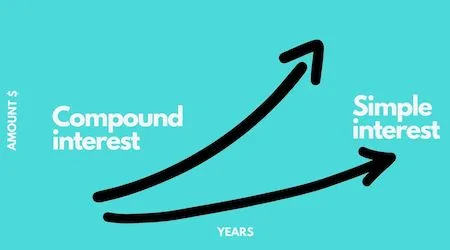 Compound interest can turn a small amount of money today into a large amount of money over the space of 10, 20 or 30 years.
The longer your timeline ahead of you, the more you stand to benefit from compound interest.
Interest is typically calculated on the daily closing balance. Here's the savings account equation:
Interest begins to accumulate on the day the opening deposit is made in your savings account. It's then usually credited into your account on the last day of each month. If you choose to close your account, your accrued interest will be deposited on the day it's closed.
Any interest awarded to your savings account is usually available for use on the same day it's been credited. The daily closing balance of your savings account tends to include all cleared and uncleared transactions. This may be because electronic transfers to your linked bank account usually occur on a business day.

"I would almost always put money into a savings account over a term deposit. Savings accounts earn compound interest (meaning you earn interest on the interest paid), whereas most term deposits only earn simple interest (meaning you earn interest only on the initial deposit)."
The monthly variable interest rate will be clearly displayed on the provider's website under the product description for the particular account you’re looking at. Instead of going to each bank's website, you can take a look at the latest high interest savings account interest rates in our guide. It is important to remember that the interest rate is variable, meaning it will change from time to time.

Compare Ubank Save and Up Bank Saver accounts. See rates, features, fees and which suits you best.
Compare ING Savings Maximiser and Ubank Save Account. See rates, features, fees and which suits you best.
Here are a few different ways to save money automatically without lifting a finger, including using round up savings apps and tools.
NAB vs Commonwealth Bank: which bank offers the best accounts for Australian savers?
Gift savings accounts are just the beginning for starting kids off on the right track to a secure financial future.
See historical interest rates for savings accounts since January 2012.
Looking for the best bank in Australia? Let's take a look at the bank accounts offered by the big banks and see how they stack up against others in the market.
International banking transactions can be made easy with the help of a multi currency account. If you find that you are consistently trying to manage currencies other than the Australian dollar, then consider banking your money in this type of account.
As you approach retirement age, managing a fixed income can be a cinch with a pensioner high interest savings account for the flexibility you need.
If you need help getting your savings back on track, a bonus saver account with competitive interest may provide you with the incentive and features you need.

If I want to start saving and am already 49years old with no initial amount deposit and can save $100/week for the next 10 years would a savings account via a bank that compound interest be the best way to go?
Hi Lisa,
We can’t really tell you what the “best” option for you is, as this depends on so many factors. If you are looking for a low risk way to slowly grow your savings, a high interest savings account could work well for you.
10 years is a long time frame, which is good for compound interest. But it also depends on how interest rates move over time, which is hard to predict. Rates for high interest savings accounts have been around 5% lately, but they may be lower in the future.
You have other options to build wealth, such is investing in ETFs (a riskier option with higher growth potential) and also putting more money into your super. This has tax benefits but does have some short term risk because the money is invested and can go up or down, but should still grow over time.
Hi there
just wanted to get more information about compound interest. what is my best option of opening account with any financial institution that offeres compound interest.
Thanks in advance
Compound interest will apply to any account where you leave the money in place and don’t make withdrawals. Check out our guide to high interest savings accounts for options to consider.