Stamp Duty Calculator
Our stamp duty calculator can help you estimate your costs and find out if you're eligible for an exemption or discount in your state or territory.

To use this calculator select your state or territory, enter the value of your property (the full value, not your loan amount), choose the type of purchase (home to live in, investment or land) and select yes or no if you're a first home buyer or not.
Stamp duty in Australia is a state/territory level tax levied on large transactions such as property purchases, cars or other assets. Historically, stamp duty was levied on the signing of various legal documents, hence the word stamp. Stamp duty is sometimes referred to as transfer duty.
Your stamp duty cost varies depending on where you live. Governments update these costs every few years, depending on state budgets and tax policy.
Click your state or territory below to find out about stamp duty costs where you live.
Many buyers pay stamp duty at settlement. Depending on your state or territory, it may be due on settlement day, and in other states you have around 30 days from settlement to organise the payment.
Your lawyer or conveyancer can help you with the logistics of paying stamp duty and will advise you of deadlines. Your conveyancer can also help you organise your paperwork when applying for a concession or exemption.
Typically your stamp duty is an upfront cost, not rolled into your home loan. However, if you're not using your full borrowing power to buy the property, you may be able to use your loan to pay stamp duty. This is known as having your stamp duty capitalised into the principal of the loan.
It will depend on your borrowing power and the size of your deposit. But because you're borrowing money to pay for the duty, you'll be paying interest on that amount for 30 years.
Keep in mind that this may increase your loan to value (LVR) ratio, which could require you to pay a higher Lenders Mortgage Insurance premium, if your loan is above 80% of the property's overall value.
Stamp duty isn't payable if one of you is transferring the title to a home or land to another. However, you can only save on stamp duty if the transfer is done so you can obey a court order. The court must be able to know what assets are owned by each of the parties. This includes all of your assets like land, bank accounts and superannuation. It may be necessary to hire an expert to value an asset.
It's important to know that parenting is seen as a very important contribution. If the marriage has been a long one, it is often seen as equal to financial contributions. Usually, the court gives the party whose financial future is not as good as the other some extra part of the property owned by the parties.
First home buyer? Learn how to find the right home loan here
We currently don't have that product, but here are others to consider:
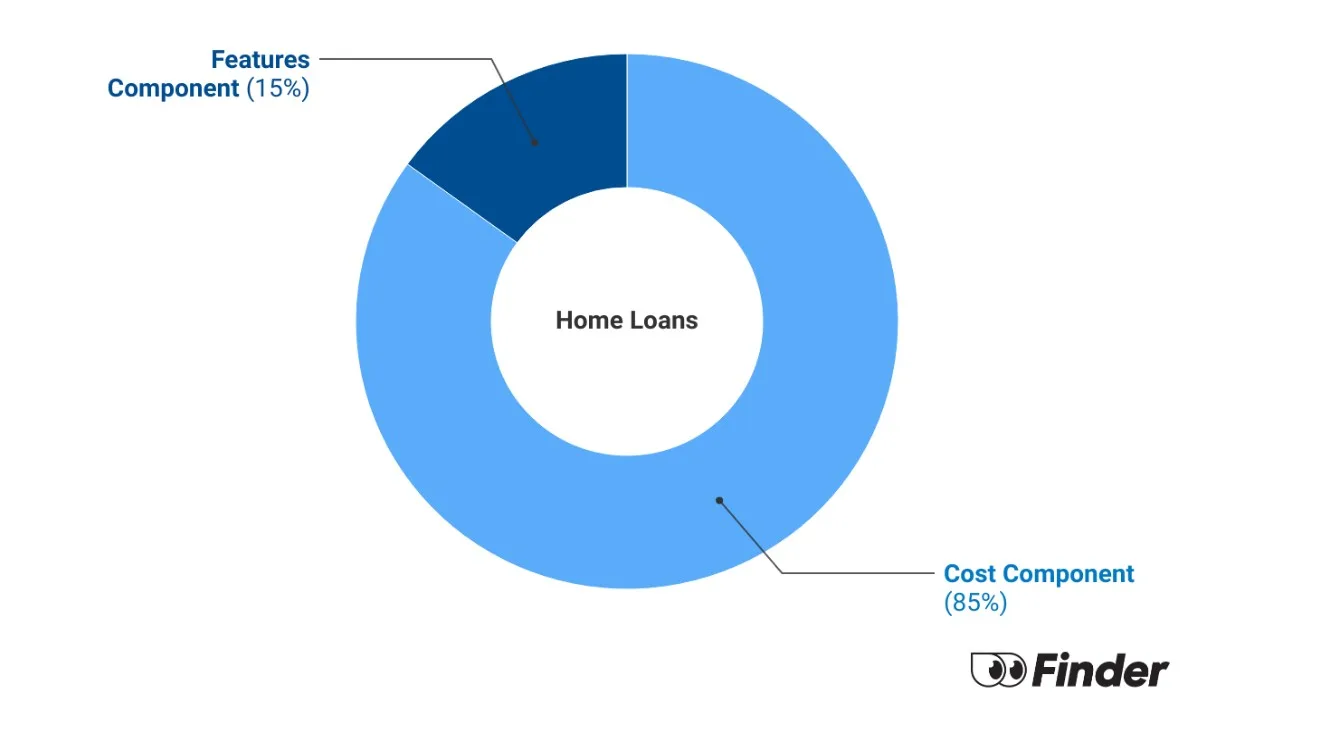
How we picked theseThe Finder Score crunches 7,000 home loans across 120+ lenders. It takes into account the product's interest rate, fees and features, as well as the type of loan eg investor, variable, fixed rate - this gives you a simple score out of 10.
To provide a Score, we compare like-for-like loans. So if you're comparing the best home loans for cashback, you can see how each home loan stacks up against other home loans with the same borrower type, rate type and repayment type. We also take into consideration the amount of cashback offered when calculating the Score so you can tell if it's really worth it.
Everything you need to know about stamp duty in the NT and how it’s calculated.
Here’s everything you need to know about stamp duty in South Australia and how it’s calculated.
Everything you need to know about stamp duty in Tasmania and how it’s calculated.
Everything you need to know about stamp duty in Queensland and how it’s calculated.
Everything you need to know about stamp duty in the ACT and how it’s calculated.
Everything you need to know about how much stamp duty you'll pay when you buy a home in Western Australia.
Your complete guide to stamp duty in Victoria, including new discounts that could save homebuyers up to $27,500.
Stamp duty is just one of the many costs associated with property ownership. Learn everything you need to know about transfer duty in NSW.

Hi there,
I found out recently that the investment property in QLD that my husband and I own is set up as tenants in common with a 60/40 split. 60 to my husband, 40 to me. It is still under mortgage. We wish to set the property up as joint tenants (for the sake of our will) and have been informed that we first have to transfer the 10% to me before we can change to joint tenants and that transfer will incur CGT. Is this correct. Is there a way around this? Can he gift it to me?
Thanks
Hi Susan,
Thanks for your question.
Transferring a share of a property you own in Queensland to your spouse is a dutiable transaction unless all the following apply:
Hence, unless the property will become your principal residence, the transfer of investment properties will incur transfer duty. You may refer to Queensland home or property owner exemptions for more information. You can also seek legal advice on this matter.
Cheers,
Liezl
Hi ,
We bought a property in ACT in Late December 2016. They say stamp duty paid is immediately deductible during the first year for properties in ACT (due to all properties in ACT being leasehold not freehold)
After buying the home we immediately moved in and started renting part of the house. We have been renting for 6 months (until 30 June 2017)
If the area of the house I rented is 25%
Can I
A. claim a full deduction of Stamp Duty at 30 June 2017
B. Claim a deduction for 25% of the stamp duty paid
C. Claim a deduction for 25% of the stamp duty X 50% (for only renting for half of the year)?
Appreciate anyone’s thoughts on this
Hello Chin,
Thank you for your inquiry.
It is unclear as to why would you rent a part of your own home, unless you mean renting it out? Please be advised that as per ATO’s Rental Property Guide 2013 page 7, “If you use your property for both private and assessable income-producing purposes, you cannot claim a deduction for the portion of any expenditure that relates to your private use. Examples of properties you may use for both private and income-producing purposes are holiday homes and time-share units. In cases such as these, you cannot claim a deduction for any expenditure incurred for those periods when the home or unit was used by you, your relatives, or your friends for private purposes.”
If you use your property for both private and income-producing purposes, you can only claim a deduction for the portion of any expenditure that relates to the income-producing use. Generally, apportion your expenses on a floor-area basis – that is, based on the area solely occupied by the tenant, together with a reasonable figure for their access to the general living areas, including garage and outdoor areas if applicable. Using your example above and assuming this was meant to be renting out, Answer C is applicable for you.
You may refer this matter to ATO or to a tax accountant for further review.
Hope this helps.
Cheers,
Jonathan
Hi, I bought a property before I got married. If my husband buys a property under his name only under $650,000, does he still need to pay stamp duty as first home buyer in NSW?
Hello Diana,
Thank you for your inquiry today.
Exemptions on transfer duty are applicable on new and existing homes valued up to $650,000 and a vacant block of residential land valued at up to $350,000.
Please make sure you review the First Home Buyers Assistance scheme (FHBAS) eligibility requirements. You can use the Revenue NSW calculators to have an estimate.
Hope this helps.
Cheers,
Jonathan
I’m intending on purchasing an active farming enterprise in Victoria valued at $1.2 million. The sale is “walk in walk out” & includes land of 100 acres, 5 acre vineyard, residence, sheds, cattle yards, livestock & plant & equipment. The farm equipment, wine making equipment, motor vehicles & livestock are valued at around $50,000 (from the depreciation schedule). I appreciate that I will need to pay stamp duty on the land, residence, buildings, vineyard & fittings but are the livestock & plant & equipment subject to stamp duty ? Can I separate these items out from the land purchase & purchase them separately. If so I assume that they would be subject to gst.
Hello Michael,
Thank you for your inquiry today.
A conveyance of Qualifying Land for consideration together with a conveyance of other property that cannot be stamped such as:
Chattels;
Livestock;
Plant & equipment;
Stock;
Water licence;
Goodwill or
Intellectual property
If the farmer sells livestock and plant and equipment all separately, they are subject to GST if the seller is registered. Please refer to the Stamp Duty Document Guide for more details.
You can discuss this with a tax expert for further assistance or to your local tax office.
Hope this helps.
Cheers,
Jonathan
Hi. If I buy an investment property before my first home, will I still be eligible for first home concessions after?
Hi Kelly,
Thanks for your question.
This will depend on the location where you are planning to buy a property as applicable exemptions and concessions vary between states and territories. If you intend to purchase a property in Queensland, you won’t be eligible for first home concession. Queensland government requires that in order to claim first home concession, you should have never held an interest in residential land anywhere in the world.
You may also refer to our guide here on FHOG eligibility after acquiring an investment property.
I hope this has helped.
Cheers,
Liezl