What is the property clock and how does it work?
The property clock can help you determine the perfect time to buy and sell your investment.

The property cycle is a series of events that repeat themselves over and over in a cyclical pattern that impacts on property prices.
This cycle can be broken down into four different phases:
As our population grows the demand for real estate is increased, which causes an increase in property values. This demand is met with keen builders and developers constructing new dwellings to meet demand.
This demand may then peak, as an oversupply of properties can lead to a slump in valuations.
Investors can track the property market cycle using the property clock, which maps the cycle of rising and falling property demand.
While we've outlined the four phases above you can also think of it as 8 steps.
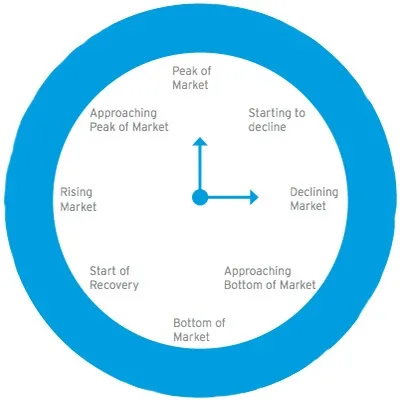 This clearly-defined cycle can be expressed in the form of a clock. When the hour hand on the clock is at 12, the property market is in a boom period, demand is outpacing supply and prices are at their peak.
As the hand moves down clockwise around the face, the market enters a downswing period and prices start to cool until, when the hand reaches 6, there is an oversupply of houses and the market bottoms out.
But then things start to turn around as the recovery period begins. Rental returns start to improve and interest rates fall, which means demand for housing increases and prices start to rise once again.
This continues as the hand moves further around the clock face and up towards 12, the next boom period once again.
The Australian property market is really many smaller markets. Each city has its own market, and even within a city certain suburbs may be at different points on the property clock.
There are many factors to look at when trying to identify where a city is sitting in a property cycle. The local economy, demographics, planned infrastructure and developments can all be key indicators of a suburb on the rise or about to bottom out.
We've also covered off the other ways to research the property market here.
The property cycle is handy as a tool to analyse the current market. It is not a predictor of future performance and should be used in conjunction with other sound research and expert advice.
Knowing the best time to buy within the property cycle also isn't much good if you buy a dud property. Although a useful consideration when searching for your next investment property, the property cycle is not always significant for most long-term investors' strategies.
Major infrastructure upgrades are frequently associated with strong demand in local markets, as property investors often seek locations with infrastructure developments in the pipeline.
The FIRB has recently introduced new laws surrounding foreign investment along with new application fees and compliance policies.
Australia has a unique love affair with property as an investment class. Not only is bricks and mortar seen as a safe investment, but Australia’s tax code means property investors can see enormous benefits at tax time. To make sure you’re getting the most out of your investment property, it’s important to understand the tax benefits available to investors.
When you sell a rental investment property and make a profit, you will generally need to pay Capital Gains Tax. Some exemptions and discounts apply: here's how to work out how much CGT could cost you.
Use this downloadable spreadsheet to keep track of your investment property income and expenses.
Should you invest in a Mantra, Quest or other brand of serviced apartment? We answer all your questions from rent to home loans in our guide.
Read our price guide for rental fees and an interesting case study from someone who opted to do it herself instead of pay.
The laws around buying Australian property using a foreign income have recently changed, so here’s what you need to do to invest in Australian property.
Investors often pair an interest only home loan with an offset account to maximise tax savings. Here's what you need to know about it.
Don't get caught up in a get-rich-quick property investing scam or dodgy seminar. Find out the red flags so you avoid falling victim.
