No-gap optical
No-gap optical means you don’t pay a cent towards your new glasses. Here’s how to get it.

No-gap optical is an attractive benefit offered by some extras health insurance policies. It means you don't have to pay anything towards your new glasses, as long as they don't cost more than your annual limit.
If you have a $200 annual limit, and your new specs also happen to cost $200, you can walk away with a fresh prescription - for free!
Not all health insurers offer no-gap optical, but we've rounded up a few with limits ranging from $100-$250 so that you can compare policies at a glance.
Below are a few Finder partners that cover Optical in their extras policies. They will have either a 2 or 6 month waiting period. They also include other benefits such as dental or physiotherapy. All prices are based on a single individual with less than $105,000 income and living in Sydney.
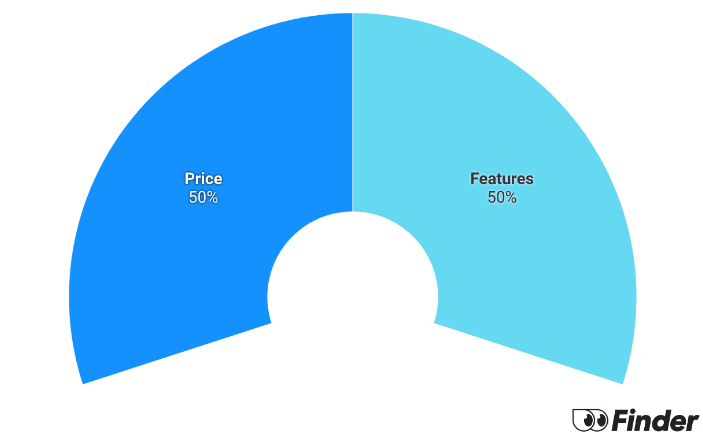
Each month we analyse over 10,000 extras insurance products and rate each one on price and features. What we end up with is a nice round number out of 10 that helps you compare extras cover a bit faster.
We want to compare apples to apples, not apples to apple pie. It doesn't make sense to compare a top extras policy with coverage for hearing aids and braces against a policy designed only for dental. So we've separated all the extras policies on the market into pools and categories. Once in their pools and categories, each product gets a price score and a features score, which are then combined to give the Final Score.
Extras cover is available in several levels (basic, medium and comprehensive) and generally covers ancillary services such as optical, dental and physio up to set annual benefit limits.
If a doctor charges a higher fee than the Medicare Benefit Schedule (MBS) fee for a service, the medical gap is the difference between the MBS fee and the doctor’s fee. This amount will have to be paid either by your health fund or by you.
In the case of optical services that are not listed on the MBS, the medical gap is the gap between what an optometrist charges for lenses and frames and what your private health extras cover will pay towards them.
To avoid having to pay any medical gap, you need to be with a health fund that has a no-gap scheme. A no-gap optical scheme is one where a health fund agrees to cover the medical gap if members go to a preferred optometrist or an optical dispenser with which the health fund has an arrangement. These practices charge capped prices that have been agreed upon with the health fund for a select range of lenses and frames.
Here are Finder's partner health funds that offer a no-gap optical option:
| Fund | What's covered? | More info |
|---|---|---|
 | ahm offers 100% back up to your annual limit on the cost of prescription glasses, frames, lenses, repairs, and contact lenses. | |
 | For prescription glasses, contact lenses or repairs supplied by an optometrist in private practice. Excludes non-prescription sunglasses and contact lenses, and optical consultations. | |
 | 100% Optical benefits on prescription lenses and contact lenses. | |
 | Includes prescription glasses, prescription sunglasses and prescription contact lenses. Doesn't include non-prescription sunglasses, repairs or frames purchased without prescription lenses or ophthalmology appointments. | |
 | 100% Optical benefits on frames, single vision lenses. Frames, bi-focal or multi-focal lenses and contact lenses. | |
 | HCF offers a range of fully covered services through HCF Eyecare Centres, Dresden, or Specsavers on a range of standard prescription glasses and one free digital retinal imaging with your eye test per calendar year. | |
 | You can claim 100% of your annual limit on prescription glasses, contact lenses or sunglasses from any optical provider in Australia with HIF. | |
 | 100% back on eligible items up to annual limits at all recognised providers. Includes prescription glasses and contact lenses. | |
 | Through its nib Eye Care Centres, nib offers members 100% back on three ranges of complete single vision prescription glasses and selected contact lenses (depending on your level of cover) with free delivery anywhere in Australia. | |
 | Optical benefits (glasses & contacts) are paid when glasses or contacts are prescribed by a registered optometrist. They have to be for sight correction, and non-prescription sunglasses aren't covered. | |
 | Transport Health offers members 100% back on a selection of single vision, bifocal and multifocal glasses from several ranges at Specsavers (depending on your level of cover). |
Table last updated April 2021
Find out how both Medicare and private health insurance cover occupational therapy to get the assistance you need.
See how your private health insurance could help with couples counselling.
Remedial massage can help ease pain from general wear and tear as well as specific injuries. This treatment isn’t covered by Medicare but is included in private health insurance extras cover. Find out how private health insurance can cover you for remedial massage therapy.
Physiotherapy services can be beneficial at any life stage, so it could be worth considering and comparing extras health insurance that can cover the cost of this type of treatment.
Optical health cover can ensure you get the care you need to protect your eye health. Compare health insurance policies with optical cover.
If you're wondering what pharmaceutical costs are covered by private health insurance, we've got a guide to health cover for non-PBS pharmaceuticals here.
finder.com.au explains how the private and public health system in Australia handles optical procedures and services.
A guide to extras benefits for hearing aids.
Discover more about accessing naturopathy, herbal remedies, traditional Chinese medicine and other alternatives with coverage through your health insurance.