Home Loans for Pensioners
While it is harder, you can get a home loan while on a pension. It depends on how much you want to borrow, your spending, assets and if you have other income sources.

Getting a loan as a pensioner always comes down to the lender's eligibility criteria and your individual circumstances. This includes your savings and other sources of income, whether you have outstanding debts or not and the amount you are hoping to borrow.
If your only source of income is the pension, then this might limit your options. The pension amount is lower than the income level most lenders require you to earn in order to repay a loan.
However, there are several ways a pensioner might be able to apply for mortgage finance.
If you have forms of income from other sources or you're only borrowing a small amount, you may be able to apply for a home loan like any other borrower. You might even be able to get a competitive interest rate, so be sure to compare your home loan options.
There are lenders who specialise in providing finance solutions to borrowers in difficult or unique circumstances. These types of lenders provide loans known as specialist or non-conforming loans. There are even lenders who focus entirely on older borrowers.
Non-conforming lenders may be able to help where the big banks can't. But they often charge higher interest rates and fees.
Keep in mind that many lenders that specialise in "senior's finance" don't actually lend to pensioners who don't already own property. Instead they offer reverse mortgages and other forms of equity access to older Australians who already own property.
Perhaps the best option for pensioners looking for a home loan is to get in touch with a mortgage broker. This is because mortgage brokers specialise in helping borrowers in unique circumstances and they have access to a wide panel of lenders.
A broker can help you look for loans and lenders that match your requirements. Their services are typically free to you because the lender you choose will pay them a commission.
As a pensioner you'll need to provide a few extra documents in addition to the standard documents in a mortgage application. Every lender has their own requirements but you'll generally need to provide the following:
Generally, lenders consider a disability pension to be a valid form of income, meaning they treat a home loan application for someone on a disability pension just like any other application.
Most lenders will review your application on a case-by-case basis. Your eligibility for a home loan will depend on the amount of income you receive and how much of this can be used to service a loan.
Other factors including your age, assets and debts will be assessed by a lender on an individual basis.
Many lenders may accept a Veterans' Pension as a source of income for a home loan. This applies if you are receiving:
Additionally, lenders may accept the Department of Veterans' Affairs Incapacity Pension as a source of income. In order to demonstrate your pension as a source of income for a home loan application, you'll need either a current bank statement showing your pension payment, or a current Department of Veterans' Affairs statement.
On Centrelink? You could still get a home loan
If you're a pensioner who already owns their own home you have some other finance options. Both reverse mortgages and line of credit loans allow you to borrow money against the equity in your home.
In the tables below you can compare various finance options, from normal home loans to reverse mortgages and lines of credit. Please be aware that not all of the options presented in the table will be available for pensioners. If you're a pensioner and are looking for expert guidance, contact a mortgage broker for personal advice.
We currently don't have that product, but here are others to consider:
How we picked theseWe currently don't have that product, but here are others to consider:
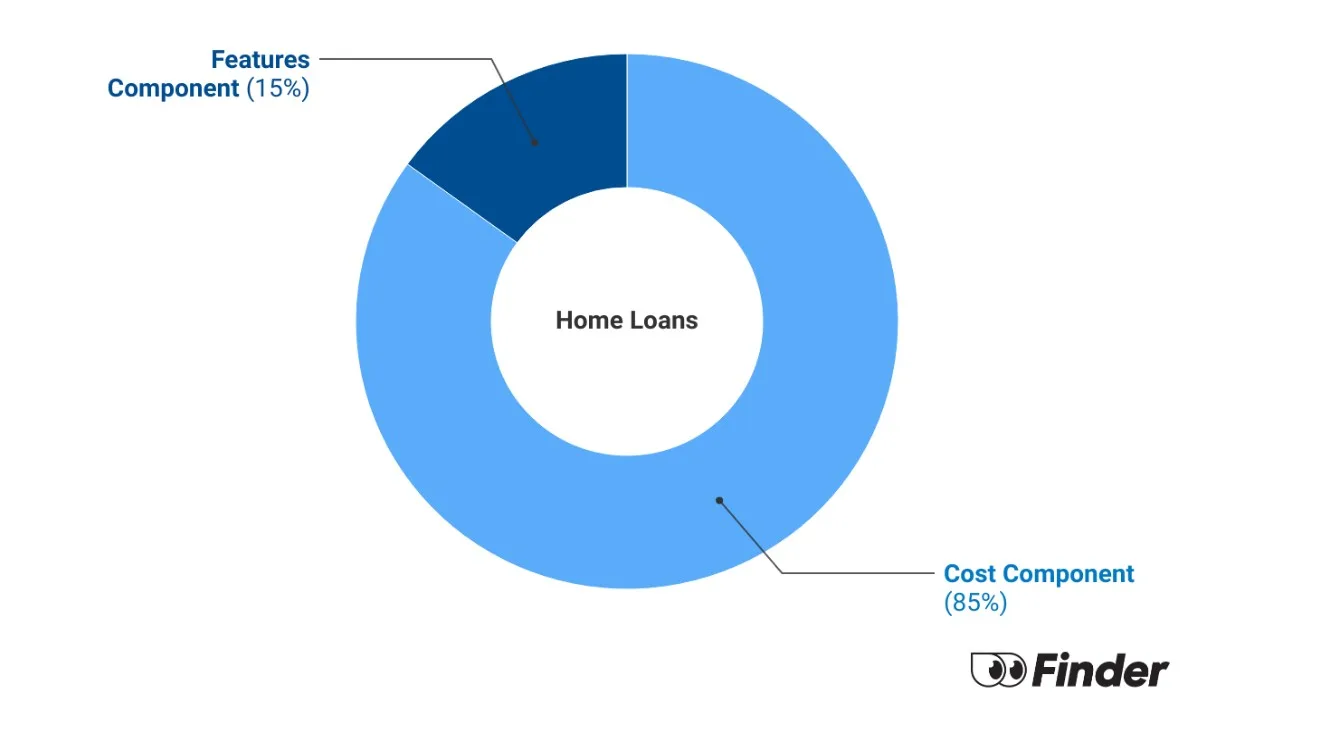
How we picked theseThe Finder Score crunches 7,000 home loans across 120+ lenders. It takes into account the product's interest rate, fees and features, as well as the type of loan eg investor, variable, fixed rate - this gives you a simple score out of 10.
To provide a Score, we compare like-for-like loans. So if you're comparing the best home loans for cashback, you can see how each home loan stacks up against other home loans with the same borrower type, rate type and repayment type. We also take into consideration the amount of cashback offered when calculating the Score so you can tell if it's really worth it.

Data from Finder's 2026 Home Loan Report shows more than 1 in 5 homeowners (22%) accessed their home equity in the past 12 months.
How much does the average Australian home buyer need to save for a house deposit?
Here’s a breakdown of exactly what foreclosure means.
A guide to distressed property sales in Australia, including risks to be aware of and tips for buying distressed properties.
If you’re having trouble securing a home loan through traditional means, there are some government programs that might help you achieve your property goals.
Now that you've paid off your mortgage, find out how to finalise your home loan and where to invest your money next.
Compare current bank interest rates for home loans, credit cards, personal loans, savings accounts and term deposits to find the best deal for you.
If you haven't sold your house yet, but want to buy your next one before the sale is completed a bridging loan may be able to help. Read on to discover how bridging finance can help.
Low doc home loans allow you to get a mortgage if you're self-employed or don't have regular payslips. check your eligibility and compare competitive offers now.

Im on TAC and return to work on light duties as well as i get topped up by centrelink for carers payment and allowance. I have a nice size deposit and after a mortgage but finding it hard while im on TAc as they wont take that income into account. who could i go with to get the mortgage?
Hi Nicole,
Thanks for getting in touch with Finder. I hope all is well with you. 😃
I recommend you check our list of pensioner loans. You may review and compare the offers available on the table or on the list. Once you have selected one, you may proceed by clicking the green “Go to Site” button.
I hope this helps.
Cheers,
Danielle
Hi there I would like to know if is there any Banks that can help as to get a home loan.I’m a 50 year old man who has a disability pension,and I live with my wife who is a career to our daughter who also has a disability pansion.I think this means that we all together have 3 stable incomes,for the last 8 years we have been paying the rent to a real estate agency which is right now $ 700 a week.I would like to know if is there any way to get a home loan on our 3 combined incomes.
Hi Joe,
Thank you for contacting finder. We are a comparison website and general information service, we’re more than happy to offer general advice.
You are on the right page. You may review and compare the offers available at the bottom of the page. Once you have selected one, you may proceed by clicking the orange “More Info” button.
I hope this helps.
Cheers,
Danielle
We are a couple over 50 both employed with good paying jobs. We are renting and would like to purchase a home together. We can afford about 20000 deposit and want to borrow 350000. We have been told we need at least 50 to 80k deposit. Please advise
Hi Juanita,
Thanks for reaching out to us.
Generally, you would need a 20% deposit for the amount you plan to borrow. So, if you need $350,000, then you would most likely need a deposit of $70,000. Thankfully, there are low deposit home loans, which allows you to only have a 5-10% deposit.
Please note though that low deposit home loans often come with higher rates, and with the extra cost of lenders mortgage insurance (LMI), which can amount to several thousands of dollars.
To further explore your options and have someone take into consideration your whole situation, a mortgage broker may help. A mortgage broker is a professional who compares and helps you apply for home loans on your behalf. A good mortgage broker will give you personalised service all the way through to settlement.
Cheers,
Rench
Can I use the house I want to buy as collateral for a loan also how much deposit would I need for a 250,000 dollar loan I am on a disability pension?
Hi Patricia!
There are some lenders who can allow you to use your property as security. This means that you will use the property you intend to buy as a collateral and will just hold on to the deed until it is paid off. As for the deposit, usually, they require 20% of the loan value and this varies per lender.
Please consult with your lender of choice to know exactly the requirements and deposit required.
All the best!
Cheers,
Jonathan
Hi! I was wondering if I’m able to obtain a loan from your company. I’m waiting for my paperwork to go through Centrelink for single parenting payments and disability.
Hi Rosemary!
Thanks for the comment.
We have a few pages that may help you as a Centrelink recipient:
Please go through those pages to find the right loan products for you.
I hope this helps. Should you have further questions, please don’t hesitate to reach out again.
Hope this helps.
Cheers,
Jonathan