If you've bought a block of land and plan to build property on it, you'll probably need a construction loan and not a home loan.
A construction loan works differently to a home loan in that it releases the funds bit by bit as you reach each stage of building.
Construction loans are usually interest-only while the property is being build and they may have higher interest rates.
What is a construction loan?
If you want to build your own home on an empty block of land you'll need a construction loan rather than a normal home loan.
You can take out a separate land loan to buy the land and then take out a separate construction loan, but they can be bundled together.
With a construction loan your lender releases funds at each stage of the construction process rather than all of it upfront.
Construction loans can sometimes attract a higher interest rates so it's worth doing your research. Borrowers also need to provide more paperwork to the lender to show they have a council-approved building plan and a fixed contract with a licensed builder.
How do construction loans work?
With a construction loan, your lender considers the total amount you need to borrow in order to pay your builder. Then it breaks down the full amount into separate payments called progress payments.
You receive a payment at the completion of each stage of the construction project rather than all at once. Repayments at this stage are usually interest-only. You don't start paying off the loan principal until the house is complete.
Here's a quick example:
You're building a $350,000 house on a $600,000 block of land (total cost $950,000).
You buy the land first and your lender releases the amount required for your land purchase. Let's assume you have purchased your land with a 20% deposit, which means you have a loan of $480,000.
You are now paying interest only on the first $480,000.
Construction starts and your builder requires $100,000 to cover the foundations.
Your lender releases a further $100,000 of your funds to cover this. You're now paying interest on $580,000.
You continue borrowing instalments as construction progresses . Once completed, you've borrowed $830,000 which is $480,000 for the land and $350,000 for your construction.
Once your property has been completed you can now contact your lender to potentially revalue your newly completed home and ensure your repayments are now Principal & Interest.
How do repayments work on a construction loan?
Construction loan repayments are interest-only during the construction stage. And you only pay interest on the money you've drawn on to cover the next construction stage.
This means you're not repaying the full loan amount until you've moved in to the house.
Once construction is complete, you start making principal-and-interest repayments on the loan. This is when you start repaying the debt plus interest.
The benefit of this repayment structure is that your repayments during construction are minimal, because you only pay interest on the money you've spent.
What are drawdown fees?
Some lenders charge a drawdown fee for each stage of a construction loan. This means you pay a fee (typically around $100 – $200) when you access more of the loan at each stage of construction.
What kind of borrowers need a construction loan?
Constructions loans are a suitable mortgage for:
Owner-occupiers buying land to build their own homes to live in
Owner-occupiers building homes on land they already own
You can get a construction loan as an owner-builder but it is much harder. The vast majority of banks and lenders will prefer that you choose a licensed builder to construct your home before they extend a construction loan to you.
However, there are some lenders that will allow you to build your own home as an owner-builder. This is ideal if you're a qualified tradesperson or if you have a building licence of your own, but an owner-builder loan isn't suited to the faint of heart.
Understanding the 5 steps of a construction loan
With construction loans, funds are paid in stages known as progress draws. These stages correspond to the progress of your home's construction. They can vary a little depending on your builder and lender, but generally are as follows:
1. Foundations and footings
The building site is cleared of any vegetation and debris, and is levelled. Footings for your house are installed and spaces are cut out for the site's plumbing.
During this time, the concrete slab for your house will be poured. After this, initial plumbing and waterproofing will be installed.
2. Frame-up and brickwork
The framework, trusses, roof and windows will be constructed. If your home has brickwork, this will be partially done.
Gutters and insulation will also go in at this stage, as will any conduits for plumbing or electrical work.
At the completion of this stage, the second progress payment will be made.
3. Lock-up stage
During the lock-up stage of construction, doors and windows will be installed. All exterior walls will also be completed.
At the end of the lock-up stage, your home will be sealed and protected from the elements.
Your lender will make the third progress draw payment to your builder. This is one of the most significant drawdowns, often making up 20–35% of the total building funds.
4. Fit-out
At the fit-out stage of construction, all fixtures, fittings and appliances will be added.
Plumbing and electrical work is completed, gutters and downpipes are installed, skirting boards, cornices and architraves are added, kitchen benches and cupboards are put in and shower screens, mirrors, sinks, toilets and faucets are installed.
At the end of this stage, your lender will make the fourth progress payment to your builder.
5. Practical completion
Your home is almost finished. Your builder will work on the finishing touches, including painting, any final electrical or plumbing work, final installations of appliances and any other detailing.
At the end of this stage, which can take up to 8 weeks, you'll do a final walkthrough of your property to identify any problems, and the builder will walk you through the property's features.
Your lender will also do a final inspection before disbursing the final progress drawdown. After this stage, your construction home loan will also be converted into a traditional home loan.
Expert insight: Ask yourself these questions
"Make sure that when you're going to a lender you've got a pretty good handle on their process for a construction loan.
Are their fees charged at valuation stages? Some banks want to do ongoing valuations at different stages of your construction. Some may charge valuation fees at certain milestones, so when the slab or the frames go up, for example.
How prompt are they in paying your builder? Because the last thing you want is your builder chasing up for progress payments as well.
Are you interest only for while the property completes? Most lenders will offer you interest only for that time of construction and then it rolls into a P&I loan. Then you've usually got a land loan and a construction loan, so if you want to have simplicity then you'll have to internally refinance to get the loan back into one singular payment once your property is completed."
With a construction loan you only pay interest charges at first, and only on the money you spent at each construction stage. This keeps your loan costs down during construction.
Once approved, you should begin construction as soon as possible. But most construction loans have some flexibility, allowing you to commence construction for several months or even a year from the approval date (or even longer).
While you have to pay stamp duty on the vacant land purchase, stamp duty doesn't apply to home construction. This is potentially a big saving.
Cons
Construction loans can have higher interest rates and may have more fees than standard home loans.
You'll need a contract with a licensed builder, a council-approved plan and builder's indemnity insurance.
Undecided on building your home?
Take a look at the difference in costs between building your home vs buying one outright.
A granny flat can give you extra living space and serve as an investment opportunity. As a property owner, there are various ways you can finance the construction of the flat using the equity in your home, including a construction loan.
The cost involved in adding a granny flat to your home varies depending on the type of granny flat you choose. If you're thinking of adding a granny flat to your property as part of a renovation or extension, then costs could head north of around $120,000. You'll also need to factor in engineering costs and possibly architect's fees, as well as money for any existing or potential hazards such as asbestos.
Pros of granny flat investment properties
Affordable investment. Buying or building a granny flat is usually cheaper than buying a standalone investment property, allowing you to start your investment portfolio without borrowing a huge amount of money.
Rental income. Depending on where you live and the size/features of the granny flat, your investment could provide several hundred dollars of rental income per week.
Adds value. A legally compliant granny flat will add to your property's total value.
Handy addition. If your circumstances change and you need somewhere for a relative or friend to live, your granny flat can provide the necessary accommodation.
Cons of granny flat investment properties
Tenants. You'll need to be prepared to deal with tenants living on your property, which could potentially lead to some tense and awkward situations.
Cost. The cost of constructing a granny flat may be more than you expect and the expenses can quickly add up.
Construction lending in Australia
In the 3 months to December 2025, Australians borrowed close to $6.7bn in construction loans. This is 20% more than Australians borrowed in the same period the previous year. It's the highest value of borrowing for construction since 2022.
Collect documents. Make sure you have evidence of your income and expenses, a detailed building plan (with council approval), a contract from a licensed builder and proof that your builder has the necessary builder's insurance.
Complete application. You can usually apply for a construction loan on your chosen lender's website, or through a mortgage broker.
Lender assessment. The lender will examine all your documents and conduct a land valuation before (hopefully) approving your loan.
Lender approval. Once approved, construction can begin and your lender will release funds as needed (according to the agreed-upon building plan).
Construction loan contracts are a bit more complicated than other loan contracts. With any property transaction, you should always have an expert solicitor or conveyancer review any contracts before you sign them.
Frequently asked questions about construction loans
Most construction loans give you up to 2 years to finish the construction of a new home. If you’ve purchased your vacant block of land as part of your construction loan, the time frame commences after your land purchase has settled.
There are times when you may want to include quotes from external contractors who aren’t with your builder as part of your total mortgage. This might include quotes for air conditioning, floor coverings, driveways, landscaping or a pergola to be added. Some banks will allow you to add individual quotes to your building pack or bank pack that your builder gave you, which lets you include those things in your mortgage amount. The progress draw payments remain the same to your builder, but the payment for those external quotes won’t happen until after the builder has been paid first and your house is at the practical completion stage.
Most builders try to offer "fixed price" contracts. While the cost of your new home construction won't change after this has been fixed for you, always be very wary of "variations" added to your final costs by the builder. These can include changes in the footings/foundation price after soil testing has been conducted.
If your contract includes a "TBA" or "NC" item listed anywhere, ask for verification about this. These are the builder's way of saying that your house price might be fixed, but there might be things that can change in cost that they won't guarantee.
Price increases can also include any upgrades you may have made during your colour selection process. This is when you arrive at various suppliers to choose your tiles, paint, bricks, roofing and other items that go into your house. Your building contract will include an allocation to cover these things, but if you spend more than you intended, your costs will go up.
Most banks are quite understanding about this and will expect that all those final variations have been received by the time your finance approval is underway. If there are any changes in pricing after this time, you may have to alert the bank to account for the extra, or you'll need to pay for them yourself.
Most banks and lenders will let you borrow up to 95% of the value of the land plus the construction costs. Note that this doesn’t say "95% of market value", as it would if you were buying an established home. Instead, banks use a "To be erected", or TBE valuation to determine what percentage of your costs you can borrow.
This means the bank will use the actual market value of your land, or the purchase price shown on the purchase contract, whichever is lower. Then it will add the exact cost of your construction to your land value to arrive at a TBE valuation amount.
This is not the same as the market value of your property once the construction has been completed. If you’re careful with your spending, it could be possible to pay less money constructing your home than it is actually worth in market value once it’s completed. If this is the case, it is very possible to have your newly built home re-valued 3 months after completion to maximise your equity. This is ideal if you intend to refinance after construction is finished to help pay for finishing touches to your home.
Yes, you can. In fact, almost all construction loans are set to interest-only payments during the progress draws period. Only after the construction is complete and the final drawdown payment has been made will your loan revert to a full principal and interest payment, unless you specifically request for it to stay on interest-only payments.
Most banks will allow you to make extra payments off your mortgage while your loan is still in the progress draws stage. Some banks will even let you link a 100% offset account to your mortgage account while it’s still being drawn down. This helps you get ahead on your mortgage while the balance is still low and reduces how much interest you’ll pay overall. Always check with your bank that they’ll allow this.
Building your own home can mean you get everything exactly the way you want it and with a construction loan you remain in control of the building process at every stage.
Many lenders offer pre-approval for construction loans. While it's not the same as full approval, you can get some confidence around how much you can borrow. You can get pre-approval before you have a contract with a builder of council-approved plans.
While some construction loan lenders will require at least a 20% deposit, you can still purchase with as little as a 5% deposit. If you are planning to build your first home you may still be eligible for government schemes like the First Home Loan Deposit Scheme.
These home loans offer low costs, coupled with a host of features, giving the best overall value.
7+
Great
These home loans may have slightly higher interest rates or fewer features but overall, a competitive offering.
5+
Standard
Usually the home loans would offer above average rates. They may still include some competitive features.
0+
Basic
Higher costs and/or fewer features.
What is Finder Score?
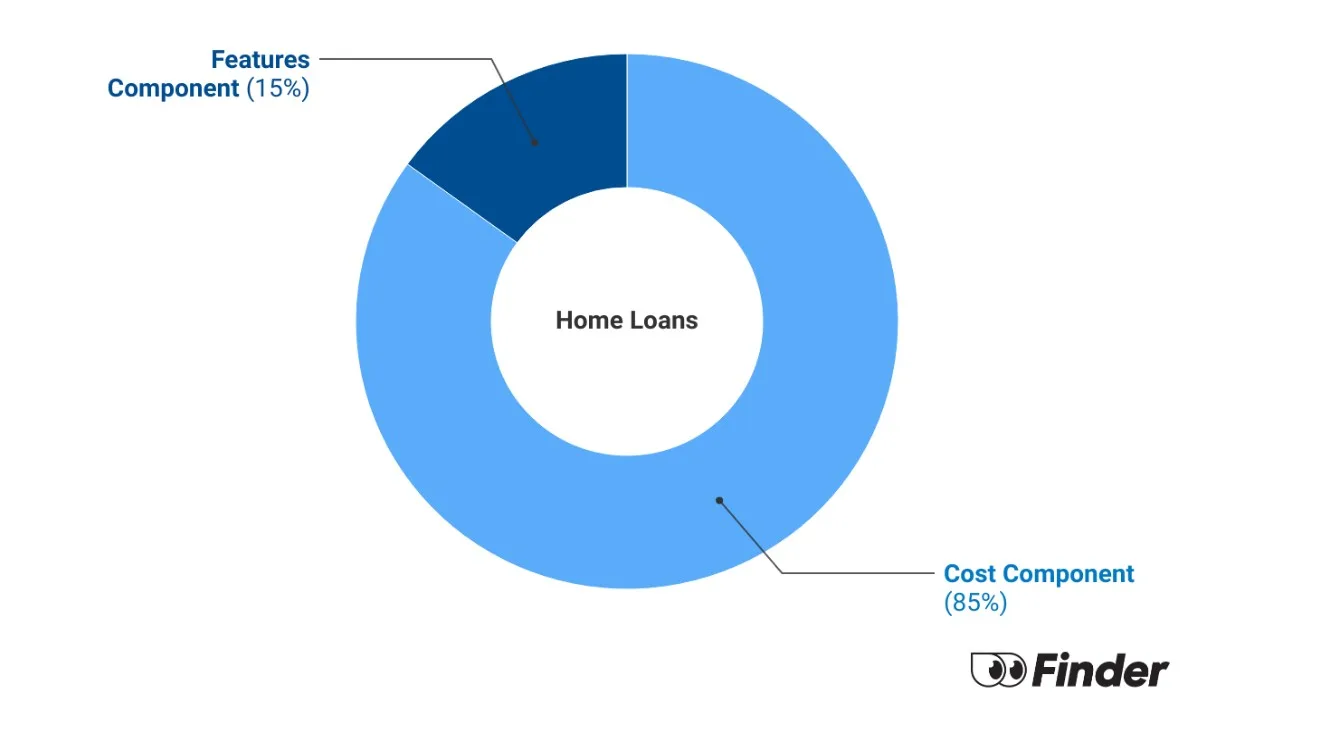
The Finder Score crunches 7,000 home loans across 120+ lenders. It takes into account the product's interest rate, fees and features, as well as the type of loan eg investor, variable, fixed rate - this gives you a simple score out of 10.
To provide a Score, we compare like-for-like loans. So if you're comparing the best home loans for cashback, you can see how each home loan stacks up against other home loans with the same borrower type, rate type and repayment type. We also take into consideration the amount of cashback offered when calculating the Score so you can tell if it's really worth it.
Richard Whitten is Finder’s Senior Money Editor, with over eight years of experience in home loans, property, credit cards and personal finance. His insights appear in top media outlets like Yahoo Finance, Money Magazine, and the Herald Sun, and he frequently offers expert commentary on television and radio, helping Australians navigate mortgages and property ownership. Richard started his career in education and textbook publishing in South Korea. He holds multiple industry certifications, including a Certificate IV in Mortgage Broking (RG 206) and Tier 1 and Tier 2 certifications (RG 146), as well as a Bachelor of Education from the University of Sydney and a Graduate Certificate in Communications from Deakin University.
See full bio
Richard's expertise
Richard
has written
792
Finder guides across topics including:
Hello, we have bought a block with cash with another couple. There is no money owed at all by anyone. There are two couples, four people on the title. We plan to build two townhouses and subdivide the block in half. The property would temporarily be on two titles. My question is- I have approx half the cash needed for the build. We will need to apply for a construction loan to obtain the additional funds to build the home. Is it possible to obtain a construction loan for our townhouse whilst there are four names on the title. Both couples are building at the same time using the same builder. Plans have been drawn up together and been passed at council together.
Thank you- I desperately need some suggestion about the best way to do this.
Sue
BalaMay 17, 2018
It is possible to get separate loans for the construction for both couples and you both will be responsible for your own portion of the loan repayments, provided we use the same lender and the same builder to build both properties, cross collateral will be required. Both couples will need to be guarantors on loans ie Couple A will need to be Guarantors on couple B loan and vice versa. Thanking you. Bala
Finder
MayMay 18, 2018Finder
Hi Bala,
Thanks for your inquiry.
The approval of your (and husband’s) separate construction loan will depend entirely on the lender based on their assessment of both of your overall financial situations, including but not limited to both your income, liabilities, assets, credit history, etc. In the case of guarantor loans, the lender will also assess if your guarantor also meets the criteria. Not sure though if you two can be a guarantor for each other’s loan. You can find a full guide on how a guarantor loan works.
I suggest that you speak to a mortgage broker who can take your circumstances into account as they can find a suitable construction loan for you and your husband.
Cheers,
May
Finder
MayApril 9, 2018Finder
Hi Sue,
Thank you for your question.
It would be best to speak to all the persons whose names are on the title so they would know that you’ll be using the title to secure a loan. I would suggest that you speak to the lender directly as well about this so they can arrange the mortgage according to your situation. In any case, best to get a legal advice on this too to avoid future problems.
Meantime, there are construction home loan brands listed above which you can contact with and discuss your options for a loan and your situation.
Cheers,
May
DionOctober 3, 2017
Hi Finder!
I am interested in buying land from an Estate, and once titles are received, build a house on top. What respective loans would I need to apply for to make this happen?
Thanks,
Dion
DanielleOctober 4, 2017
Hi Dion,
Thank you for contacting finder. We are a comparison website and general information service, we’re more than happy to offer general advice.
You are on the right page. You may review and compare the offers available on the table. Once you have selected one, you may proceed by clicking the green “Enquire Now” button. And if you scroll down you’ll find more information regarding these types of loans so it should serve as a reference guide.
I hope this helps.
Cheers,
Danielle
KenJuly 7, 2017
Hi Guys, I have purchased a property which I paid 20% deposit with a mortgage of $600K. I am currently drawing plans to build a new house on this block, I have $120K savings and need a further $450K to complete build, so total will be $1.05M. Will a bank lend us the 450K on existing mortgage to start building? Will they combine it once the build is complete? We will have no issue serving the size of the debt.
Cheers Ken
JonathanJuly 11, 2017
Hi Ken!
Thanks for the comment. :)
As long as your credit resources are able to meet the qualifications of the lenders, why not? As for combining the loans, usually it is not. You would have two separate mortgages if that happens, one regular home loan and another one for construction loan.
If this interests you, please learn more about mortgage brokers and how they can help you.
Hope this helps.
Cheers,
Jonathan
DavidMay 18, 2017
I want to build a house to create equity and sell it. I have only $60k in savings, but would need double that to meet the 80% LVR of what I have in mind. Are there any lenders for residential investors like me who will lend against the completed value of the property? This would solve my problem of having less than 20% as a deposit.
AnndyMay 28, 2017
Hi David,
Thanks for your question.
Kindly note that lenders that do offer owner builder mortgages will usually limit the loan amount to 60% of the total land value and construction cost. The lender will take into account the value of the vacant land as part of the valuation total. However, the actual completed value of the home is rarely taken into account when factoring in the value of the security property with owner builders.
You may have to directly get in touch with the lenders listed on the page to confirm if they consider the completed value of the property in connection to your loan application.
Cheers,
Anndy
LynNovember 4, 2016
I own a block of land outright and wish to build a house on it. The house cost will be somewhere around 160K of which I have 80K. Therefore the construction loan I require would be for 80K approx. The problem I have is that I am an aged pensioner. (67 yo). Is it still possible to get a loan?
Thanks
Finder
HaroldNovember 4, 2016Finder
Hello Lyn,
Thank you for your question.
There are possible options you may explore if you want to find home loans For pensioners. For eligibility requirements, some home loans will require you to meet certain eligibilities in order to take out that home loan. This may include a regular source of income, good credit history, and more. Pensioners in particular should compare the eligibility requirements of home loans because some may be more appropriate to apply for than others. Also, you may check pensioner loans if you wish to check other possible options.
Discover the renovations that add $100,000 to your house in Australia. From extra bedrooms to smart budget combinations, learn how to boost your home value.
Learn how to compare rates to find the best home loan and start saving money on your mortgage today.
Important information about this website
Finder is a comparison service. We do not compare every product or every provider in the market.
We make money through commercial arrangements with some of the providers on this site. Products marked 'Sponsored', 'Promoted', 'Featured' or 'Advertisement' appear as a result of a commercial arrangement.
Our editorial content, product reviews and any 'Top Pick' designations are prepared independently of these commercial arrangements.
The default order of products in our tables can be influenced by commercial arrangements. You can re-sort or filter using the controls above each table.
Some content on this site may be generated or supported by AI tools. You should verify details directly with the provider.
Finder is one of Australia's leading comparison websites. We are committed to our readers and stand by our editorial principles.
Our comparison service does not include every product or every provider in the market. Some product issuers offer their products under multiple brands or through associated companies. Where we can, we identify the underlying issuer so you can compare like with like, but you should always check with the provider directly to confirm which brand you are dealing with.
Finder is a comparison website and an intermediary. We are not a product issuer and we do not provide personal financial or credit advice. When you click a link to a product, or apply for a product through our site, you deal directly with the product issuer. We may receive a referral fee, commission or other payment from the issuer if you click through, apply or take out a product. We describe these arrangements in more detail under 'How we make money' below.
Product features, fees, terms and eligibility criteria are set by the product issuer and may change. We rely on information supplied by issuers when we present product details on our site. Before you apply for or take out any product, you should confirm the details directly with the issuer.
We earn revenue from Finder in four principal ways:
Referral fees and commissions. When you click a product link, complete an enquiry form or apply for a product through our site, we may receive a referral fee, commission or other payment from the product issuer. We may also receive payment based on the volume of leads or conversions we send to an issuer.
Sponsored placements. Products marked 'Sponsored', 'Promoted', 'Featured' or 'Advertisement' appear as a result of a commercial arrangement between Finder and the issuer. These labels always indicate a paid placement. We do not use them for editorial choices.
Display advertising. Banner advertising, newsletter advertising and similar display ads on our site are paid by advertisers.
Content sponsorship. Some articles, videos and social media posts are sponsored by an issuer and are clearly labelled as such.
Our editorial opinions, product reviews and any 'Top Pick' designations are prepared independently of these commercial arrangements. A 'Top Pick' is an editorial choice made by our writers and editors based on the criteria described on each comparison page. A 'Top Pick' is not a personal recommendation and does not mean the product is appropriate for your circumstances.
If you would like to know whether we have a commercial arrangement with a specific product issuer, please contact us.
When products are grouped in a table or list, the default order can be influenced by commercial arrangements we have with product issuers. In some categories, sponsored or featured products appear in the top positions of the table by default, and are always labelled as such.
Other factors that influence default order include price, fees and features, and (where relevant) our editorial view of the product.
You can re-sort every comparison table using the controls above the table. You can filter by product features that matter to you. The order you see after re-sorting or filtering is not influenced by commercial arrangements.
Some content on this site is generated or supported by artificial intelligence tools, including our AI-powered assistant FinderBot. AI-generated content may contain errors. Please verify important information directly with the product issuer before making a financial decision. For more information about FinderBot, see the FinderBot Terms of Use and FinderBot Privacy Collection Notice.
Please read our website terms of use and privacy policy for more information about our services and our approach to privacy.
We update our data regularly, but information can change between updates. Confirm details with the provider you're interested in before making a decision.
Our goal is to create the best possible product, and your thoughts, ideas and suggestions play a major role in helping us identify opportunities to improve.



Hello, we have bought a block with cash with another couple. There is no money owed at all by anyone. There are two couples, four people on the title. We plan to build two townhouses and subdivide the block in half. The property would temporarily be on two titles. My question is- I have approx half the cash needed for the build. We will need to apply for a construction loan to obtain the additional funds to build the home. Is it possible to obtain a construction loan for our townhouse whilst there are four names on the title. Both couples are building at the same time using the same builder. Plans have been drawn up together and been passed at council together.
Thank you- I desperately need some suggestion about the best way to do this.
Sue
It is possible to get separate loans for the construction for both couples and you both will be responsible for your own portion of the loan repayments, provided we use the same lender and the same builder to build both properties, cross collateral will be required. Both couples will need to be guarantors on loans ie Couple A will need to be Guarantors on couple B loan and vice versa. Thanking you. Bala
Hi Bala,
Thanks for your inquiry.
The approval of your (and husband’s) separate construction loan will depend entirely on the lender based on their assessment of both of your overall financial situations, including but not limited to both your income, liabilities, assets, credit history, etc. In the case of guarantor loans, the lender will also assess if your guarantor also meets the criteria. Not sure though if you two can be a guarantor for each other’s loan. You can find a full guide on how a guarantor loan works.
I suggest that you speak to a mortgage broker who can take your circumstances into account as they can find a suitable construction loan for you and your husband.
Cheers,
May
Hi Sue,
Thank you for your question.
It would be best to speak to all the persons whose names are on the title so they would know that you’ll be using the title to secure a loan. I would suggest that you speak to the lender directly as well about this so they can arrange the mortgage according to your situation. In any case, best to get a legal advice on this too to avoid future problems.
Meantime, there are construction home loan brands listed above which you can contact with and discuss your options for a loan and your situation.
Cheers,
May
Hi Finder!
I am interested in buying land from an Estate, and once titles are received, build a house on top. What respective loans would I need to apply for to make this happen?
Thanks,
Dion
Hi Dion,
Thank you for contacting finder. We are a comparison website and general information service, we’re more than happy to offer general advice.
You are on the right page. You may review and compare the offers available on the table. Once you have selected one, you may proceed by clicking the green “Enquire Now” button. And if you scroll down you’ll find more information regarding these types of loans so it should serve as a reference guide.
I hope this helps.
Cheers,
Danielle
Hi Guys, I have purchased a property which I paid 20% deposit with a mortgage of $600K. I am currently drawing plans to build a new house on this block, I have $120K savings and need a further $450K to complete build, so total will be $1.05M. Will a bank lend us the 450K on existing mortgage to start building? Will they combine it once the build is complete? We will have no issue serving the size of the debt.
Cheers Ken
Hi Ken!
Thanks for the comment. :)
As long as your credit resources are able to meet the qualifications of the lenders, why not? As for combining the loans, usually it is not. You would have two separate mortgages if that happens, one regular home loan and another one for construction loan.
If this interests you, please learn more about mortgage brokers and how they can help you.
Hope this helps.
Cheers,
Jonathan
I want to build a house to create equity and sell it. I have only $60k in savings, but would need double that to meet the 80% LVR of what I have in mind. Are there any lenders for residential investors like me who will lend against the completed value of the property? This would solve my problem of having less than 20% as a deposit.
Hi David,
Thanks for your question.
Kindly note that lenders that do offer owner builder mortgages will usually limit the loan amount to 60% of the total land value and construction cost. The lender will take into account the value of the vacant land as part of the valuation total. However, the actual completed value of the home is rarely taken into account when factoring in the value of the security property with owner builders.
You may have to directly get in touch with the lenders listed on the page to confirm if they consider the completed value of the property in connection to your loan application.
Cheers,
Anndy
I own a block of land outright and wish to build a house on it. The house cost will be somewhere around 160K of which I have 80K. Therefore the construction loan I require would be for 80K approx. The problem I have is that I am an aged pensioner. (67 yo). Is it still possible to get a loan?
Thanks
Hello Lyn,
Thank you for your question.
There are possible options you may explore if you want to find home loans For pensioners. For eligibility requirements, some home loans will require you to meet certain eligibilities in order to take out that home loan. This may include a regular source of income, good credit history, and more. Pensioners in particular should compare the eligibility requirements of home loans because some may be more appropriate to apply for than others. Also, you may check pensioner loans if you wish to check other possible options.
I hope that helps.
Cheers,
Harold