

These products offer great value, with a good score across both features and price.
7+
Great
These are competitive products, though they didn't quite get top scores.
5+
Standard
These products might offer less value or command a higher premium than others in the market.
0+
Basic
These products might only offer a basic set of features or aren't very competitive on price.
In some circumstances, you'll have to pay higher premiums, depending on your condition, but you should be able to get cover.
Am I covered by life insurance if I have a pacemaker?
Yes. All causes of death are generally covered by life insurance. You'll have to let the insurer know that you have a pacemaker, which may increase the amount you'll pay, depending on your condition, but you should be able to get cover.
Otherwise, they'll let you know. You can also check the product disclosure statement (PDS) for exclusions and ask the insurer directly.
Compare providers that cover pacemaker use
During the application process, it's important you let the insurer know about your pacemaker so that you can get cover tailored to your needs.
We currently don't have that product, but here are others to consider:
How we picked these
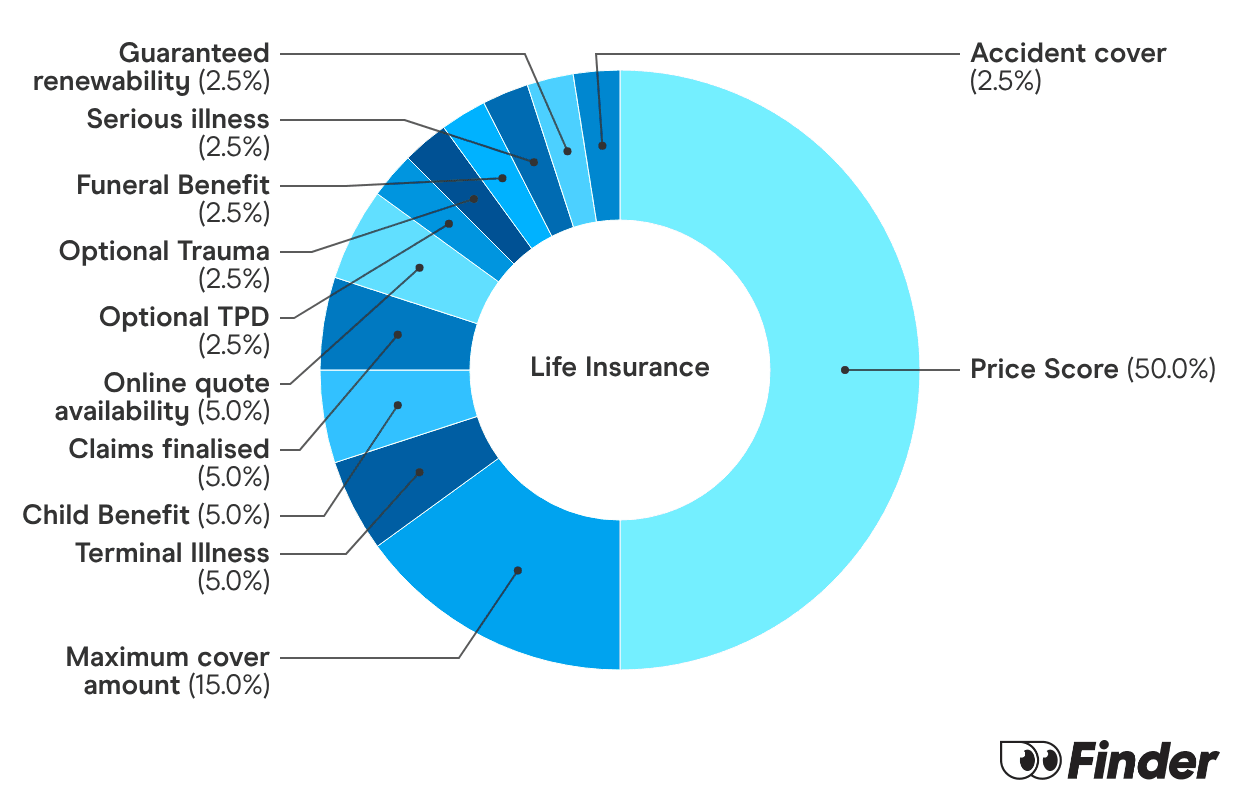
Finder Score - Life Insurance
Life Insurance is a little complicated and a lot overwhelming. That's why we made the Finder Score, to make it easier to compare Life Insurance products against each other. Our experts analysed over 30 products and gave each one a score out of 10.
But a higher score doesn't always mean a product is better for you. Your situation is unique, so your policy choice will be too. Don't think of Finder Score as the final word, but as a good place to start your life insurance comparison.
You pay the same price as buying directly from the life insurer.
We're not owned by an insurer (unlike other comparison sites).
We've done 100+ hours of policy research to help you understand what you're comparing.

Can I get life insurance if I have a pacemaker?
Yes, it's possible to get life insurance if you have a pacemaker, particularly if it's helping you to live a normal, healthy lifestyle. However, because most people have a pacemaker due to a heart condition, it's very likely you'll be charged more. If you're struggling to find cover, keep in mind:
How long you've had a pacemaker
The longer the better, provided that you've had no symptoms related to your heart condition. This is because life insurance providers want to know that the pacemaker has had a positive overall impact on your health.
You can speak to an adviser
Having an irregular heart rhythm and a pacemaker is considered a pre-existing medical condition. Advisers can be helpful because they know what to look for and they're not tied to one insurance provider.
Do I have to let my insurer know if I get a pacemaker while I have cover?
When you apply for a policy, your premiums are worked out based on your current health, lifestyle, age and job. If any of those things change once your policy has been accepted, which they inevitably will, you don't generally need to inform your insurer.
However, if you want to update or alter your policy – say you want to increase your life insurance benefit - then you will have to provide updated personal information, including that you've got a pacemaker.
Do I have to declare that I have a pacemaker before taking out cover?
✅ Yes. You need to let your insurer know about your pacemaker and heart condition or you risk invalidating your cover, meaning that any future claim you make will likely be rejected. It's crucial that you're honest.
When you take out life insurance, you'll usually have to provide a detailed account of your medical history. This often requires some kind of medical exam to assess your health. It's essentially to help the provider determine how much of a risk you are to insure and work out how much to charge you.
You'll also be asked questions about your:
Overall health
Diet, exercise, lifestyle
Condition history (e.g. how long you've had the condition and pacemaker)
Occupation
Is it worth getting life insurance if I have a pacemaker?
Absolutely. Having a pacemaker shouldn't necessarily make it a whole lot more difficult or expensive to get life insurance. If anything, it can show insurers that you've had a heart condition that is now stable thanks to the pacemaker, provided you've not had any symptoms for some time.
Even if the cost of your cover is increased marginally or considerably, life insurance is really important if you want peace of mind and financial security. It can pay off debts from your mortgage to your car loan and ensures that you're not leaving your loved ones in the lurch.
Getting life insurance if you have a pacemaker isn't as difficult as you might think. There are policies out there for you. 🔎 Begin comparing here.
FAQs about life insurance and pacemakers
When you apply for life insurance with a pacemaker, insurers will thoroughly review your medical history. They will look at the underlying heart condition that led to the pacemaker, how long you have had the device, your overall health, and any related symptoms or complications. They will also consider the results of your most recent medical check-ups and specialist reports. The goal is to understand the stability of your condition and the effectiveness of the pacemaker in managing it.
While it is less common to be declined solely for having a pacemaker, it can happen depending on the severity of your underlying heart condition, your overall health and the specific insurer’s guidelines. Insurers assess risk on a case-by-case basis. If you are declined by one insurer, it is advisable to speak to an insurance adviser who can help you find providers more willing to offer cover to individuals with pacemakers.
Insurers will typically request detailed information about your pacemaker and heart condition. This often includes the reason for its implantation, the date of insertion, the type of pacemaker, any related heart diagnoses like arrhythmia or heart failure, details of your last cardiologist visit and your current medication. They may also ask for medical reports, electrocardiograms (ECGs) or other cardiac test results to fully understand your health status.
It is possible for an insurer to apply specific exclusions related to your pacemaker or underlying heart condition. This means certain events or conditions directly linked to your pacemaker or heart issues may not be covered. For example, some policies might exclude claims arising from complications of the pacemaker itself or a worsening of the specific heart condition it treats. Always check the Product Disclosure Statement (PDS) and any policy terms carefully for such exclusions.
To find the most affordable life insurance with a pacemaker, compare quotes from multiple insurers. Being upfront and honest about your health condition is crucial. Providing comprehensive medical information and demonstrating a stable health history can help. Consider consulting a financial adviser or a specialist insurance broker who has experience with pre-existing conditions as they can navigate the market for you. Also, maintaining a healthy lifestyle can positively influence your premiums.
Generally, life insurance policies cover death from all causes, including complications arising from a medical device like a pacemaker, provided you fully disclosed your condition during the application. If the pacemaker-related complication leads to your death and it was not explicitly excluded from your policy, your beneficiaries should receive the payout. Always refer to your policy's Product Disclosure Statement (PDS) for specific coverage details and exclusions.
It is often beneficial to wait until your condition is stable and you have fully recovered from pacemaker surgery before applying for life insurance. Insurers prefer to see a period of stability, typically 6 to 12 months, where there have been no further complications or symptoms related to your heart condition or the pacemaker. This allows them to better assess the long term impact of the device on your health and potentially offer more favourable terms.
Once your life insurance policy is in force and you have fully disclosed your pacemaker and heart condition at the time of application, any subsequent worsening of that condition will generally not affect your existing cover or premiums. Your policy terms and conditions are locked in from the start. However, if you decide to increase your cover amount or make other significant changes to your policy, the insurer may reassess your health at that new point in time.
Gary Ross Hunter has over 6 years of expertise writing about insurance, including life, health, home, and car insurance. Having reviewed hundreds of product disclosure statements and published over 800 articles, he loves simplifying complex insurance topics for everyday readers. Gary has contributed to major outlets like Yahoo Finance, The Sydney Morning Herald, and news.com.au, and holds a Bachelor of Arts (Honours) in English Literature from the University of Glasgow, along with a Tier 2 General Advice certification, ensuring his work adheres to ASIC’s RG146 standards.
See full bio
Gary Ross's expertise
Gary Ross
has written
573
Finder guides across topics including:
Finder makes money from featured partners, but editorial opinions are our own.
Finder is one of Australia's leading comparison websites. We are committed to our readers and stand by our editorial principles.
We try to take an open and transparent approach and provide a broad-based comparison service. However, you should be aware that while we are an independently owned service, our comparison service does not include all providers or all products available in the market.
Some product issuers may provide products or offer services through multiple brands, associated companies or different labeling arrangements. This can make it difficult for consumers to compare alternatives or identify the companies behind the products. However, we aim to provide information to enable consumers to understand these issues.
We make money by featuring products on our site. Compensation received from the providers featured on our site can influence which products we write about as well as where and how products appear on our page, but the order or placement of these products does not influence our assessment or opinions of them, nor is it an endorsement or recommendation for them.
Products marked as 'Top Pick', 'Promoted' or 'Advertisement' are prominently displayed either as a result of a commercial advertising arrangement or to highlight a particular product, provider or feature. Finder may receive remuneration from the Provider if you click on the related link, purchase or enquire about the product. Finder's decision to show a 'promoted' product is neither a recommendation that the product is appropriate for you nor an indication that the product is the best in its category. We encourage you to use the tools and information we provide to compare your options.
Where our site links to particular products or displays 'Go to site' buttons, we may receive a commission, referral fee or payment when you click on those buttons or apply for a product.
When products are grouped in a table or list, the order in which they are initially sorted may be influenced by a range of factors including price, fees and discounts; commercial partnerships; product features; and brand popularity. We provide tools so you can sort and filter these lists to highlight features that matter to you.
Please read our website terms of use and privacy policy for more information about our services and our approach to privacy.
We update our data regularly, but information can change between updates. Confirm details with the provider you're interested in before making a decision.
How likely would you be to recommend Finder to a friend or colleague?
0
1
2
3
4
5
6
7
8
9
10
Very UnlikelyExtremely Likely
Required
Thank you for your feedback.
Our goal is to create the best possible product, and your thoughts, ideas and suggestions play a major role in helping us identify opportunities to improve.