Find the right insurance for you
This super-quick quiz takes less than 1 minute ⚡



It's a question almost every Australian asks themselves at one point or another. The truth is, whether or not you need life insurance depends on your circumstances.
For some people, getting life insurance ends up being one of the best decisions they ever make.
That's because life insurance is there to help when things go seriously awry. It can cover medical bills if you get sick and keep a roof over your head if you can't pay the mortgage.
It can also give you the financial freedom to focus on getting better after an injury and make sure your family is well looked after in the event of your death.
Yes, life insurance comes at a cost, but it might not be as pricey as you think. A healthy 40-year-old can easily get $200,000 cover for around $10 a month.
Life insurance can give you peace of mind that you'll be able to afford the bills if you can no longer work due to illness or injury. That means you can focus on getting better, instead of worrying about falling into debt.
If your family would struggle to get by without your income, life insurance can give them a financial safety net. It could cover your children's school fees, let them stay in the family home or even pay for life's everyday expenses.
Life insurance can pay for rehabilitation and private healthcare costs if you suffer a serious accident or critical illness. It can cover the cost of installing medical equipment in your home and ensure you get the best care possible.
Life insurance can pay for home renovations if your mobility changes or for a carer so you can maintain independence. It can also pay out if you're diagnosed with a terminal illness, so you can spend the money making the most of the time you have left.
Despite what you may have heard in the media, relatively few life insurance claims are denied. Studies from ASIC and APRA show that over 90% of all life insurance claims are paid by Australian insurers.
Many life insurers include premium loading fees in their quotes. A loading fee is a percentage added into the cost of your premium. It's based on your level of risk according to the insurer and how likely you are to make a claim. For example, if you smoke, drink heavily or have a pre-existing condition, you may be subject to a higher than average premium.
There are lots of different motivations for buying life insurance. Some of the main reasons are:

"If you have someone who is relying on your income, then life insurance is particularly important. And not just kids. This can include elderly parents or a partner. No one is ever really prepared for life's harsh surprises, but insurance can help soften the blow."
Life insurance is an umbrella term which covers several different types of insurance. You can buy standalone policies or bundle them together for more comprehensive cover. The six main types of life insurance are:

Pays a lump sum benefit to your family in the event of your death or to you if you are diagnosed with a terminal illness.

Pays a monthly benefit to you if you are unable to work due to illness or injury. It's designed to replace a portion of your regular income.

Pays a lump sum benefit if you're diagnosed with a specific medical condition, such as major head trauma, stroke or heart attack.

Pays a lump sum benefit if an injury or illness renders you totally and permanently disabled. May pay a partial benefit if you are partially disabled.

Pays a lump sum benefit to your family so they can cover the cost of your funeral after your death.

Sometimes called personal accident insurance, it provides a lump sum benefit if you are injured or killed accidentally. This does not include cover for illness.
While over 90% of life insurance claims are approved, there are a few circumstances where cover may be rejected or excluded:
Although life insurance is a worthwhile investment for lots of people, there are some situations in which it's just not necessary. We'd encourage you to think twice about life insurance if any of the following apply to you:
In some situations, yes. Remember, life insurance doesn't just pay out when you die, it can also pay out if you're seriously injured or fall critically ill. Single people can see lots of benefits from a life insurance payment, including:
If you die without a life insurance policy in place, your family would need to find alternative funds to cover the cost of everyday expenses. Unless your family has a significant amount of savings, this could be a major financial burden in an already stressful situation.
Life insurance is designed to assist with major and everyday costs, including mortgage repayments, rent, utility bills and groceries. It's a massive financial safety net for your family, so they can continue to live comfortably during a time you are no longer around.
That depends entirely on your own personal circumstances. The cost of life insurance varies depending on lots of different factors, including your age, overall health and chosen coverage amount. That's why it's so important to get a quote, before you decide whether it's worth it.
If you have financial commitments, such as a mortgage, which you wouldn't be able to cover without your income, life insurance is a good idea. Particularly if you have children who are financially dependent or your partner relies on your income.
However, if you're a senior with poor health, your life insurance policy will be more expensive than that of a healthy young person. If your kids and partner are financially independent or you have investments that would provide income even after you could no longer work, you may decide the regular premiums just aren't worth it.
Of course, the decision is entirely up to you. Everyone's personal circumstances are different and we can't tell you what's right in your case.
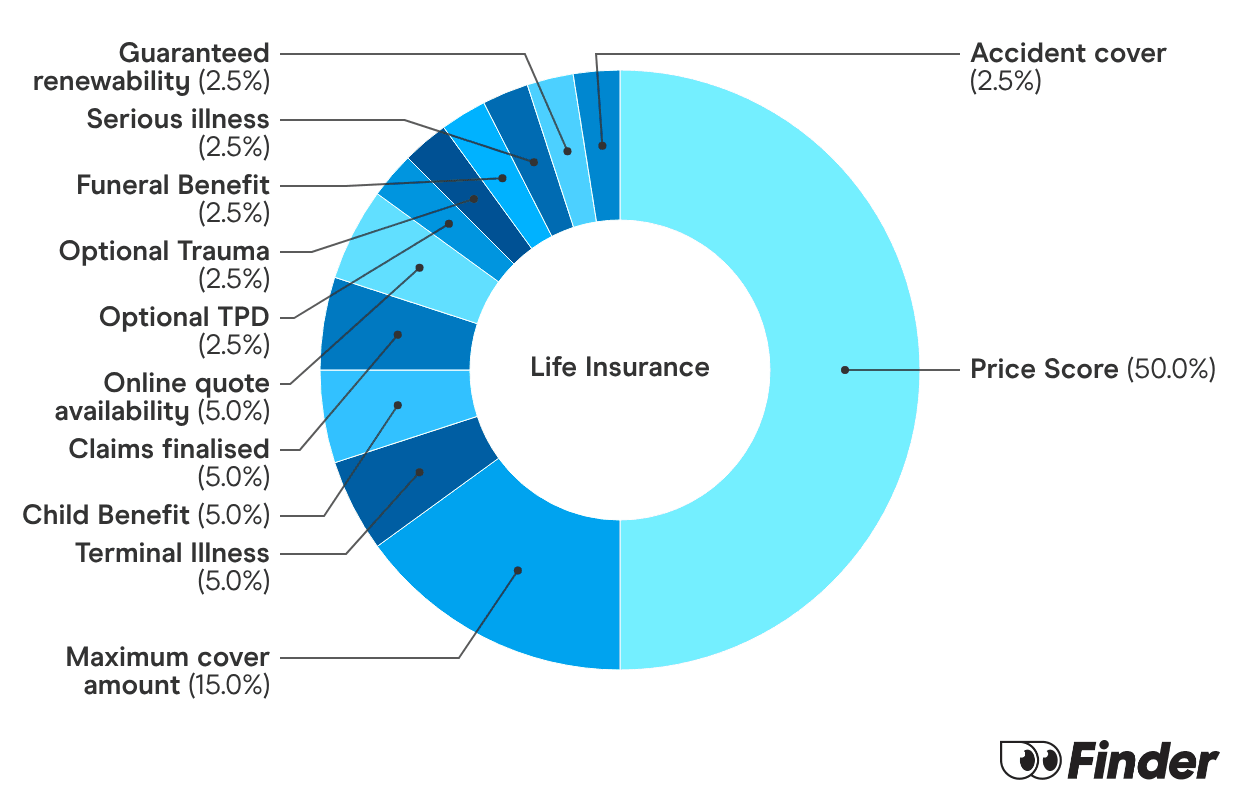
Life Insurance is a little complicated and a lot overwhelming. That's why we made the Finder Score, to make it easier to compare Life Insurance products against each other. Our experts analysed over 30 products and gave each one a score out of 10.
But a higher score doesn't always mean a product is better for you. Your situation is unique, so your policy choice will be too. Don't think of Finder Score as the final word, but as a good place to start your life insurance comparison.
You pay the same price as buying directly from the life insurer.
We're not owned by an insurer (unlike other comparison sites).
We've done 100+ hours of policy research to help you understand what you're comparing.
Read our comprehensive guide to finding the best life insurance policy for your situation.
Find out how term life insurance actually works and receive quotes for cover securely.
Read our comprehensive review of ahm Life Insurance to find out if it's right for you.
Personal insurance provides security against the unfortunate events in life including serious illnesses and death.
With HCF life insurance products, you can benefit from flexibility and peace of mind given the range of policies to choose from.
NEOS life insurance is the new provider aiming to make insurance easier, simpler and better. See if it’s right for you.
Is ClearView life insurance the right option for you? Find out with our latest review.
Are you a farmer? See how life insurance for farmers can protect you and your family.
Find out how life insurance can cover your children in case anything happens to you.
Review the Australian Seniors Life and compare options available.