The best overall home loan for first home buyers in September 2026 is the Unity Bank First Home Buyer home loan. But you should compare all options against your own needs.
First home buyers find saving for a deposit the biggest barrier to buying a home, but there are other costs to be aware of.
There are several grants, schemes and concessions available to help first home buyers buy property.
Best home loan pick for first home buyers in September 2026
What makes a good first home buyer loan?
A good first home buyer loan will be different for different first home buyers. It can depend on how much deposit you've saved up, what your financial goals are and what you're planning to do with the property.
For example, someone buying a home to live in for the long-term will want a different home loan to someone planning to rent out the home and then sell in a couple of years.
Although most home loans are available for both first-time buyers and existing borrowers who want to refinance, there are features to look out for to know whether they are better suited for first home buyers. There are also some home loans which are specific to first home buyers.
How to find the best home loan as a first home buyer
First home buyers, like all other borrowers, are trying to get approved for a home loan that suits their needs, without paying more than they need to.
Although our best home loan for first home buyers above is a great solution, there's no one-size-fits-all and so it won't be the best for everyone.
Here's how to find the best loan for you:
Deposit size: As a first home buyer you're more likely to want to borrow with a lower deposit. Many lenders offer as little as 10%, which you'll see listed in the table above. Many lenders are part of first home buyer schemes where you could get a loan with a 5% deposit.
Interest rates: The lower your interest rate, the lower your repayments.
Loan purpose: Whether an owner occupier loan or an investment loan is right for you depends on your goals. Make sure you get the right loan based on whether you're going to live in the home or rent it out.
High Finder Score: The loans in the table above are selected for first home buyers. Those with a Finder Score of above 9 are the best loans with a combination of lower costs and good features.
Fixed vs variable.Variable rate loans typically offer more features and flexibility, as well as access features to like an offset account (more on that in a moment). With a fixed rate loan, you have the certainty of knowing your repayments will never move up (or down) during the fixed period, but it's hard to make changes if you need to.
Features: Making sure your home loan has a redraw facility or an offset account attached to the home loan can be a great way to attack your home loan early.
Low or no fees: No one wants to pay even more money by having to pay fees, just don't get sucked in by no fees with a high interest rate.
Cashback offers: A cashback offer is by no means something you should make your home loan decision on. But if you've found 2 identical home loans that will save you money over the long run and it offers a cashback, it can be a really useful cash injection to help you in the early days of homeownership.
First home buyer fears
Fear of missing out is a big factor driving Australian first home buyers. Many buyers say they're concerned they'll miss out if they don't enter the market soon. A reasonable fear given how much property prices seem to rise. 38% of first home buyers in 2025 say their decisions are influenced by this fear, up from 31% in 2022.
Your deposit is usually the biggest cost, but there are other costs to consider when you buy a home:
Stamp duty. Every property purchase attracts stamp duty, a tax charged by state and territory governments. Stamp duty can add thousands or tens of thousands of dollars to your purchase costs. Luckily, many first home buyers can get a discount or exemption if they're buying their first home.
Lenders mortgage insurance (LMI). The LMI premium costs thousands and is usually payable when you have a deposit worth less than 20% of the purchase price (we'll deep-dive this in a moment).
Inspections. While not compulsory, getting a professional building and pest inspection before buying a property is always a good idea.
Conveyancing. You need a legal expert to review your contract of sale (for the property purchase), check the property title is correct and represent you at settlement. The services of a conveyancer or lawyer can cost $1,000–$2,000.
Bank and government fees. There's a government fee to register your mortgage and your lender may charge other upfront fees, like an application fee or valuation fee.
Insurance. You need to take out a home insurance policy on your home before settlement occurs and you take ownership of the property. If you're buying a strata property (an apartment or townhouse), strata insurance is usually included in the strata fees and covers the building.
How much can you afford to borrow for your first home loan?
You can use a borrowing power calculator like the one below to get an estimate of how much a bank will lend you.
Enter your income (and your partner's income if making a joint application), plus the number of dependants and any debts you have. The calculator will estimate your expenses using a standard cost of living index.
Although it is generally thought that you need to save a 20% deposit, you actually can get a home loan with as little as 10%. As a first home buyer you might even be able to take advantage of schemes where you can use as little as 5%.
Here are some tips on saving for your property deposit, but you can also visit our full guide for more in-depth tips:
Work out your borrowing power. Once you've worked out how much you're likely to be able to borrow, you can calculate your required deposit size.
Set a serious budget. You'll need to go through your bank statements, take stock of how you spend currently and limit yourself to a certain budget each month. Put everything into a high interest savings account separate from your disposable income.
See what help you can get. Whether that's assistance from family or researching the various government grants and schemes.
Look for other ways to cut back. For anything you can't cut out of your budget, see if you can switch to cheaper plans, benefit from store rewards programs and keep easy, low-cost junk food in the freezer for those days you're tempted by Uber Eats.
Expert insight: Prepare for financial responsibilities beyond the deposit
"How good are you at managing your expenses and building up savings? If you've gotten into bad spending habits and money feels a little out of control, imagine how much worse it would feel with a giant mortgage hanging over your head.
People spend an average of 30% of their income on a mortgage, but to get ahead, you should plan to still save 20% of your income as well. This will set you apart in the long run.
[And] my advice to parents thinking about putting their property on the line for their kids would be to make sure the kids are good savers first."
Max Phelps
Founder of Golden Eggs and creator of the Five 2 Money Diet
Loan to value ratio (LVR) is a fancy mortgage term for your deposit size in relation to your property's value. For example:
If you bought a $500,000 property
With a $100,000 deposit
That would be a 20% deposit, or 80% LVR
Having a 20% deposit means you can avoid paying LMI.
Lenders mortgage insurance (LMI)
If your deposit is smaller than 20% of the property's value, your lender will charge you LMI. This is to cover the lender in case you're unable to repay your home loan.
LMI can cost you thousands or tens of thousands on top of all your other expenses (although you can often borrow it alongside your loan amount).
LMI costs vary depending on your loan amount and deposit size. If your LVR is 85% (a 15% deposit) then your LMI will be less than if you have an LVR of 95% with a 5% deposit.
First home buyers in Australia have access to a large (and sometimes confusing) range of state and federal grants, concessions and other schemes.
Eligibility for these programs depends on things like the property value, your location and whether it's newly built or already exists. Every state and territory has different rules and policies.
First home owner grants
Some first-time buyers are eligible for a cash grant. These grants can run up to $10,000 or even more in some cases. To qualify, you often need to be purchasing a new or off-the-plan property, with a limit on the overall value of the property. These grants differ in every state and territory.
Stamp duty is one of the biggest costs associated with buying a property. Luckily, many first-time buyers can avoid stamp duty completely or get a discount on this tax. In NSW, for example, eligible first home buyers don't have to pay stamp duty on properties valued below $800,000.
If you only have a 5% deposit saved and you're a first home buyer, you could be eligible for the First Home Guarantee. Under this federal scheme, eligible borrowers can borrow 95% of their property value with a 5% deposit and have the government guarantee the remaining 15% of the deposit, allowing them to avoid LMI costs.
The First Home Super Saver Scheme
Another federal scheme, the First Home Super Saver Scheme allows first home buyers to make extra payments into their superannuation and then withdraw them to use for a home deposit. This ends up saving you in tax while helping you build your deposit.
Family Home Guarantee
Up to 10,000 single parents (2,500 per year for 4 years) are eligible to buy a home with a deposit of just 2%, under the government's Family Home Guarantee, announced as part of the 2021 Federal Budget in May. This means for the purchase of a property worth $700,000, the homebuyer will need to save a deposit of just $14,000.
Regional Home Guarantee
The Regional Home Guarantee lets you buy or build a new home in regional Australia with a 5% deposit while avoiding LMI costs.
Frequently asked questions about first home buyer loans
While some lenders offer home loan products specifically for first home buyers, most do not. But an ideal mortgage product for a first home buyer usually:
Has a low interest rate. No one wants to be stuck with a high interest rate, especially first home buyers. A lower rate means lower repayments, making your mortgage more affordable.
Requires a 10% deposit (or lower). Saving a deposit is often one of the hardest challenges for first home buyers. Loans targeting first home buyers often have a maximum insured LVR of 90–95%, meaning you can get the loan with just a 5–10% deposit. But you'll need to pay LMI if you're borrowing above 80%.
Has principal and interest repayments. With these home loans you repay the principal and the interest together. These loans often have lower interest rates too. But you could also consider an interest-only loan. Your rate will be higher but your repayments will be lower (in the short term).
First home owner grants and stamp duty concessions vary within each state and change over time.
In NSW first home buyers don't have to pay stamp duty on properties valued below $650,000, saving them up to $22,000. But first home buyers constructing or purchasing new homes can also receive a $10,000 grant (depending on the value of their property). In Victoria the grant can go as high as $20,000 if you're buying a new residential property outside Melbourne.
If you only have 5% saved and you're a first home buyer you could be eligible for the First Home Loan Deposit Scheme. Under this scheme eligible borrowers can borrow 95% of their property value with a 5% deposit and have the government guarantee the remaining 15% of the deposit, allowing them to avoid LMI costs.
Building that deposit for your first home is tough, especially if you're renting. And when house prices rise the amount you need to save only grows. Finding a low deposit home loan can make the task easier. But there are a few other ways to build your deposit:
Parental gift or inheritance. Most lenders want to see genuine savings. In other words, money you've earned yourself. But many will accept at least part of a deposit in the form of a cash gift or inheritance from your parents. Some lenders only need 5% of your deposit to be genuine savings.
Sell assets. You can sell valuable assets and use the cash to boost your deposit. You may need to hold the cash in your account for 6 months in order for it to quality as genuine savings.
Find a guarantor. As mentioned above, a parent can use their property as security to guarantee part of your deposit. This reduces the amount you have to save and might help you avoid LMI costs too.
You certainly can. Mortgage brokers are experts who have access to home loans from a panel of lenders. They can suggest suitable options for you and help you with the whole application process. Their services are usually free. While most people are perfectly capable of getting their own home loan, a broker can be a useful guide.
These home loans offer low costs, coupled with a host of features, giving the best overall value.
7+
Great
These home loans may have slightly higher interest rates or fewer features but overall, a competitive offering.
5+
Standard
Usually the home loans would offer above average rates. They may still include some competitive features.
0+
Basic
Higher costs and/or fewer features.
What is Finder Score?
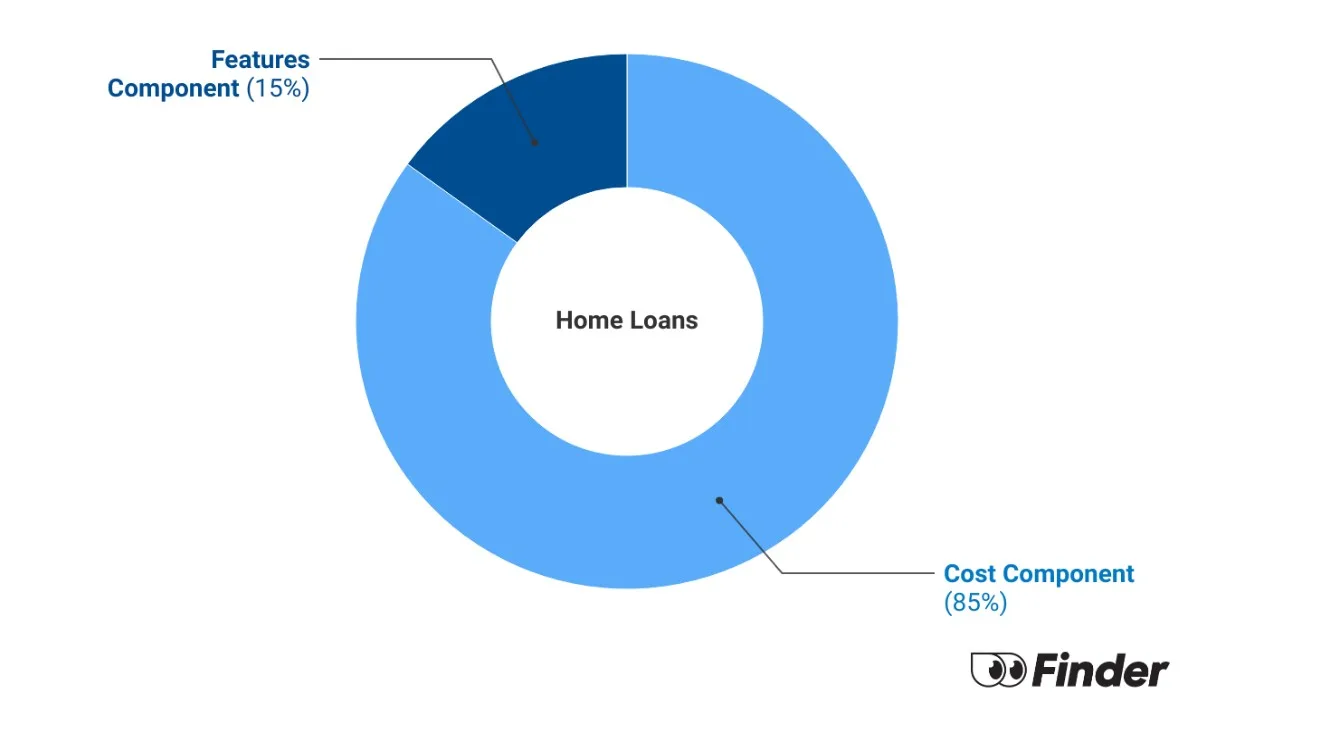
The Finder Score crunches 7,000 home loans across 120+ lenders. It takes into account the product's interest rate, fees and features, as well as the type of loan eg investor, variable, fixed rate - this gives you a simple score out of 10.
To provide a Score, we compare like-for-like loans. So if you're comparing the best home loans for cashback, you can see how each home loan stacks up against other home loans with the same borrower type, rate type and repayment type. We also take into consideration the amount of cashback offered when calculating the Score so you can tell if it's really worth it.
Richard Whitten is Finder’s Senior Money Editor, with over eight years of experience in home loans, property, credit cards and personal finance. His insights appear in top media outlets like Yahoo Finance, Money Magazine, and the Herald Sun, and he frequently offers expert commentary on television and radio, helping Australians navigate mortgages and property ownership. Richard started his career in education and textbook publishing in South Korea. He holds multiple industry certifications, including a Certificate IV in Mortgage Broking (RG 206) and Tier 1 and Tier 2 certifications (RG 146), as well as a Bachelor of Education from the University of Sydney and a Graduate Certificate in Communications from Deakin University.
See full bio
Richard's expertise
Richard
has written
790
Finder guides across topics including:
Sarah is the author of How to Raise Rich Kids. With over 20 years of experience in property, finance and investment journalism, she is a trusted expert whose insights regularly appear across television, radio and print media, including Sunrise, Channel 7 News, Bloomberg and Yahoo! Finance. She has previously served as managing editor for Your Investment Property and Australian Broker. Her expert advice has been shared in the media over 4,000 times. Sarah holds a Bachelor’s degree in Communications and a Tier 1 Generic Knowledge certification, which complies with ASIC standards.
See full bio
Sarah's expertise
Sarah
has written
251
Finder guides across topics including:
If the Veda Score is 560-590 -Will the lenders reject the loan application?
Finder
RichardJanuary 9, 2024Finder
A lender will review your credit score but it’s only one part of the home loan application. Lenders also consider your income, spending, and the size of the loan. However, you put yourself in a better position if you can improve your credit score by doing things like lowering your credit card limits, paying off any missed or late payments and challenging any errors on your credit report.
RSSLMarch 13, 2023
My parents have offered to help us in getting into the house market by being guarantors for my husband & I. Would this be possible if they still have a small mortgage to pay and currently on the pension & unemployment benefit?
Finder
RichardMarch 16, 2023Finder
It might be harder for them to act as guarantors but if the mortgage is small it might be possible. It really depends on the lender and its lending criteria.
BriOctober 2, 2017
Hi team,
My fiance and I are looking to go into partnership to buy a property with a family friend. The family friend has good borrowing capacity and will be getting a loan to buy the property, so the title will be in his name, but we are wondering if it is possible to enter into a vendor finance agreement with our family friend to buy a portion of the property while he is still paying off the loan to the bank?
Ideally, we would like to buy a portion of the property and also be on the title without having to subdivide. Is this possible?
We are also wondering if my fiance and I will qualify for the First Home Owners grant and the exception for stamp duty if we go into a vendor finance agreement? We do intend to build our first home.
Thank you!
Finder
JoanneOctober 3, 2017Finder
Hi Bri,
Thanks for reaching out to Finder.
With regard to the option of entering into a vendor finance agreement, it would help you buy a property without having to apply for a bank loan, but there are some major risks involved, including the big risk of losing your home.
The same fees and taxes are payable with vendor finance as they would be with a standard home loan. So the amount of stamp duty payable will vary depending on which state you live in and the value of the property.
To sum it up, if you’re thinking of purchasing a property through vendor finance, you should seek a solicitor to run you through the process and legal considerations so that you may be guided accordingly.
Cheers,
Joanne
JoelJune 19, 2017
Hi, I was wondering if I buy an investment property, whether or not i can claim the fist
home buyers on my second home that I will live in? I live in Victoria.
JonathanJune 20, 2017
Hi Joel!
Thanks for the comment.
These are the guidelines for those who wish to claim FHOG on an investment property in Victoria:
Victoria’s State Revenue Office is responsible for offering the $10,000 grant to applicants buying or building their first new home. To be eligible for the grant, you must not have:
– Received a First Home Owner Grant in Australia
– Owned a home in Australia, either jointly or separately, prior to 1 July 2000
– Occupied an Australian home in which either of you acquired a relevant interest on or after 1 July 2000 for at least six continuous months
So if you purchased your investment property on or after 1 July 2000 and you didn’t live in it for a period of six consecutive months, you may be eligible for the FHOG.
You may check the other eligibility criteria for more information.
Alternatively, you may also contact your local state revenue office for clarification.
Hope this helps.
Cheers,
Jonathan
KatheyApril 19, 2017
What is the best search engine in the world?
Finder
HaroldApril 19, 2017Finder
Hi Kathey,
Thank you for your inquiry.
Unfortunately, we cannot recommend what is best for you. Our company finder.com.au is a financial comparison website and general information service designed to help consumers to make a better decision. Please note we do not represent any company we feature on our pages.
However, at the time of this writing, there are three major search engines on the web today. That would be Google, Yahoo, and Bing. I would recommend you check each of them and see which would best meet your needs and preference.
Finder is a comparison service. We do not compare every product or every provider in the market.
We make money through commercial arrangements with some of the providers on this site. Products marked 'Sponsored', 'Promoted', 'Featured' or 'Advertisement' appear as a result of a commercial arrangement.
Our editorial content, product reviews and any 'Top Pick' designations are prepared independently of these commercial arrangements.
The default order of products in our tables can be influenced by commercial arrangements. You can re-sort or filter using the controls above each table.
Some content on this site may be generated or supported by AI tools. You should verify details directly with the provider.
Finder is one of Australia's leading comparison websites. We are committed to our readers and stand by our editorial principles.
Our comparison service does not include every product or every provider in the market. Some product issuers offer their products under multiple brands or through associated companies. Where we can, we identify the underlying issuer so you can compare like with like, but you should always check with the provider directly to confirm which brand you are dealing with.
Finder is a comparison website and an intermediary. We are not a product issuer and we do not provide personal financial or credit advice. When you click a link to a product, or apply for a product through our site, you deal directly with the product issuer. We may receive a referral fee, commission or other payment from the issuer if you click through, apply or take out a product. We describe these arrangements in more detail under 'How we make money' below.
Product features, fees, terms and eligibility criteria are set by the product issuer and may change. We rely on information supplied by issuers when we present product details on our site. Before you apply for or take out any product, you should confirm the details directly with the issuer.
We earn revenue from Finder in four principal ways:
Referral fees and commissions. When you click a product link, complete an enquiry form or apply for a product through our site, we may receive a referral fee, commission or other payment from the product issuer. We may also receive payment based on the volume of leads or conversions we send to an issuer.
Sponsored placements. Products marked 'Sponsored', 'Promoted', 'Featured' or 'Advertisement' appear as a result of a commercial arrangement between Finder and the issuer. These labels always indicate a paid placement. We do not use them for editorial choices.
Display advertising. Banner advertising, newsletter advertising and similar display ads on our site are paid by advertisers.
Content sponsorship. Some articles, videos and social media posts are sponsored by an issuer and are clearly labelled as such.
Our editorial opinions, product reviews and any 'Top Pick' designations are prepared independently of these commercial arrangements. A 'Top Pick' is an editorial choice made by our writers and editors based on the criteria described on each comparison page. A 'Top Pick' is not a personal recommendation and does not mean the product is appropriate for your circumstances.
If you would like to know whether we have a commercial arrangement with a specific product issuer, please contact us.
When products are grouped in a table or list, the default order can be influenced by commercial arrangements we have with product issuers. In some categories, sponsored or featured products appear in the top positions of the table by default, and are always labelled as such.
Other factors that influence default order include price, fees and features, and (where relevant) our editorial view of the product.
You can re-sort every comparison table using the controls above the table. You can filter by product features that matter to you. The order you see after re-sorting or filtering is not influenced by commercial arrangements.
Some content on this site is generated or supported by artificial intelligence tools, including our AI-powered assistant FinderBot. AI-generated content may contain errors. Please verify important information directly with the product issuer before making a financial decision. For more information about FinderBot, see the FinderBot Terms of Use and FinderBot Privacy Collection Notice.
Please read our website terms of use and privacy policy for more information about our services and our approach to privacy.
We update our data regularly, but information can change between updates. Confirm details with the provider you're interested in before making a decision.
Our goal is to create the best possible product, and your thoughts, ideas and suggestions play a major role in helping us identify opportunities to improve.




If the Veda Score is 560-590 -Will the lenders reject the loan application?
A lender will review your credit score but it’s only one part of the home loan application. Lenders also consider your income, spending, and the size of the loan. However, you put yourself in a better position if you can improve your credit score by doing things like lowering your credit card limits, paying off any missed or late payments and challenging any errors on your credit report.
My parents have offered to help us in getting into the house market by being guarantors for my husband & I. Would this be possible if they still have a small mortgage to pay and currently on the pension & unemployment benefit?
It might be harder for them to act as guarantors but if the mortgage is small it might be possible. It really depends on the lender and its lending criteria.
Hi team,
My fiance and I are looking to go into partnership to buy a property with a family friend. The family friend has good borrowing capacity and will be getting a loan to buy the property, so the title will be in his name, but we are wondering if it is possible to enter into a vendor finance agreement with our family friend to buy a portion of the property while he is still paying off the loan to the bank?
Ideally, we would like to buy a portion of the property and also be on the title without having to subdivide. Is this possible?
We are also wondering if my fiance and I will qualify for the First Home Owners grant and the exception for stamp duty if we go into a vendor finance agreement? We do intend to build our first home.
Thank you!
Hi Bri,
Thanks for reaching out to Finder.
With regard to the option of entering into a vendor finance agreement, it would help you buy a property without having to apply for a bank loan, but there are some major risks involved, including the big risk of losing your home.
The same fees and taxes are payable with vendor finance as they would be with a standard home loan. So the amount of stamp duty payable will vary depending on which state you live in and the value of the property.
To sum it up, if you’re thinking of purchasing a property through vendor finance, you should seek a solicitor to run you through the process and legal considerations so that you may be guided accordingly.
Cheers,
Joanne
Hi, I was wondering if I buy an investment property, whether or not i can claim the fist
home buyers on my second home that I will live in? I live in Victoria.
Hi Joel!
Thanks for the comment.
These are the guidelines for those who wish to claim FHOG on an investment property in Victoria:
Victoria’s State Revenue Office is responsible for offering the $10,000 grant to applicants buying or building their first new home. To be eligible for the grant, you must not have:
– Received a First Home Owner Grant in Australia
– Owned a home in Australia, either jointly or separately, prior to 1 July 2000
– Occupied an Australian home in which either of you acquired a relevant interest on or after 1 July 2000 for at least six continuous months
So if you purchased your investment property on or after 1 July 2000 and you didn’t live in it for a period of six consecutive months, you may be eligible for the FHOG.
You may check the other eligibility criteria for more information.
Alternatively, you may also contact your local state revenue office for clarification.
Hope this helps.
Cheers,
Jonathan
What is the best search engine in the world?
Hi Kathey,
Thank you for your inquiry.
Unfortunately, we cannot recommend what is best for you. Our company finder.com.au is a financial comparison website and general information service designed to help consumers to make a better decision. Please note we do not represent any company we feature on our pages.
However, at the time of this writing, there are three major search engines on the web today. That would be Google, Yahoo, and Bing. I would recommend you check each of them and see which would best meet your needs and preference.
Regards,
Harold