Bridging Loans
Bridging loans or bridging finance covers the gap between buying your new property and selling your old one.

We currently don't have that product, but here are others to consider:
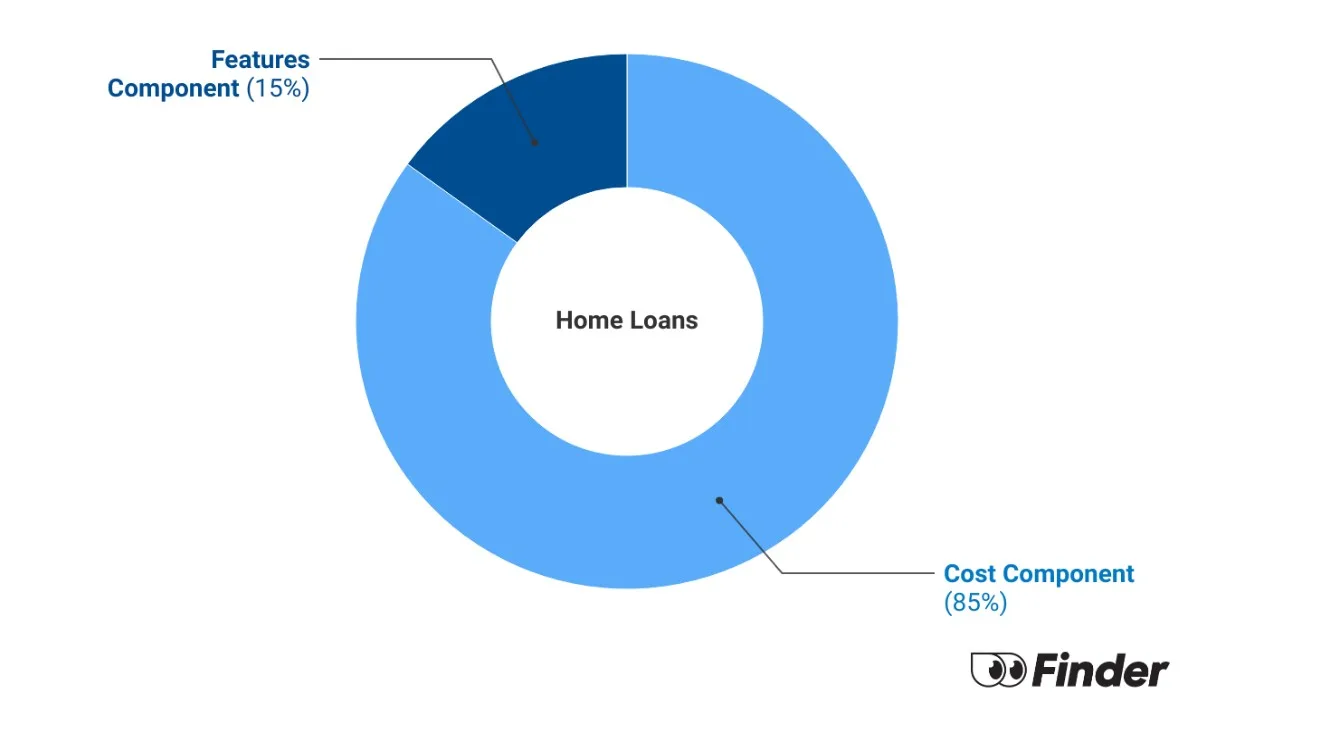
How we picked theseThe Finder Score crunches 7,000 home loans across 120+ lenders. It takes into account the product's interest rate, fees and features, as well as the type of loan eg investor, variable, fixed rate - this gives you a simple score out of 10.
To provide a Score, we compare like-for-like loans. So if you're comparing the best home loans for cashback, you can see how each home loan stacks up against other home loans with the same borrower type, rate type and repayment type. We also take into consideration the amount of cashback offered when calculating the Score so you can tell if it's really worth it.
Bridging loans are calculated on the amount owing on your current mortgage, plus the purchase price of your new property. This figure is known as your "peak debt". For example, if you owe $250,000 on your current mortgage and are purchasing a new property for $600,000, your peak debt would be $850,000.
Your lender will then subtract the likely sale price of your existing home from this figure, generally building in a buffer to take into account the possibility of selling at a lower price, to arrive at your ongoing balance. This will be the amount of your bridging loan.
Bridging loans are interest-only loans, meaning you only owe for the interest charged on your ongoing balance. Lenders will usually capitalise this interest, making it payable upon the sale of your existing property. At this point, the bridging loan will revert to a normal home loan.
The two main types of bridging loans are known as: Closed Bridge and Open Bridge.
Bridging home loans can be used by home buyers who have found a home they want to buy but haven't yet found a buyer for their previous home. Bridging loans can generally be organised very quickly, and can help borrowers who need to move quickly to secure the purchase of a new property.
Closed bridging loans are for borrowers who are in the process of selling their home and have already exchanged contracts. They're easier to get than open bridging loans, which are offered to borrowers who haven't actually sold their current property yet.
Closed Bridging Finance has a pre-agreed date by which the property will be sold and the loan repaid.
To get a closed bridging loan you usually need at least a 20% deposit. You also need to provide all the information about the property you are buying and the property you are selling.
These loans typically have application and monthly fees that can also add to your costs, so be sure to factor them in.
An Open Bridge differs in that it is taken out by buyers who have found their perfect property but haven't found a buyer for their existing home. An open bridging loan is one with no set time period in which to sell your property. While a closed bridging loan has a predetermined time frame in which your property must be sold, typically six months, an open bridging loan does not.
Lenders are often hesitant to offer open bridging loans and will expect to see details about the new property proof that your current home is being actively marketed. Lenders will also insist you have a significant amount of existing equity in your current property and an exit strategy in case the sale falls through.
You would use an open bridging loan if you have yet to exchange contracts on the sale of your current property, or if you expect settlement to be delayed.

"Not every lender offers bridging loans which is something very important to be aware of. If you are thinking about buying your next home and you are not prepared to sell your current home, then preparation is absolutely critical. In the midst of trying to make an offer, getting contracts reviewed and arranging finance, you then need to engage an agent to sell your home. For the time you are using a bridging loan you will be paying interest so it's important you understand the timeframes you are working with and also the total fees and costs involved. Bridging Loans are a great way to enable you to buy before selling and it's best to consult your mortgage broker if you are considering purchasing your next home."
Bridging loans are generally offered for periods up to 6 months, though in some cases lenders may offer a bridging period of up to 12 months. Most bridging loans are for the purchase of an established property, though some lenders will allow bridging loans for the construction of a new property.
Keep in mind you will still need a 20% deposit for your new property, as bridging loans aren't covered by lenders mortgage insurance (LMI). If you do not have funds readily available then a deposit bond is one alternative. A deposit bond is a substitute for a cash deposit that guarantees the purchaser will pay the full purchase amount by the settlement date.
When applying for a deposit bond, an independent assessment will be made by your deposit bond provider. Bonds can be issued for a period of up to 48 months, however the shorter the period the bond is required, the lower the cost to the borrower.
While there are many advantages with bridging loans, there are some disadvantages too. In some cases, people may find it harder to sell their existing homes as quickly as they thought, which means you'll be up for a lot more interest since you're now paying off two mortgages.
Another catch is some people may be forced to sell their existing home for a lower price than was originally intended. Others may find they don't have sufficient equity in their homes to qualify for a bridging loan.
A bridging loan is often obtained by developers to carry a project while permits are approved. Since the project going ahead is not guaranteed, the loan may have a higher rate of interest and be from a specialised lending source that will accept the risk. Once the project is fully entitled, it becomes eligible for loans from more conventional sources in greater amounts, over longer periods and with lower interest rates. A construction loan would then be obtained to take out the bridge loan and fund completion of the project.
A bridging loan can be also used by a business to ensure continued smooth operation during a time when, for example, one senior partner wishes to leave whilst another wishes to continue the business. The bridging loan could be made based on the value of the company premises allowing funds to be raised via other sources, for example, a management buy-in.
Need help from an expert? Get in touch with a mortgage broker

Need an owner-occupier home loan? Compare rates, understand home owner tax rules and more.
Taking out a home loan can seem like a huge mountain to climb. But when you break it down into these 10 key steps, it becomes much easier.
Here's what borrowers need to know about home loans with redraw facilities.
Fractional property investment platforms like BrickX and Domacom allow you to invest in property, without a huge deposit. Find out how you can use them to invest in property.
What happens if a large portion of your savings is tied up in shares - will the bank accept your share portfolio as part of your home loan deposit?
Here's everything you need to know about fees when exiting a home loan.
If you are looking at selling, buying or refinancing a home, a property valuation helps determine what your property is really worth.
You may be able to get a low deposit home loan with just a 5% cash deposit. Here are the lenders who are more likely to lend you a 95% loan.
Non-bank mortgage lenders might approve your home loan when the banks say no.
Many borrowers can avoid early repayment fees when paying off a mortgage now, but not if you have a fixed rate.

Can you use a bridging loan if your home is on the market and you want to build so for a construction loan?
Hi Jo,
Thanks for getting in touch!
Most bridging loans are for the purchase of an established property though some lenders will allow bridging loans for the construction of a new property. Given that your home is for sale, speaking to a lender would be best at this point since they have their own criteria that they would take into account when deciding on whether to offer you a loan. Another option would be to seek advice from the mortgage broker to see other options available to you.
Best,
Nikki
Is it possible to obtain bridging finance to cover the time delay with foreign currency transactions? For example, suppose it takes 3 months for PNG Kina to be transferred to AUD. I have a Australian supplier sold goods to my company in PNG and he wants payment within 30 days. Is there such a bridging loan facility that will pay my supplier immediately, then I pay off the loan in 3 months once my foreign currency is exchanged and arrives in Australia ?
Hi Bob, thanks for your inquiry.
As per the definition of bridging loans “Bridging finance (e.g. a bridge loan), is a type of finance that can help businesses and investors manage the cash flow gap that can occur between the purchase of one asset and the sale of another.”, foreign currency transactions do not qualify for this type of loan. It would be recommended to clear the funds first before finalising the purchase of the property.
Thanks,
Jonathan
Hi There
I have had my Sydney home on the market for a few weeks only with several offers already none have gone ahead. Planning to buy for $800k and sell at $1.2 Million. Current balance on mortgage is $1200 only.
Would I be eligible for bridging finance as retired person? Have seen place to buy and they are willing to give me 90 day long settlement. Is this too risky ?
Thanks !
Hi David,
Thanks for your enquiry.
Please be mindful that lenders typically impose strict criteria for bridging finance, and you may need to demonstrate an unconditional sale on your existing property. The lender may also have restrictions on the settlement terms but this will be treated on a case-by-case basis.
As you’ll see above on this page, bridging loans can be risky in the sense that the longer the sale takes, the more interest you will pay and it can be difficult to know how long it will take to sell your existing property.
Lenders have different eligibility criteria for bridging finance, and for retirees, so you should consult the lender directly to see whether you would qualify. They will take into consideration your income, assets, and any other liabilities you have to assess your serviceability potential.
If you’re interested in one of the bridging loans in the above table, you can click the ‘enquire now’ button to be redirected to the lender’s website.
Thanks,
Belinda
My home is for sale at $480.000 I own it outright but need a $250.000 bridge for 2/3 months. As an aged pensioner will this affect me getting a loan ? and what would the repayments be. Mant thanks.
Hi Vinny,
Thank you for your comment.
You have come through to finder.com.au, we are a financial comparison website so are not able to offer you personalised advice. Generally speaking each lender has their own criteria that they would take into account when deciding on whether to offer you a loan. It would be best to contact one of the lenders on this page to discuss your lending needs or alternatively you can contact a mortgage broker who can assist you.
Regards
Jodie
We are looking for bridging finance to allow us to move. We own our current home outright. We are both retired. Our home is valued at $579k and we want to borrow $375k until our house is sold. What is the best way to go, traditional big banks or use a broker. Many thanks for any help
Hi Pauline,
Thanks for your question.
A mortgage broker has access to a wide range of loans and will take your situation into account. Some borrowers prefer bigger banks if they already have a good relationship with them, and they could provide more security.
The decision is ultimately up to you, you can compare lenders according to what you need from your personal and financial situation.
Cheers,
Shirley