How to make the most of the $5 trillion wealth transfer
A simple guide to inheritance management for women over 45.

A massive handover of wealth is starting to take place right now in Australia. Over the next decade, more than $5 trillion from the Baby Boomers will be inherited by their children1. Two thirds (63%) of those heirs will be women. Why is that? Firstly, there are more women than men aged 45 or more. Secondly, thanks to changing perceptions around gender equality, inheritances no longer default automatically to the eldest son. What this means is that this demographic of women in Australia is going to inherit over $3.2 trillion2.
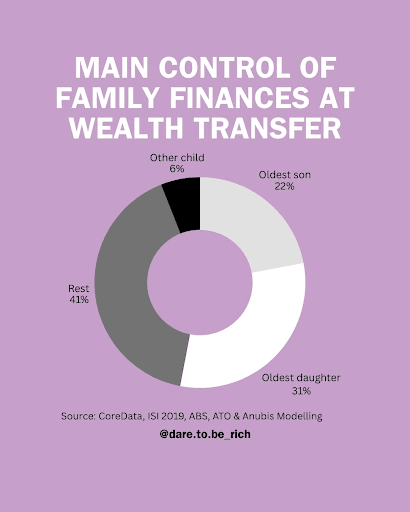 | 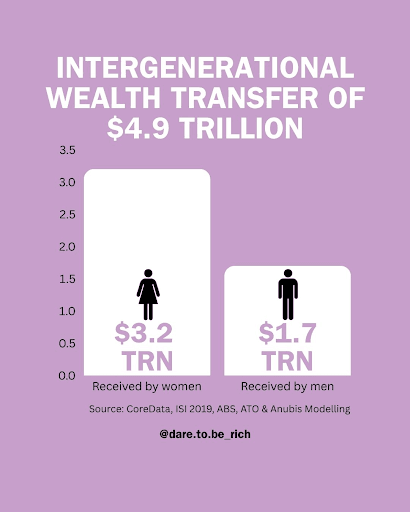 |
If you're one of these women, this is an incredible opportunity to create financial freedom and build your own legacy. However, for those not skilled in investments, it also presents some enormously challenging questions: 'What should I do with this money?' and 'Where do I start?'
If you're not familiar with the world of investments, tax or estate planning, the first step is not to panic. You're not alone in your unfamiliarity. Many women - and men - in your position are asking the same questions. The good news is, you don't need to be an expert to have control and make decisions that benefit you and your family, hopefully for generations to come.
Let's imagine that you've inherited, or are in line to inherit, wealth of some description. Everybody has a different definition of wealth - for some it's $1 million, for others it's $100 million - but regardless of the figure, let's assume this is money you want to protect, manage and grow. For the purposes of this guide, we'll assume you are going to rely on an investment professional rather than manage the inherited wealth yourself (for this, see breakout box below). Here's a simple step-by-step guide to help you get started:
Australia does not have uniform inheritance and state laws across its various states and territories. While there are many similarities, differences exist in areas such as probate procedures, intestacy laws and estate taxation.
A good place to start therefore is by learning the basics of the inheritance laws that impact you. Once you've understood the essentials of your local framework, then you're well placed to understand how to protect your assets.
Here are some trustworthy places to learn more and get advice:
Another approach is to identify someone whose wealth and lifestyle you admire. At your next social gathering, ask them where they source their financial advice. Ask your contact further questions about the adviser in order to get a feel for whether you would be compatible with them. If the adviser seems right for you, ask your contact to make an introduction. If not, ask them if they know of others they could recommend.
It's always worth going into a consultation with an adviser or legal professional, having read up on the topic. This means that you'll be able to have a more informed conversation and also be able to ask some specific questions, rather than ask questions that are general in nature.
Let's say you want to find a financial adviser or wealth manager to assist with managing your money; here are some tips for your online research:

"With women set to control an estimated $3.2 trillion as part of the greatest wealth transfer over the next two decades, there is a powerful opportunity for them to shape not only their family's financial future but also the broader social impact landscape. Wealth transfer is not solely about assets - it's about values, legacy and purpose. Women can take meaningful action by engaging early and normalising conversations around wealth and its significance within the family. Whether a bequest is directed to charity or family, thoughtful planning and values-led dialogue are essential. It's also critical that women seek advisers who understand their unique perspectives and aspirations - ensuring their inheritance journey is both empowering and aligned with what matters most. "
After you've completed your online research, you're now ready to have an initial meeting with the adviser or wealth manager you think might be right for you. Before the visit, make sure that you're not being charged for the session and that no advice will be given during or following it. During your meeting, ask the adviser or wealth manager a few basic questions, such as:
Essentially you're looking for trust points. Does this person or group feel reputable? Are they a good fit for you, in terms of understanding where you're at in life, as well as from a personality perspective? What's their track record? Hopefully, the answers you receive give you a feel for whether this adviser is right for you.
In the same way you don't marry the first and only person you meet, you'll want to 'date' a few potentials to work out which adviser or wealth manager is right for you. This too is going to be a long-term relationship.
In the same way you would seek two (or more) opinions for surgery or after being diagnosed with a significant illness, it makes sense to seek other opinions when it comes to your financial future. This is a big deal! It will likely be the most important investment of time and money that you make. So what if you receive two sets of advice that are identical? Great – you can be absolutely certain you're on the right path. Ideally, one of the advisers finds a loophole or recommends another strategy that can potentially make you even better off; in this case, the money you've spent on their fee has been worth every cent. Ultimately, seeking a second (or third) opinion only yields upside.
Once you've appointed a financial adviser or wealth manager, then you need to close the loop by updating your own estate plan. It's your plan for who gets your estate and how. If you don't have one, now is a good time to start.
It's also important to start talking with your family about your wealth and future as it helps reduce surprises and disagreements later. Plus, sharing your wishes ensures everyone understands and respects your decisions, meaning less likelihood of legal disputes after you've gone. As the saying goes - often the only winners from a legal dispute are the lawyers.
You don't need to be a financial expert to make smart choices about your money. The simple steps of education, research and cross-checking your plans should be able to provide you with a growing portfolio as well as peace of mind. This is your chance to secure your financial future, as well as leave a legacy that reflects your wishes.
For a low-risk investment, you may wish to invest it all in cash - take a look at Finder's comparison of high-interest savings accounts to work out which one is right for you.
Looking to invest your inheritance in something that delivers more growth than cash, and also gives you a steady income? Investing in property could be the answer; the Finder Property Index looks at which suburbs have the highest potential for growth.
For those who want to capitalise on the higher returns often associated with investing in the sharemarket but don't feel confident choosing which shares to invest in, then an Exchange Traded Fund (ETF) may be a good option for you. An ETF means you get access to a portfolio of stocks, even including alternative assets like bonds, property, gold and oil. To compare brokers on which asset class they offer, brokerage fees and other charges, make sure to check out Finder's ETF partners.
If you're confident of your share selection ability, and are prepared for the rewards - and risk - associated with investing directly in the sharemarket, then make sure to check out Finder's share trading partners. You'll be able to compare which region they offer, customer service awards and pricing.
SPONSORED: With MySuper Lifecycle, Aware Super offers an investment approach that automatically adjusts your investment mix to your age over time.
How much super should you have by 50 if you want a comfortable retirement, and what do you do if you're behind?
Spouse super contributions allow you to grow your partner’s super balance and also save money on tax. Here’s how spouse super contributions work.
We've compared the fees, investment options and performance for both Australian Retirement Trust and HESTA to help you choose between these two popular super funds.
Hostplus and HESTA are two popular industry super funds, but which is right for you? We've compared their fees, investment options and performance side by side to help you choose.
Trying to decide between AustralianSuper and Australian Ethical Super? We've compared their fees, performance and investments to help you choose.
Trying to decide between AustralianSuper and QSuper? We've compared their fees, investment options, performance and extras side by side to help you choose.
Trying to decide between AustralianSuper and Sunsuper? We've compared their fees, investment options, performance and extras side by side to help you choose.
Here’s why it’s so important to consolidate your super, and the steps you need to follow to roll over your super today.
Media Super is an industry fund for employees in Australia’s print, media, creative or digital sectors. See investment options, fees and performance here.
