Investment loan rates are often higher; the average variable rate was 7.22% in August 2026.
A larger deposit, ideally 20%, helps approval and can avoid Lenders Mortgage Insurance costs.
Consider interest-only repayments for tax benefits, but they often increase your total long-term costs.
The best investment loans for August 2026
The average property investor now takes out a loan of $709,083 to fund their investment, according to ABS lending figures.
And while interest rates are still high across the board, several lenders are offering very competitive rates for investors.
Here are 5 of the best variable investment loans for August 2026, based on their Finder Scores:
Easy Street Smart Variable Special Home Loan (min 20% equity) (Investor, P&I) has a Finder Score of 9.9. It has a 5.95% interest rate for investors (comparison rate 6%).
Unloan Variable Home Loan (min 20% equity) (Investor, P&I) has a Finder Score of 9.8. It has a 6.04% interest rate for investors (comparison rate 5.95%).
Macquarie Bank Offset Home Loan Package (min 20% equity) (Investor, P&I) has a Finder Score of 9.5. It has a 6.24% interest rate for investors (comparison rate 6.49%).
Unity Bank Momentum Home Loan (min 20% equity) (Investor, P&I) has a Finder Score of 9.3. It has a 6.45% interest rate for investors (comparison rate 6.5%).
Virgin Money Lite Variable Home Loan $150,000+ (min 20% equity) (Investor, P&I) has a Finder Score of 9.3. It has a 5.99% interest rate for investors (comparison rate 6.01%).
Market update by Rebecca Pike – Finder's senior home loans writer

What are investment loans?
An investment loan is a loan you can use to purchase an investment property. That is, a property you intend to rent out. Investment loans have higher interest rates than owner-occupier loans because lenders view investors as riskier borrowers.
Investment loans: Basic facts
Fixed or variable rates
Investors can choose fixed or variable repayments. Variable rate loans are easier to pay off faster or refinance without an exit fee.
But a fixed rate loan lets you lock in an interest rate and forget about rates rising. There's also the option of splitting your loan into fixed and variable portions.
Interest-only repayments
Most owner-occupier borrowers choose principal-and-interest repayments. You borrow money and pay it back, plus interest. Investors can do this too. But they have another option.
Interest-only investment loans start with very low repayments because you're just paying the interest charges. These loans cost you more in the long run. But they let investors maximise their tax-deductible debts in the short term.
Tax deductions
As an investor, most expenses related to owning and maintaining your investment property are tax-deductible.
This includes your loan fees and your loan interest charges. If your investment costs you more than it generates in rent, you can offset the cost by reducing your tax bill.
Investor loans versus owner-occupier loans
Feature
Investor loans
Owner occupier loans
Purpose
You have to use the loan to purchase an investment property, not your place of residence.
You need to live in the property you're buying.
Deposit
It's not impossible to get an investment loan with a 5% deposit, but you'll have an easier time if you've saved between 10 and 20%.
You can get a home loan with as little as a 5% deposit (plus LMI).
Interest rate
Interest rates are (almost) always at least 10 to 20 basis points higher than a comparable owner-occupier rate (sometimes more).
Owner-occupier loans have the lowest rates on the market compared to investment loans. But you should still compare your options.
Loan approval
Lenders have stricter eligibility requirements for investors. A lender may require a higher income or restrict how much you can borrow.
An owner-occupier loan is generally easier to get approved for. But your income, spending habits and the property you're buying still matter.
Tax deductions
Any loan fees, interest charges and other borrowing costs are tax-deductible (but not stamp duty).
Your loan costs are not tax-deductible as a homeowner (sorry!).
Features
Investor loans can come with all the same features other home loans have, like offset accounts and redraw facilities.
Many owner-occupier loans come with offset accounts, and almost all variable rate loans let you make extra repayments and redraw them.
How do I compare investment loans?
Interest rate: A lower interest rate means lower loan repayments.
Fees: Take a look at fees that might come with the loan. Avoiding fees can make your loan cheaper.
LVR: Loan to value ratio (LVR) is the amount you can borrow relative to the value of your investment property. If you have a smaller deposit, compare which lenders allow high LVRs. But remember, the smaller your deposit, the more you have to borrow and the higher your costs will be.
Borrowing capacity: Every lender has different lending criteria. Compare lenders to get an estimate of your borrowing power before deciding on a particular loan or lender.
How your interest rate changes the cost
Here's a simple example of how the interest rate affects your loan repayments each month and the total interest you pay over 30 years.
Loan amount
Interest rate
Monthly repayment
Interest over 30 years
$600,000
6.00%
$3,598
$695,030
$600,000
6.25%
$3,695
$729,950
$600,000
6.50%
$3,793
$765,267
$600,000
6.75%
$3,892
$800,972
$600,000
7.00%
$3,992
$837,054
These calculations don't take loan fees or extra repayments into account and assume that the interest rate doesn't change over 30 years.
How do I apply for an investment property loan?
Lenders treat investment properties as higher-risk purchases, which means it can be more complicated to get an investment loan approved.
Here are 6 tips to make your investment loan application a success:
1. Save a bigger deposit.
A 20% deposit is a big ask, but it makes you a less risky borrower (and lets you save on LMI).
Cutting back on unnecessary purchases in the 3 months leading up to your application boosts your chances of approval.
4. Compare loans and lenders.
Every lender has different eligibility criteria. Some may be stricter when lending to investors.
5. Choose your property carefully.
If the property you're buying looks like a riskier investment due to its size, property type or location, the lender might reject your application.
6. Talk to a mortgage broker.
A qualified broker can help match you up with a bank or lender whose policies and criteria best suit your personal situation.
"My mortgage broker suggested I go on an interest only investment property loan as it would keep down the costs, and the interest can be claimed at tax time."
Property investment can be both risky and rewarding. Here are some of the potential risks and benefits you should think about:
Benefits
Rental income. You can earn rental income that puts cash in your pocket right away.
Capital gain. If you hold the property for a long time, it could grow in value significantly.
Tax and depreciation benefits. You can deduct investment loan interest charges and other investment costs from your income tax each month, making the cost of owning a property far more affordable.
The potential to add value. Unlike shares or other investments, you may be able to increase your investment's value through renovations.
Ongoing costs. There are many ongoing costs such as repairs, strata fees and council rates.
Managing tenants. Being a landlord means dealing with the tenants in the property.
Illiquid asset. It can take months to sell an investment property if you need to generate cash.
Expert insight
"Common wisdom is to opt for an interest-only investment loan so you maximise your tax deductions. And it's a sound approach. The only exception is if you have already paid off the mortgage on your own home. This is not tax-deductible. At that stage, consider going principal and interest and throwing all the money you can at that investment loan to create a debt-free source of income in retirement."
These investment home loans offer low costs, coupled with a host of features, giving the best overall value.
7+
Great
These home loans may have slightly higher interest rates or fewer features but overall, a competitive offering.
5+
Standard
Usually the home loans would offer above average rates. They may still include some competitive features.
0+
Basic
Higher costs and/or fewer features.
What is Finder Score?
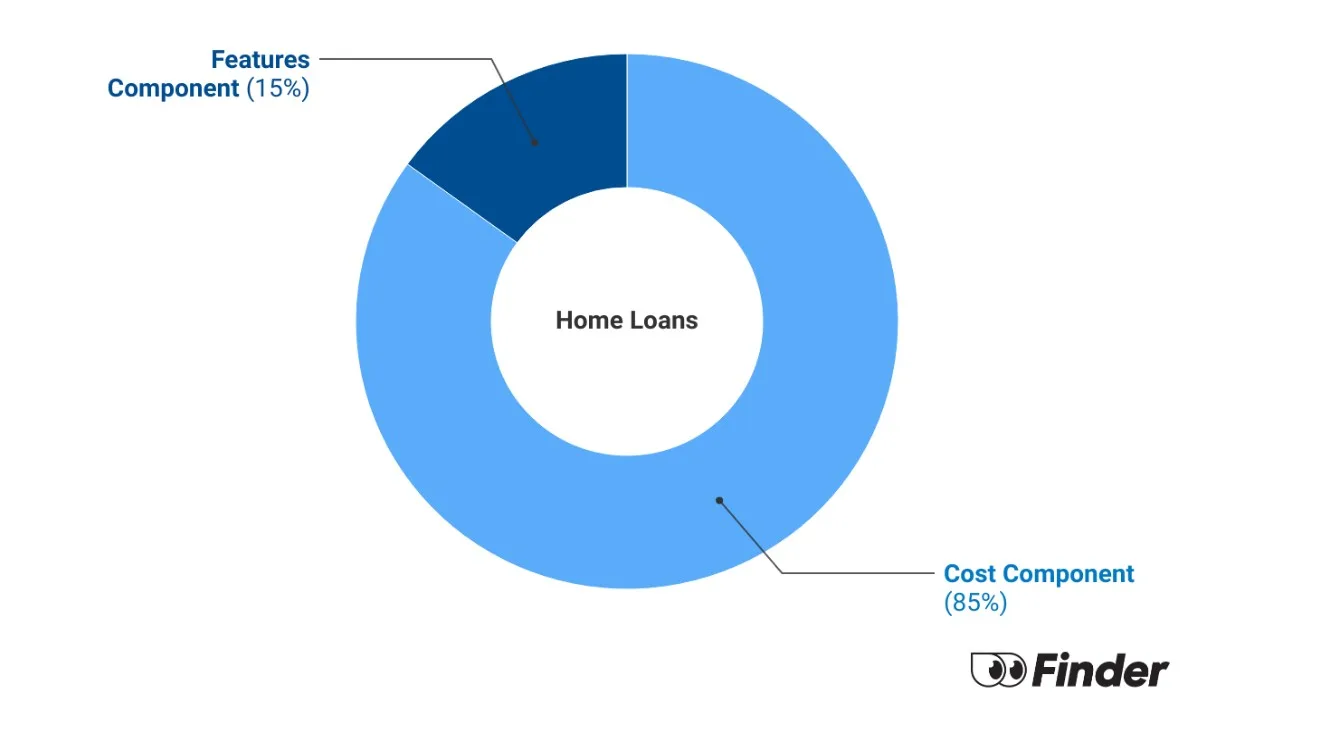
The Finder Score crunches 7,000 home loans across 120+ lenders. It takes into account the product's interest rate, fees and features, as well as the type of loan eg investor, variable, fixed rate - this gives you a simple score out of 10.
To provide a Score, we compare like-for-like loans. So if you're comparing the best home loans for cashback, you can see how each home loan stacks up against other home loans with the same borrower type, rate type and repayment type. We also take into consideration the amount of cashback offered when calculating the Score so you can tell if it's really worth it.
No. Most borrowers have a 20% deposit, but you can get an investment loan with a 10% deposit. A few lenders offer investment loans with 5% deposits.
Every home loan is a risk for the lender. And investment properties represent a greater risk. An owner-occupier with no other mortgages is a pretty safe bet. But an investor is speculating on the market. They may have their own mortgage too. An investor needs to cover their own mortgage, find a tenant to pay rent and cover the investment loan repayments.
As of August 2026, the average variable rate investment loan (P&I) in Finder's database is 7.22%.
As of August 2026 the lowest investment loan rate is 5.85%.
In Australia most borrowers, whether homeowners or investors, save a deposit of around 20%. Some lenders are reluctant to lend to an investor unless they have a 20% deposit, but it's definitely possible to buy an investment property with a 10% deposit. You could go lower, but there are fewer loan options if your deposit is 5%.
When your deposit is under 20% you also need to pay LMI. This can cost you thousands or even tens of thousands, so be sure to factor that in when looking to buy an investment property.
In Australia, all home loans come with 2 rates: the interest rate and the comparison rate. This includes investment loans. The comparison rate is a legal requirement that factors in the cost of fees in addition to interest. All comparison rates are calculated on a hypothetical home loan and don't provide specific details about your own potential costs. While a comparison rate is helpful, you're better off looking at the loan fees in detail for yourself.
There's no limit on how many investment properties you can buy or how many loans you can take out. But you do need to be in a strong financial position to get multiple loans to buy multiple investments.
If you tried to buy a string of investment properties with 5% deposits, lenders would likely knock you back and your credit score would drop. But if you bought one, paid off a good chunk of it and had steady rental income, you could be in a position to finance a second investment – especially if the value of the first one has risen.
It's a really good idea to talk to a broker if you're trying to finance multiple properties.
An offset account is a bank account attached to your investment loan. Any money you've saved there offsets your loan principal (reducing your overall loan term and interest charges). It's your money and you can withdraw at any time.
A redraw facility lets you withdraw extra repayments you've made on your investment loan. This can be handy in an emergency. Extra repayments also shorten your loan term and reduce your interest charges.
An offset account gives you more control over your money. But not every investment loan has one.
If you are planning to convert your current home into an investment property then an offset account offers more tax benefits. It's complicated, but basically if you make extra repayments on your original home loan, this reduces your loan size when it becomes an investment loan. This lowers your tax deductible costs.
Positive gearing is the flip side to negative gearing. If you're positively geared, it means the income from your investment property (rent) is greater than the cost of holding it. In other words, you're earning more in rent than you're spending on your investment loan plus maintenance, council rates, insurance and so on. You're making a profit on your investment.
It's worth reviewing your loan's interest rate at least annually. But you should take note of any time your interest rate goes up, as this increases your investing costs.
Rebecca Pike is Finder’s money editor, with over 7 years of experience in mortgages and personal finance. A frequent TV and radio commentator, she frequently appears on Sunrise and 7News, Today and 9News, as well as Sky News, Channel 10 and across radio and print. Rebecca previously served as Editor of Mortgage Professional Australia. She has a Master’s degree in Journalism as well as ASIC-recognised certifications in Tier 1 Generic Knowledge and Tier 2 General Advice Deposit Products, which comply with ASIC guidelines.
See full bio
Rebecca's expertise
Rebecca
has written
284
Finder guides across topics including:
Learn how to compare rates to find the best home loan and start saving money on your mortgage today.
Important information about this website
Finder is a comparison service. We do not compare every product or every provider in the market.
We make money through commercial arrangements with some of the providers on this site. Products marked 'Sponsored', 'Promoted', 'Featured' or 'Advertisement' appear as a result of a commercial arrangement.
Our editorial content, product reviews and any 'Top Pick' designations are prepared independently of these commercial arrangements.
The default order of products in our tables can be influenced by commercial arrangements. You can re-sort or filter using the controls above each table.
Some content on this site may be generated or supported by AI tools. You should verify details directly with the provider.
Finder is one of Australia's leading comparison websites. We are committed to our readers and stand by our editorial principles.
Our comparison service does not include every product or every provider in the market. Some product issuers offer their products under multiple brands or through associated companies. Where we can, we identify the underlying issuer so you can compare like with like, but you should always check with the provider directly to confirm which brand you are dealing with.
Finder is a comparison website and an intermediary. We are not a product issuer and we do not provide personal financial or credit advice. When you click a link to a product, or apply for a product through our site, you deal directly with the product issuer. We may receive a referral fee, commission or other payment from the issuer if you click through, apply or take out a product. We describe these arrangements in more detail under 'How we make money' below.
Product features, fees, terms and eligibility criteria are set by the product issuer and may change. We rely on information supplied by issuers when we present product details on our site. Before you apply for or take out any product, you should confirm the details directly with the issuer.
We earn revenue from Finder in four principal ways:
Referral fees and commissions. When you click a product link, complete an enquiry form or apply for a product through our site, we may receive a referral fee, commission or other payment from the product issuer. We may also receive payment based on the volume of leads or conversions we send to an issuer.
Sponsored placements. Products marked 'Sponsored', 'Promoted', 'Featured' or 'Advertisement' appear as a result of a commercial arrangement between Finder and the issuer. These labels always indicate a paid placement. We do not use them for editorial choices.
Display advertising. Banner advertising, newsletter advertising and similar display ads on our site are paid by advertisers.
Content sponsorship. Some articles, videos and social media posts are sponsored by an issuer and are clearly labelled as such.
Our editorial opinions, product reviews and any 'Top Pick' designations are prepared independently of these commercial arrangements. A 'Top Pick' is an editorial choice made by our writers and editors based on the criteria described on each comparison page. A 'Top Pick' is not a personal recommendation and does not mean the product is appropriate for your circumstances.
If you would like to know whether we have a commercial arrangement with a specific product issuer, please contact us.
When products are grouped in a table or list, the default order can be influenced by commercial arrangements we have with product issuers. In some categories, sponsored or featured products appear in the top positions of the table by default, and are always labelled as such.
Other factors that influence default order include price, fees and features, and (where relevant) our editorial view of the product.
You can re-sort every comparison table using the controls above the table. You can filter by product features that matter to you. The order you see after re-sorting or filtering is not influenced by commercial arrangements.
Some content on this site is generated or supported by artificial intelligence tools, including our AI-powered assistant FinderBot. AI-generated content may contain errors. Please verify important information directly with the product issuer before making a financial decision. For more information about FinderBot, see the FinderBot Terms of Use and FinderBot Privacy Collection Notice.
Please read our website terms of use and privacy policy for more information about our services and our approach to privacy.
We update our data regularly, but information can change between updates. Confirm details with the provider you're interested in before making a decision.
Our goal is to create the best possible product, and your thoughts, ideas and suggestions play a major role in helping us identify opportunities to improve.