Learn how to buy Bitcoin, Ethereum and other cryptos
There are now well over 15,000 cryptocurrencies and tokens, with new coins launching all the time. We've cut through the noise and written guides on how to buy some of the most traded cryptos, like Bitcoin and Ethereum, as well as hundreds of others.
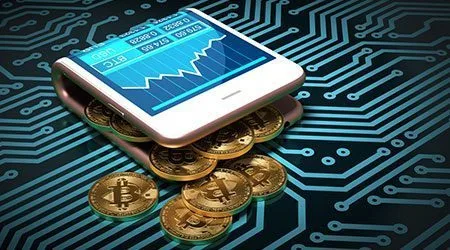
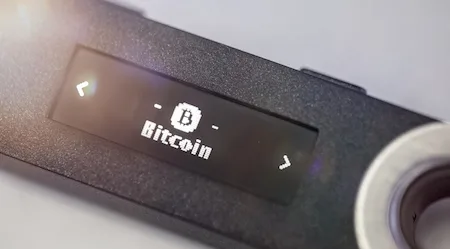
Hardware, mobile, hot, cold… it's tricky knowing where to start with crypto storage. Our guides explain what's in a wallet to help you find your best options for convenience and security.
Cryptocurrencies are digital assets that have a value, just like a $10 note is a physical token with 10 dollars of value assigned to it.
The difference is that digital currencies are electronic – they only exist on the internet.
While some cryptocurrencies are intended to be spent like regular currencies, other may be considered a store of value investment, used to power transactions on a crypto network or even simply to assign governance over a project.
Others, known as memecoins, are simply designed as a novelty and aren't intended to have any intrinsic value.
In order for a cryptocurrency to have value, its coin needs to be unique, verifiable and unreplicable.
The Bitcoin blockchain was the innovation that made this possible and was first laid out in the original Bitcoin whitepaper in 2008.
Where can you buy and sell crypto in Australia?
The easiest place to buy and sell crypto is via a dedicated crypto exchange. Australians can now choose from dozens of established and feature-rich crypto exchanges.
If you're just starting out, you might want to go with an AUSTRAC-registered exchange that lets you buy and sell crypto with Australian dollars, either via bank transfer or card.
If you're a more experienced investors or trader, you may want to consider the number of coins an exchange offers, how low its trading fees are and other features like staking, advanced order types and good liqudiity.
You can click the Go to Site button when you're ready to create an account with any of the providers.
How does cryptocurrency work?
Crucial to crypto is the principle of decentralisation. There is no single authority or business (such as a bank or government) that controls cryptocurrencies.
This idea of sovereignty over your assets and removing reliance on any sort of intermediary is something you'll hear about a lot.
Decentralisation also makes crypto a powerful medium of exchange because it can help minimise the costs and processing times of transactions.
Thanks to these innovations, companies like Visa, PayPal and the big four Australian banks have also begun adopting cryptocurrency and blockchain technologies.
Cryptocurrency uses cryptographic technology to secure individual assets on a database called a "blockchain". A blockchain records transactions on a network in a way that cannot be altered.
You can think of a blockchain as hundreds of connected computers sharing information with one another. This builds a ledger of data that can be used to validate that each crypto transaction is legitimate and secure.
Some blockchains use a variation of proof-of-work or proof-of-stake consensus algorithms to execute transactions. Proof of work is where the term "Bitcoin miners" comes from.
Miners operate powerful computers that solve complex mathematical problems, which helps secure the blockchain by confirming transactions. For keeping the network secure and accurate, miners are rewarded with certain amounts of the cryptocurrency each time they confirm a "block" of transactions.
Proof of stake is a bit different. This algorithm uses staking – the process of locking up cryptocurrency on a specified blockchain wallet in exchange for a reward. Staking protocols use "nodes" – small copies of the blockchain being run on thousands of different computers.
Understanding how a crypto's algorithm works in detail isn't essential – or easy – but it can help explain movements in price.
You might be surprised to learn that Bitcoin (BTC) is not the most traded cryptocurrency, although it usually sits in the top 3.
Instead, it's the dominant crypto by market capitalisation – a metric that shows the circulating supply of a coin, multiplied by its value.
VIDEO: Cryptocurrency explained for beginners
6:46
How to buy cryptocurrency
Compare crypto exchanges
The easiest way to purchase cryptocurrency is through an exchange or trading platform. Features to look out for are low fees, supported coins and deposit methods. Registering an account with an Australian exchange will require you to provide a form of government identification.
Deposit funds
To deposit Australian dollars to your exchange account, first, you'll need to verify your identity in a process known as KYC. Most exchanges accept instant transfers from an Australian bank account, while others also support credit card purchases and sometimes even cash.
Choose a cryptocurrency
There are thousands of cryptos to choose from. Thoroughly research any you're interested in, check what's trending, and keep on top of the latest crypto news before investing any money.
Build your crypto portfolio
Most exchanges allow you to instantly buy cryptocurrency with the funds deposited to your account. Some platforms also have advanced market options and trading pairs which may be useful for more experienced traders.
Store your crypto
You can choose to leave your assets in your exchange wallet, but this does come with some added risks. It's generally recommended that you transfer your crypto to a non-custodial or hardware wallet for increased security.
Is cryptocurrency safe?
There are a number of risks associated with buying, storing and using digital currencies. Before jumping in, do plenty of research and make sure you understand how to keep your crypto safe. Some key risks to be aware of include:
Poor regulation. Cryptocurrency is still a largely unregulated market, which means you may not be protected if your funds are lost or stolen. Look for platforms that are registered with AUSTRAC and provide an insurance fund.
Volatile prices. Crypto is much more unpredictable than traditional markets and massive price fluctuations within a short window are not uncommon. Because of this, your investment can quickly lose its value.
Vulnerable to hacking. Several million dollars have been lost to successful hacks of crypto exchanges, wallets and blockchains. It's important to understand that without appropriate security measures like using a hardware wallet, securing your private key and enabling 2-factor authentication, your funds could be stolen.
Steep technical learning curve. Grasping the complex technical foundations of potential crypto investments can quickly become confusing. You'll also need to fully understand concepts like gas fees and wallet addresses before interacting with a blockchain, or else risk total loss of funds.
Scams. As crypto has become popular, so too have crypto scams. Be extremely wary of deals that seem too good to be true, thoroughly research all platforms or projects before putting your money in, and never disclose your private key.
Read the Australian government's crypto investment warning for more guidance on keeping your money safe.
Frequently asked questions
Cryptocurrency is a type of digital asset secured by a database known as the blockchain. Blockchains are designed to ensure privacy and security using complex cryptographic algorithms.
Cryptocurrencies have a huge number of potential uses. They can be spent like money, ensure contract transparency, manage supply chains and much more.
Cryptocurrency prices rise and fall like any other speculative investment, and can be heavily influenced by public announcements and media sentiment. Some coins, like Bitcoin, have a small supply and high demand, which can also affect its value.
The Australian Tax Office treats cryptocurrency as an asset. In this sense, it's viewed more like a stock than a currency.
This means profits made from buying, selling or trading crypto can be subject to capital gains tax (CGT). This includes selling one crypto for another.
There are quite a few types of cryptocurrencies, including digital currencies, stablecoins, memecoins, store of value coins, governance tokens, staking tokens and payment tokens.
Many cryptos may even fall into multiple categories at once. For example, Ethereum (ETH) is the governance token of the Ethereum network and is used to process transactions on the Ethereum network. It may also be considered a store of value coin because of its strong price performance and large market capitalisation.
Buying, selling and holding cryptocurrencies may trigger a taxable event. Consult a financial adviser, refer to the latest guidance from the ATO and read our guide to crypto tax in Australia to find out more.
Yes, cryptocurrency can be sold via exchanges and brokers for a local currency like Australian dollars. In some places, you can even use a crypto ATM to convert digital assets directly into cash, though this does attract high fees.
Unfortunately for investors, there's no such thing. The best cryptocurrency will be whichever you believe has real utility and that suits your personal investment goals.
Bitcoin and Ethereum are widely considered to be the "blue chips" of crypto because of their high market cap and proven use-cases. Check out our guide to which cryptos to buy now for a look at what's trending today.
Cryptocurrency can be a good investment if you've conducted extensive research and understand fundamental trading strategies. Investing in a highly volatile asset comes with the potential to magnify your losses as well as your profits, so only invest what you can afford to lose.
Money spent on cryptocurrency goes to whoever sold the digital asset, similar to any other exchange of value. This is usually an exchange or broker service, but it can also be a stranger if you've used a decentralised finance or P2P platform.
It depends on the cryptocurrency you buy. For instance, $100 would get you 0.00058 of Bitcoin or 0.016 of Ether at the time of writing. Or you could buy 283 Dogecoins.
Sources
Disclaimer: Cryptocurrencies are speculative, complex and involve significant risks – they are highly
volatile and sensitive to secondary activity. Performance is unpredictable and past performance is no guarantee of
future performance. Consider your own circumstances, and obtain your own advice, before relying on this information.
You should also verify the nature of any product or service (including its legal status and relevant regulatory
requirements) and consult the relevant Regulators' websites before making any decision. Finder, or the author, may
have holdings in the cryptocurrencies discussed.
Fred Schebesta is one of Australia’s leading entrepreneurs and a crypto visionary, globally recognised as the founder and executive chair of the Finder Group.
See full bio
Fred's expertise
Fred
has written
4
Finder guides across topics including:
Cryptocurrency and NFTs
Business and scaling
Startups
Fintech
Get rewarded $$ for switching with Finder Rewards
Find a better deal, save on your bills and get a free gift card. Sign up to be the first to hear about new Finder Rewards.
Hi I have been with thos finder from last year. I have put money in my account to buy bitcoin. But now I can’t see any money or I can’t login to my account. Please help me how to do that .I have been sending emails to the finder group so far no help.
Finder
ThomasNovember 18, 2024Finder
Hi Safinath,
You can talk to our app customer support by heading to the Settings tab in the Finder app (by tapping the gear icon in the top right corner) and then selecting “Get support”.
If you’re struggling to log in to the app, please email us at app@finder.com.au.
Finder makes money from featured partners, but editorial opinions are our own.
Finder is one of Australia's leading comparison websites. We are committed to our readers and stand by our editorial principles.
We try to take an open and transparent approach and provide a broad-based comparison service. However, you should be aware that while we are an independently owned service, our comparison service does not include all providers or all products available in the market.
Some product issuers may provide products or offer services through multiple brands, associated companies or different labeling arrangements. This can make it difficult for consumers to compare alternatives or identify the companies behind the products. However, we aim to provide information to enable consumers to understand these issues.
We make money by featuring products on our site. Compensation received from the providers featured on our site can influence which products we write about as well as where and how products appear on our page, but the order or placement of these products does not influence our assessment or opinions of them, nor is it an endorsement or recommendation for them.
Products marked as 'Top Pick', 'Promoted' or 'Advertisement' are prominently displayed either as a result of a commercial advertising arrangement or to highlight a particular product, provider or feature. Finder may receive remuneration from the Provider if you click on the related link, purchase or enquire about the product. Finder's decision to show a 'promoted' product is neither a recommendation that the product is appropriate for you nor an indication that the product is the best in its category. We encourage you to use the tools and information we provide to compare your options.
Where our site links to particular products or displays 'Go to site' buttons, we may receive a commission, referral fee or payment when you click on those buttons or apply for a product.
When products are grouped in a table or list, the order in which they are initially sorted may be influenced by a range of factors including price, fees and discounts; commercial partnerships; product features; and brand popularity. We provide tools so you can sort and filter these lists to highlight features that matter to you.
Please read our website terms of use and privacy policy for more information about our services and our approach to privacy.
We update our data regularly, but information can change between updates. Confirm details with the provider you're interested in before making a decision.
How likely would you be to recommend Finder to a friend or colleague?
0
1
2
3
4
5
6
7
8
9
10
Very UnlikelyExtremely Likely
Required
Thank you for your feedback.
Our goal is to create the best possible product, and your thoughts, ideas and suggestions play a major role in helping us identify opportunities to improve.
Hi I have been with thos finder from last year. I have put money in my account to buy bitcoin. But now I can’t see any money or I can’t login to my account. Please help me how to do that .I have been sending emails to the finder group so far no help.
Hi Safinath,
You can talk to our app customer support by heading to the Settings tab in the Finder app (by tapping the gear icon in the top right corner) and then selecting “Get support”.
If you’re struggling to log in to the app, please email us at app@finder.com.au.
Thanks,
Tom