Your gold buying strategy depends on how you want to gain exposure to gold's potential upside.
For some gold investors, owning bullion is all that matters. If you want to own physical gold, the best option is to go through a gold bullion dealer
You may distrust banks and investing platforms and prefer securing gold in a safe at home. You can also pay a dealer to store it for you, although this adds to your costs.
For a lot of people this is a risky and complicated move (like storing your money under the mattress). An ETF that tracks the price of gold gives you exposure to the price of gold as an investment without the risks of holding it physically.
And you can also speculate in future price changes in gold via futures trading, or invest in mining companies that deal with gold and other precious metals.
Why buy gold in 2026?
Gold is a hot commodity right now. With increasing economic uncertainty thanks to inflation and US trade tariffs, many investors in the last year have flocked to the traditional safe haven of gold.
Gold market roundup
Gold is largely seen as a safe haven and recent movements demonstrate less confidence in other assets. If you tracked the price of gold in Australian dollars during August you saw a pretty solid bounce. The proxy rose 7.81% last month to give the precious metal a welcome short-term glow. Looking at the longer term painted a slightly different picture. The gold price rose 0.17% over the past three months and fell 3.61% for the year to date.
What is the price of gold in Australia today?
Track the current price of gold in Australia (and the US) below:
AUD$6,137.46 |
USD$4,383.90
Note: While both AUD and USD pricing are displayed above the graph, all mentions of price within the graph itself are displayed in USD.
Where is the gold price headed?
According to a January 2026 Finder survey, 22% of Australians have either bought gold or are planning to. 68% of economists surveyed by Finder in January said they expected gold to continue to rise in 2026.
Source:Finder research
1. Invest in gold ETFs
Gold ETFs (exchange-traded funds) are another convenient way to invest in gold that don't require buying and storing physical gold.
When you buy units in a gold-themed ETF, you're either investing in a group of gold-related companies, or getting exposure to the price movements of gold itself, depending on which ETF you invest in.
ETFs like the VanEck Vectors Gold Miners ETF (GDX) and BetaShares Global Gold Miners ETF – Currency Hedged (ASX: MNRS) track the performance of gold mining companies, whilst ETFs like the Global X Physical Gold (ASX: GOLD) and BetaShares Gold Bullion ETF – AU Hedged (ASX: QAU) simply track the price of gold.
ASX-listed gold ETFs:
VanEck Vectors Gold Miners ETF (ASX: GDX)
BetaShares Global Gold Miners ETF – Currency Hedged (ASX: MNRS)
BetaShares Gold Bullion ETF – AU Hedged (ASX: QAU)
Risks
Investing always carries risks. With an ETF tracking the price of gold you don't have to worry about losing your property to burglary, but the price of gold can and does go down sometimes.
Investing in companies with exposure to gold carries the usual investing risks of market volatility, company bankruptcy and the possibility of losing your investment.
Expert insight
"The world still values physical gold, so it is often used as protection if stock markets sour, or interest rates rise. To take a lot of the guess work out of investing in the precious metal, a physical gold ETF can provide you with easy access to the commodity rather than having to pick a winning gold miner or take the risk of holding physical bars of gold yourself."
Kanish Chugh
Head Of distribution, Global X ETFs AU
Compare online brokers to trade gold stocks and ETFs
We currently don't have that product, but here are others to consider:
Looking for other options? Check out these similar products.
How we picked these
Finder Score for share trading platforms
We've scored over 30 share trading platforms assessing them for their core features, fees, customer experience and accessibility. Our experts give each platform a score out of 10.
Important: The standard brokerage fee displayed is the trade cost for new customers to purchase $1,000 of either Australian or US shares. Where a platform charges different fees for both US and Australian shares we show the lower of the two. Where both CHESS sponsored and custodian shares are offered, we display the cheapest option.
2. Investing in gold on the stock market
It's possible to invest in gold through the stock market by profiting from gold prices rather than physically owning gold.
This is done by buying shares in companies that have exposure to gold, including gold miners.
With this approach, you don't actually buy any gold – rather you're investing in the performance of the gold industry or the mining company. To invest in gold via the stock market, you need a stockbroker or online trading platform.
But remember, buying a stock means you become part owner of a company. This means investors have an extra layer of complexity.
Not only do you need to know the price of the asset, but also at what price the business can produce the raw material and be profitable. It is after all possible for the gold price to increase while the business you own loses money.
However, the flip side is also true. If your investment mines additional minerals, it could reduce your risk should the gold price fall.
For our top picks, we compared our Finder partners using a proprietary algorithm. We update the list regularly. Keep in mind that our top picks may not be the best for your individual circumstances and we encourage you to compare for yourself. Read our full methodology to find out more.
ASX-listed gold stocks
There are a number of gold stocks listed in Australia. Some of the largest and best-known gold stocks include the following:
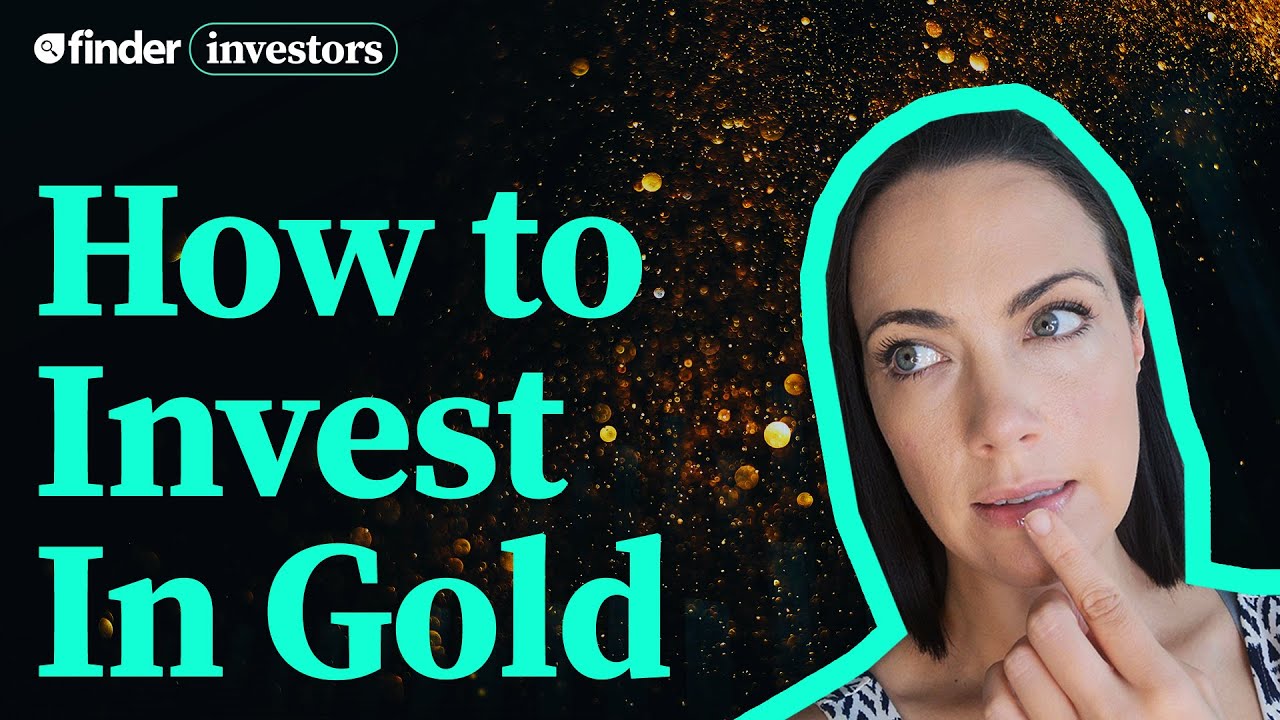
Since the dawn of time…Gold has been a symbol of wealth, beauty, success and… gangster bling the world over. And among investors these days it's also been a very hot topic. In 2019, the price of gold rose by more than 30% - and some analysts, plus some who think a recession is coming, think it has further to run yet. But for all that talk... how do you actually invest in gold? Well, in this video we're going to explore why gold matters, the many ways you can invest, and some of the risks involved.
Gold is one of the oldest forms of currencies, with coins dating as far back as 800bc. And up until pretty recently it was still used as the global standard for trade. That all became a bit shaky around WW1, but it wasn't until 1970 that the gold standard officially ended. Now we have the fiat or paper standard which is issued by the central banks and most commonly carried around in your pocket as cash. But when these currencies start to fail us... You know, because of hyperinflation, underinflation, recessions or stock market crashes… it's historically been gold that we fall back on - which is why the price of gold tends to go up when economies start to perform poorly or when grandma starts getting nervous again about the state of the world. In the last couple of years, we've been moving through a period of global economic uncertainty, thanks to the US-China trade war, unrest in the middle east and changing power dynamics around the world. Because of this, the central banks have us sitting at record low interest rates. This is why gold has reappeared as a hot commodity. And if interest rates continue dropping - even into negative rate territory -- well, gold could become a lot more important.
So how do you invest in it? There are two main ways that you can put your money into gold. You can buy physical gold, or you can invest in gold via the stock market. Physical gold is where you actually own the gold, as in, you can hold it, or wear it, or store it in a safe. The benefit of this is that you own something tangible, which can make it less risky than investing in something like stocks - where if it all goes to hell, you're left with nothing more than a piece of paper in your hand. If the price of gold goes down…in the least you can make a nice pair of earrings out of it. The most common forms of physical gold people usually invest in are gold bars, aka bullion, gold coins - and of course jewellery. If you're a serious investor though - you'll get the best price for gold in its bar form. Meanwhile, coins and jewellery are given as gifts or for special occasions like a wedding or Chinese new year. Finally, you have what's called unallocated gold investing, where it's still physical, but not in your hands. Instead, you're investing in a dealer's pool of gold - so really, it's more like a contract. You'll never get to handle any of the gold and it can be a little riskier too.
How do you buy it? You can literally walk into a bullion dealer and walk away with gold in your hand. Or you can buy it online and have the gold delivered to you or stored in a vault until it comes time to sell - and there are costs there too. There's even a few apps out there now that let you trade gold on your phone. Just remember: No matter how you're buying physical gold - make sure it's an authorised dealer - because yeah, fool's gold is still a thing.
The other way to invest in gold is over the stock market - and there's a few ways to do this. 1. You can buy gold stocks. That's where you invest in a company that has gold exposure - like a mining company. It's not always easy to pick the right company, but as a general rule of thumb, companies with strong gold exposure will see stock prices go up when gold prices go up. If stock picking isn't for you - you can invest in a Gold themed exchange traded fund, which is a listed fund that is made up of multiple gold companies or which tracks the price of gold. If you want to learn more about ETFs, I actually just did a video on that so check it out in the link below. If you're feeling especially brave, you can invest in gold through the futures market. Futures traders look to profit from price movements – so they can still profit whether prices are rising or falling. However, because futures contracts can be highly risky and complex derivative products, this is better suited to advanced traders. Remember, with the stock market you're not actually owning physical gold so you're exposed to all the usual risks that the stock market carries, such as market volatility, company bankruptcy and the possibility of losing your investment entirely.
Why might you invest in gold? To make money from it - when gold prices go up, so does your wealth. To protect your wealth - whether you believe a recession is coming or not, gold has historically been a safe bet for your money. No. three, it's liquid - it's easy to convert into cash. And fourth, on the sentimental side, it can be a terrific gift that is also an investment.
What are some of the downsides? Low risk, low-reward - as is often the case, this means your returns over a long time frame might be lower than with other kinds of investments - like stocks. Ongoing costs: If you're buying physical gold, there are fees to consider, such as dealer fees, storage, and insurance costs. No income: Unlike owning property which generates rent, or shares which can pay dividends, physical gold won't earn any income until you sell it. Price volatility. If you're investing in gold via the stock market, it comes with the same risks you normally get in stock market investing. That is, you risk losing your money altogether. Just because you're investing in a gold stock - doesn't mean it's a safe investment. So do your homework. So whether you think a recession is just around the corner, or you want to diversify your stock portfolio, gold could be a great asset to consider investing in. But as with any investment, it's not for everyone. So what do you think? Do you think gold is a good investment? And what's your flavour of choice? Let us know in the comments below. There's a lot more to it than what I've gone through, so if you want to find out more about gold investing or how to invest in shares or ETFs, you can visit Finder.com.au and the links are in the description below. Thanks for watching, I'll see you next time!
3. Investing in physical gold
This is the traditional approach and involves buying gold as a physical asset and owning it yourself. It allows you to get your hands on a tangible asset and avoid the counterparty risks associated with ETFs.
If you decide to buy physical gold, you'll then need to consider what form you'd like to acquire. You can buy gold bullion in bars or in coins. Bars are larger and therefore more expensive, but they are an effective option if you're looking to make a sizeable investment. Gold coins are smaller and less valuable, so they can be a more convenient option when you need to liquidate some of your investment.
There's an obvious downside though. You need to have a place to securely store your gold.
There are several options to consider when choosing where to buy gold, so make sure to keep the following in mind:
Location. There are several gold dealers around Australia, so the location of those dealers will influence your decision if you plan on buying gold in person.
Online options. Many online dealers allow you to conveniently buy gold bullion over the internet. As well as specialist dealers, you can also buy gold through marketplaces such as eBay and even arrange purchases through precious metal forums. However, as is always the case when spending money online, you'll need to make sure you know who you're dealing with – do some research to find out whether the seller is reputable and trustworthy.
How the gold was produced. You'll also need to find out where the dealer gets their gold from. Is it refined and produced by an established and recognised manufacturer?
Premiums and commissions. Read the fine print to find out what fees the dealer charges. Expect to pay a commission to the dealer, which is usually folded into the purchase price as well as an assay fee to check the purity of the gold and to verify its authenticity, but shop around for the best value.
Compare price to Australian gold price. Gold prices are commonly quoted in US dollars, so make sure you compare the price offered by a dealer with the current price of gold in Australian dollars.
Delivery. Find out how and when the gold will be transported to you or to its place of storage. Is it insured if anything goes wrong during the delivery process?
Storing your gold
Once you've purchased your gold, you'll also need to find a safe place to store it. There are several options to consider, including the following:
Bullion dealers. Many gold dealers will also offer a storage service where you can keep your gold bars or coins for a fee, so ask about the storage options available when you make your purchase.
Safety deposit boxes. You can rent a safety deposit box at a bank to securely store your gold bullion.
Secure vault storage. For high-level security, you may want to research vault storage companies near you and the storage options they offer.
At home. You can also choose to store your gold at home. This obviously may not be as secure as some other options, so you may want to get a home safe installed. You'll also need to update your home and contents insurance to make sure your precious metal is covered by your policy.
4. Invest in gold via the futures market
An alternative to buying gold stocks or units in an ETF is to speculate on price movements through CFD investing in the futures market. CFD investors try to profit from gold price movements – whether up or down.
Again, you don't own the asset itself, but instead own contracts based on the price movement.
That means that even if gold prices are falling, CFD investors can still make a profit (as well as a loss). However, because CFDs are risky and are complex derivative products, CFDs are better suited to advanced traders.
Disclaimer: General information only. All forms of investments (and in particular, trading CFDs, commodities and forex) carry significant risk, including the risk of losing more than the invested amounts, market volatility and liquidity risks. Past performance is no guarantee of future results. Such activities are not suitable for most investors.
We currently don't have that product, but here are others to consider:
Looking for other options? Check out these similar products.
How we picked these
Why invest in gold?
Gold has a lot of benefits for investors, especially during more volatile periods.
Generally speaking, over a long enough time horizon gold appreciates in value, has universal recognition and can work as a hedge against inflation.
In fact, in some countries it is sill used as a form of currency and a gauge of wealth.
So gold can be used to protect and diversify your wealth.
However, just because gold has a proven track record, it comes with some risks, especially if you are trading CFDs.
Is gold a good investment?
This one is a little difficult to unpack and will all depend on your own risk profile and key objectives with investing.
While over a shorter period the price of gold can be incredibly volatile, take a long-term view and gold generally increases over time.
It also has a bonus of acting as a hedge against inflation.
So in high inflation times, like we experienced in 2022 and 2023, gold generally appreciates in value offsetting other losses.
But, gold can underperform the share market.
Gold has significantly underperformed shares in the US over a 100-year period.2
It is the same story over 5, 10 and 30 years, although if you take the last 20 years gold is beating the Dow Jones, largely thanks to 2 down periods for the market being the GFC and COVID.
Pros
Protect your wealth. Gold has long been seen as a reliable store of value that is largely unaffected by the factors that influence other investments. For example, when share prices plummet, the price of gold usually rises as investors look for somewhere "safe" to park their money.
Diversify your portfolio. Gold's "safe haven" status also makes it well worth considering if you're looking to diversify your investment portfolio and protect your overall financial position during a market downturn.
Easy to buy. Many dealers specialise in buying and selling gold, so getting your hands on this precious metal may be easier than you think.
It's a tangible asset. If global financial systems were to somehow collapse, such as what happened during the Great Depression, owning gold as a physical asset offers financial protection. Gold also can't be destroyed by fire or water damage and won't corrode over time.
Liquid. Gold is also easy to convert to cash whenever you need to do so.
Cons
Long-term returns may be lower. Gold is commonly seen as a steady investment, so it may not offer the same potential for big returns as other investments.
There are fees to consider. You'll need to factor additional costs such as dealer fees, delivery, storage, security and insurance into your calculations.
No ongoing income. Unlike owning property or shares, which can both provide an ongoing source of income in the form of rent and dividends respectively, gold doesn't provide regular income.
What is the best way for beginners to buy gold in Australia?
If you're just starting out the easiest way to buy gold in Australia is arguably through an ETF.
While some investors may prefer buying physical gold directly, this comes with additional costs and logistical issues.
If you're simply looking to get exposure to the price of gold for investment purposes, a low-cost ETF is likely to be the most straightforward option.
Frequently asked questions
Some banks sell gold to customers, but many do not. If you're interested in buying from a bank, do some research to find out which banks offer this service.
Yes, it is safe to buy gold online, provided you're purchasing from a reputable gold dealer. Make sure you thoroughly research the legitimacy of any dealer by checking to see whether they're accredited with any trade associations and by checking their reputation and how long they've been operating before deciding whether to buy.
Aside from purchasing gold as a physical commodity, there are a couple of other ways you can potentially make money from gold. For example, it's possible to invest in ETFs that track the price of gold or invest in gold mining companies. Of course, these options also come with a certain level of risk attached and there's no guarantee of making a profit.
If you buy or sell gold in an investment form (gold of at least 99.5% purity), GST is not payable. However, if your gold bullion increases in value from the time you buy it to the time you sell it, capital gains tax may apply. Contact the ATO or your accountant for more details.
Important information: Powered by Finder.com.au. This information is general in nature and is no substitute for professional advice. It does not take into account your personal situation. This information should not be interpreted as an endorsement of futures, stocks, ETFs, CFDs, options or any specific provider, service or offering. It should not be relied upon as investment advice or construed as providing recommendations of any kind. Futures, stocks, ETFs and options trading involves substantial risk of loss and therefore are not appropriate for most investors. You do not own or have any interest in the underlying asset. Capital is at risk, including the risk of losing more than the amount originally put in, market volatility and liquidity risks. Past performance is no guarantee of future results. Tax on profits may apply. Consider the Product Disclosure Statement and Target Market Determination for the product on the provider's website. Consider your own circumstances, including whether you can afford to take the high risk of losing your money and possess the relevant experience and knowledge. We recommend that you obtain independent advice from a suitably licensed financial advisor before making any trades.
Kylie Purcell is an experienced investments analyst and finance journalist with over a decade of expertise in a wide range of financial products, including online trading platforms, robo-advisors, stocks, ETFs and cryptocurrencies. She is a sought-after commentator and regularly shares her insights on the AFR, Yahoo Finance, The Motley Fool, SBS and News.com.au. Kylie hosts the Investment Finder video series and actively contributes to the investment community as a judge and panellist. She holds a Master of Arts in International Journalism, a Graduate Diploma in Economics, and ASIC-recognised certifications in securities and managed investments.
See full bio
Kylie's expertise
Kylie
has written
188
Finder guides across topics including:
Tom Stelzer is a journalist with 6 years of experience covering personal finance, specialising in investment and cryptocurrency. With a Master of Media Arts and Production and a Bachelor of Communications in Journalism from the University of Technology Sydney, Tom provides expert analysis on digital assets and market trends, helping readers navigate the fast-evolving world of finance.
See full bio
Access Australian shares and ETFs at home or on-the-go with a Macquarie Online Trading account.
Important information about this website
Finder is a comparison service. We do not compare every product or every provider in the market.
We make money through commercial arrangements with some of the providers on this site. Products marked 'Sponsored', 'Promoted', 'Featured' or 'Advertisement' appear as a result of a commercial arrangement.
Our editorial content, product reviews and any 'Top Pick' designations are prepared independently of these commercial arrangements.
The default order of products in our tables can be influenced by commercial arrangements. You can re-sort or filter using the controls above each table.
Some content on this site may be generated or supported by AI tools. You should verify details directly with the provider.
Finder is one of Australia's leading comparison websites. We are committed to our readers and stand by our editorial principles.
Our comparison service does not include every product or every provider in the market. Some product issuers offer their products under multiple brands or through associated companies. Where we can, we identify the underlying issuer so you can compare like with like, but you should always check with the provider directly to confirm which brand you are dealing with.
Finder is a comparison website and an intermediary. We are not a product issuer and we do not provide personal financial or credit advice. When you click a link to a product, or apply for a product through our site, you deal directly with the product issuer. We may receive a referral fee, commission or other payment from the issuer if you click through, apply or take out a product. We describe these arrangements in more detail under 'How we make money' below.
Product features, fees, terms and eligibility criteria are set by the product issuer and may change. We rely on information supplied by issuers when we present product details on our site. Before you apply for or take out any product, you should confirm the details directly with the issuer.
We earn revenue from Finder in four principal ways:
Referral fees and commissions. When you click a product link, complete an enquiry form or apply for a product through our site, we may receive a referral fee, commission or other payment from the product issuer. We may also receive payment based on the volume of leads or conversions we send to an issuer.
Sponsored placements. Products marked 'Sponsored', 'Promoted', 'Featured' or 'Advertisement' appear as a result of a commercial arrangement between Finder and the issuer. These labels always indicate a paid placement. We do not use them for editorial choices.
Display advertising. Banner advertising, newsletter advertising and similar display ads on our site are paid by advertisers.
Content sponsorship. Some articles, videos and social media posts are sponsored by an issuer and are clearly labelled as such.
Our editorial opinions, product reviews and any 'Top Pick' designations are prepared independently of these commercial arrangements. A 'Top Pick' is an editorial choice made by our writers and editors based on the criteria described on each comparison page. A 'Top Pick' is not a personal recommendation and does not mean the product is appropriate for your circumstances.
If you would like to know whether we have a commercial arrangement with a specific product issuer, please contact us.
When products are grouped in a table or list, the default order can be influenced by commercial arrangements we have with product issuers. In some categories, sponsored or featured products appear in the top positions of the table by default, and are always labelled as such.
Other factors that influence default order include price, fees and features, and (where relevant) our editorial view of the product.
You can re-sort every comparison table using the controls above the table. You can filter by product features that matter to you. The order you see after re-sorting or filtering is not influenced by commercial arrangements.
Some content on this site is generated or supported by artificial intelligence tools, including our AI-powered assistant FinderBot. AI-generated content may contain errors. Please verify important information directly with the product issuer before making a financial decision. For more information about FinderBot, see the FinderBot Terms of Use and FinderBot Privacy Collection Notice.
Please read our website terms of use and privacy policy for more information about our services and our approach to privacy.
We update our data regularly, but information can change between updates. Confirm details with the provider you're interested in before making a decision.
Our goal is to create the best possible product, and your thoughts, ideas and suggestions play a major role in helping us identify opportunities to improve.