Solar rebates were established as an incentive for homes and businesses to install solar photovoltaic (PV) systems.
Even a small solar system can cost a couple of thousand dollars upfront.
A rebate helps you pay for those expensive installation costs and encourages more people to get panels installed which in turn helps reduce dependence on fossil fuels in Australia.
There are 3 ways you can get money back after installing solar panels in Australia:
Small-scale renewable energy scheme. The federal government offers this program. It allows eligible home and small business owners to earn small-scale technology certificates (STCs) which can then be sold for a profit.
State-issued solar rebates. These are provided at a state and territory level and are available on top of benefits offered by the federal government. Keep reading to learn more.
Feed-in tariffs. Ideally, your solar PV system will produce enough energy to power your own home. Often you may produce more energy than you need. In this instance, your energy provider can pay you credit in the form of a "feed-in tariff" for contributing energy to the grid.
Finder survey: What influenced Australians to get solar?
Response
75+ yrs
65-74 yrs
55-64 yrs
45-54 yrs
35-44 yrs
25-34 yrs
18-24 yrs
Reduce electricity bill
28.36%
26.86%
24.07%
15.56%
12.85%
11.98%
10.53%
Environmental sustainability
2.99%
3.43%
4.32%
2.78%
4.82%
3.23%
2.11%
Solar rebates
2.99%
4%
1.23%
1.11%
2.81%
1.38%
2.11%
Other
1.49%
1.14%
1.23%
0.56%
1.61%
2.3%
2.11%
None
0.62%
0.56%
0.4%
Source: Finder survey by Pure Profile of 1145 Australians, December 2023
Which solar rebates and incentives are available in my state?
Most solar rebate schemes have limits based on your income. Here's what you can get depending on where you live.
Also called the "rebate swap for solar", this scheme provides a free 3kW solar panel system.
To take part, you'll need to be currently receiving the Low Income Household Rebate, have a Pensioner Concession Card or Department of Veterans' Affairs Gold Card, own your own home and agree not to receive the low income rebate for 10 years. You also can't already have a solar PV system installed.
Eligible homeowners can get a $1,400 rebate on the cost of installing new solar panels, or as a 4-year interest-free loan.
To qualify, you must be an owner-occupier with a home valued at under $3 million or a home under construction that will be valued under $3 million on completion. Owners must have a combined taxable income of under $180,000 a year and the property must not already have solar panels in place.
Eligible homeowners can get a rebate on the cost of adding battery storage to existing solar panel installations, up to $2,950.
To qualify, you must be an owner-occupier with a home valued at under $3 million, and have a taxable income of under $180,000 a year. You'll need to be installing a pre-approved battery model and meet other additional safety criteria.
Eligible homeowners can get a 50% rebate (up to $1,000) on the cost of installing a solar hot water or heat pump hot water system.
To qualify, you must be an owner-occupier with a home valued at under $3 million, have a taxable income of under $180,000 a year and be replacing a hot water system that's at least 3 years old. The new system must be one on the approved products list.
Keep in mind: Each of these rebates is part of Victoria's Solar Homes Program. Receiving one type of rebate as an owner-occupier excludes you from being eligible for another.
In addition to the federal small-scale renewable energy scheme, Tasmania has an active Energy Saver Loan Scheme to assist Tasmanian households in reducing their energy bills.
Keep in mind: This is not a rebate and is a 0% interest loan. You will need to be approved and repay the full amount over the agreed loan term.
Energy Saver Loan
Under the scheme, you can get an interest-free loan between $500 and $10,000 to spend across a range of energy-efficient products including rooftop solar PV and battery storage systems and solar hot water heating.
Households can access the loan across several products up to the cap of $10,000. You must provide evidence of your ability to repay the loan over the repayment period between 1 to 3 years and meet other loan requirements.
Applications can be made through Brighte which is the only approved loans provider.
Good to know: Non-solar products included are electricity heating/cooling, energy-efficient appliances and building upgrades.
This program helps homeowners install a range of sustainable products including solar systems. The rebate is for up to $5,000 split 50% for rooftop solar and the remaining half for hot water heat pumps, electric stovetops and reverse cycle air conditioning.
You must be a resident of the ACT with a federal Pensioner Concession Card or Department of Veterans' Affairs Gold Card. You must also attend a free online workshop and own your home.
Applications can be made by completing the relevant forms and submitting them to accredited suppliers.
Good to know: There are 2 options for paying for your installations. You can use the full rebate and pay any remaining costs on your own. Or, you can use the rebate and get an interest-free loan from Brighte. You will need to be approved and repay the full amount over the agreed loan term.
Under this scheme you can apply for a grant of $450 per kilowatt of usable battery capacity, up to a maximum of $6,000.
You can use the grant to fund the installation of a solar PV system and battery or just the battery if you already have solar installed.
You're eligible to apply if you're a registered homeowner in the Northern Territory.
Confirm your eligibility, get a quote from a qualified system installer (you may get as many quotes as you wish), select your preferred quote and apply online through GrantsNT.
You will receive the grant in the form of a unique voucher.
Am I eligible for small-scale technology certificates?
To be eligible for STCs, your system must be less than 100kW in size, use approved solar PV panels and be installed by an approved professional.
They're also available for eligible wind turbines, hydro systems and air source heat pumps. The compliance paperwork that makes you eligible gets signed on installation day, so it's worth knowing what to expect during solar panel installation.
How much are STCs worth?
The amount you'll receive for STCs will depend on how they're sold.
If sold through the STC clearing house, you'll get a fixed price of $40 (excluding GST) for each STC.
If sold through the open market, you could get a higher or lower price depending on market demand.
How many STCs will I get?
The number of STCs you get depends on where you're located, the installation date and the amount of electricity your system is set to generate over a given period, which is known as the "deeming period". It can be 1 year, 5 years or the maximum deeming period.
The current maximum deeming period is 8 years for a system installed in 2023. The maximum deeming period will decrease by each year until 2030 when the scheme is due to end.
Good to know: A longer deeming period will mean you could be eligible for more STCs and could be better off installing solar sooner.
You'll get 1 STC for each megawatt hour of electricity generated or displaced by the system during your deeming period.
Terms like on-grid, off-grid and grid-tied can lead to confusion. They essentially refer to whether or not you want to access the grid alongside your solar power service.
A finder.com.au guide to solar panels and building permits and regulations.
Important information about this website
Finder is a comparison service. We do not compare every product or every provider in the market.
We make money through commercial arrangements with some of the providers on this site. Products marked 'Sponsored', 'Promoted', 'Featured' or 'Advertisement' appear as a result of a commercial arrangement.
Our editorial content, product reviews and any 'Top Pick' designations are prepared independently of these commercial arrangements.
The default order of products in our tables can be influenced by commercial arrangements. You can re-sort or filter using the controls above each table.
Some content on this site may be generated or supported by AI tools. You should verify details directly with the provider.
Finder is one of Australia's leading comparison websites. We are committed to our readers and stand by our editorial principles.
Our comparison service does not include every product or every provider in the market. Some product issuers offer their products under multiple brands or through associated companies. Where we can, we identify the underlying issuer so you can compare like with like, but you should always check with the provider directly to confirm which brand you are dealing with.
Finder is a comparison website and an intermediary. We are not a product issuer and we do not provide personal financial or credit advice. When you click a link to a product, or apply for a product through our site, you deal directly with the product issuer. We may receive a referral fee, commission or other payment from the issuer if you click through, apply or take out a product. We describe these arrangements in more detail under 'How we make money' below.
Product features, fees, terms and eligibility criteria are set by the product issuer and may change. We rely on information supplied by issuers when we present product details on our site. Before you apply for or take out any product, you should confirm the details directly with the issuer.
We earn revenue from Finder in four principal ways:
Referral fees and commissions. When you click a product link, complete an enquiry form or apply for a product through our site, we may receive a referral fee, commission or other payment from the product issuer. We may also receive payment based on the volume of leads or conversions we send to an issuer.
Sponsored placements. Products marked 'Sponsored', 'Promoted', 'Featured' or 'Advertisement' appear as a result of a commercial arrangement between Finder and the issuer. These labels always indicate a paid placement. We do not use them for editorial choices.
Display advertising. Banner advertising, newsletter advertising and similar display ads on our site are paid by advertisers.
Content sponsorship. Some articles, videos and social media posts are sponsored by an issuer and are clearly labelled as such.
Our editorial opinions, product reviews and any 'Top Pick' designations are prepared independently of these commercial arrangements. A 'Top Pick' is an editorial choice made by our writers and editors based on the criteria described on each comparison page. A 'Top Pick' is not a personal recommendation and does not mean the product is appropriate for your circumstances.
If you would like to know whether we have a commercial arrangement with a specific product issuer, please contact us.
When products are grouped in a table or list, the default order can be influenced by commercial arrangements we have with product issuers. In some categories, sponsored or featured products appear in the top positions of the table by default, and are always labelled as such.
Other factors that influence default order include price, fees and features, and (where relevant) our editorial view of the product.
You can re-sort every comparison table using the controls above the table. You can filter by product features that matter to you. The order you see after re-sorting or filtering is not influenced by commercial arrangements.
Some content on this site is generated or supported by artificial intelligence tools, including our AI-powered assistant FinderBot. AI-generated content may contain errors. Please verify important information directly with the product issuer before making a financial decision. For more information about FinderBot, see the FinderBot Terms of Use and FinderBot Privacy Collection Notice.
Please read our website terms of use and privacy policy for more information about our services and our approach to privacy.
We update our data regularly, but information can change between updates. Confirm details with the provider you're interested in before making a decision.
Our goal is to create the best possible product, and your thoughts, ideas and suggestions play a major role in helping us identify opportunities to improve.





 NSW
NSW VIC
VIC QLD
QLD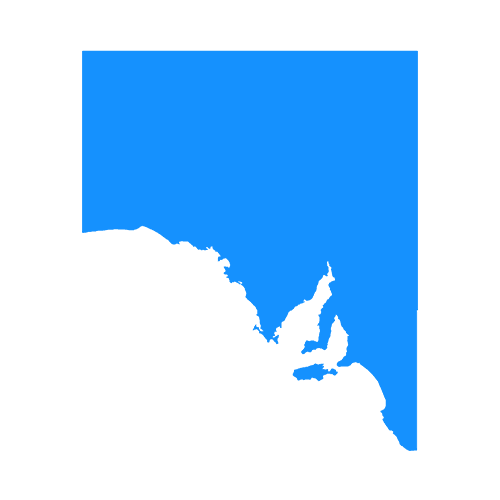 SA
SA TAS
TAS ACT
ACT WA
WA NT
NT