The $25,000 Gap: 1 in 5 Aussie kids have zero savings, while 1% are already rich



Key takeaways
- Nearly 1 in 5 Australian kids (19%) have no savings at all, while 1% have more than $25,000, highlighting a wealth gap that starts in childhood.
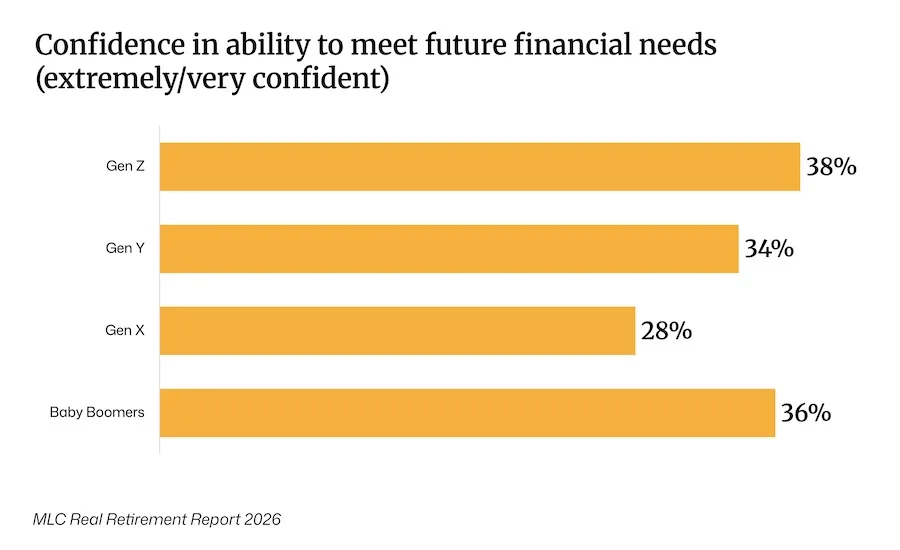
- Gen Z are the most financially confident generation, and parents are talking to their kids more about investing.
- Starting early pays off: $10 a week in a 5% p.a. kids' savings account from birth could grow to around $8,500 by age 12 or almost $20,000 by age 21.
Nearly 1 in 5 Australian kids are growing up with nothing saved, according to Finder's 2026 Parenting Report.
At the other end of the scale, just 1% already have $25,000 or more banked – a 'wealth divide' that unravels well before most of these kids reach their teens.
The middle of the market tells its own story, where 40% of kids have saved up to $1,000 and 26% have between $1,000 and $5,000.
This means 6 in 10 Australian kids have $1,000 or less to their name, while a small minority are already sitting on 5-figure sums.
How much do Australian kids have in savings?
- 19% have no savings
- 40% have up to $1,000
- 26% have between $1,000 - $5,000
- 10% have between $5,000 - $10,000
- 4% have between $10,000 - $25,000
- 1% have above $25,000
These findings come 5 years after Finder first ran this report in 2021. In this time, the average weekly pocket money for kids has doubled from around $10 per week to $21.60 per week.
Parents also reported their own financial situations, with almost 1 in 10 parents saying they had no money saved at all before having their first child.
A further 28.9% started their family with $25,000 or more already in the bank.
What it means for our kids later in life
You might wonder what kids need savings for, anyway, but the stakes go beyond childhood pocket money.
Financial Planning Association research found 45% of Australians aged 18 to 24 felt unprepared to manage their finances when they started working.
Finder's own data suggests parents already sense this, with 67% saying they have already had a conversation with their child about saving or investing.
And separate survey data conducted by McCrindle (on behalf of MLC) found that Gen Z Australians have edged out Gen Y as the most financially confident generation (45% vs 42%).
 Where to get the highest interest kids' savings accounts
For parents wanting to generate the highest possible return for their kids, the account matters as much as the habit.
Finder's 2026 Banking Awards named the Australian Mutual Bank Young Saver as the best kids' savings account on the market, offering rates around 5% p.a. with no deposit conditions or withdrawal restrictions.
As an example, paying $10 a week into an account returning 5% p.a. interest could grow to around $8,500 by the time a newborn turns 12.
Keep going until they're 21, and the pot reaches almost $20,000.
A child with $300 who knows how to save, spend and invest with intention is far better off than a kid with $3,000 and no understanding of how money works.
Compare kids' savings accounts
Sources
Ask a question