Telcos can now turn on disaster roaming when your mobile network goes down


Key takeaways
- Telstra, Optus and TPG (Vodafone's parent company) can now switch on Temporary Disaster Roaming (TDR), letting your phone connect to another network for calls, texts and limited data when your own network goes down during a disaster.
- TDR isn't automatic. The telcos decide when and where to switch it on, and there are limits on how many disaster areas can use it at once.
- Consumer group ACCAN says the voluntary system doesn't go far enough and is calling for mandatory domestic mobile roaming.
If your mobile network goes down in a disaster, your phone might be able to jump onto a rival network to keep you connected.
Telstra, Optus and TPG can now activate Temporary Disaster Roaming, just ahead of this summer's bushfire and cyclone season.
You don't need to do anything.
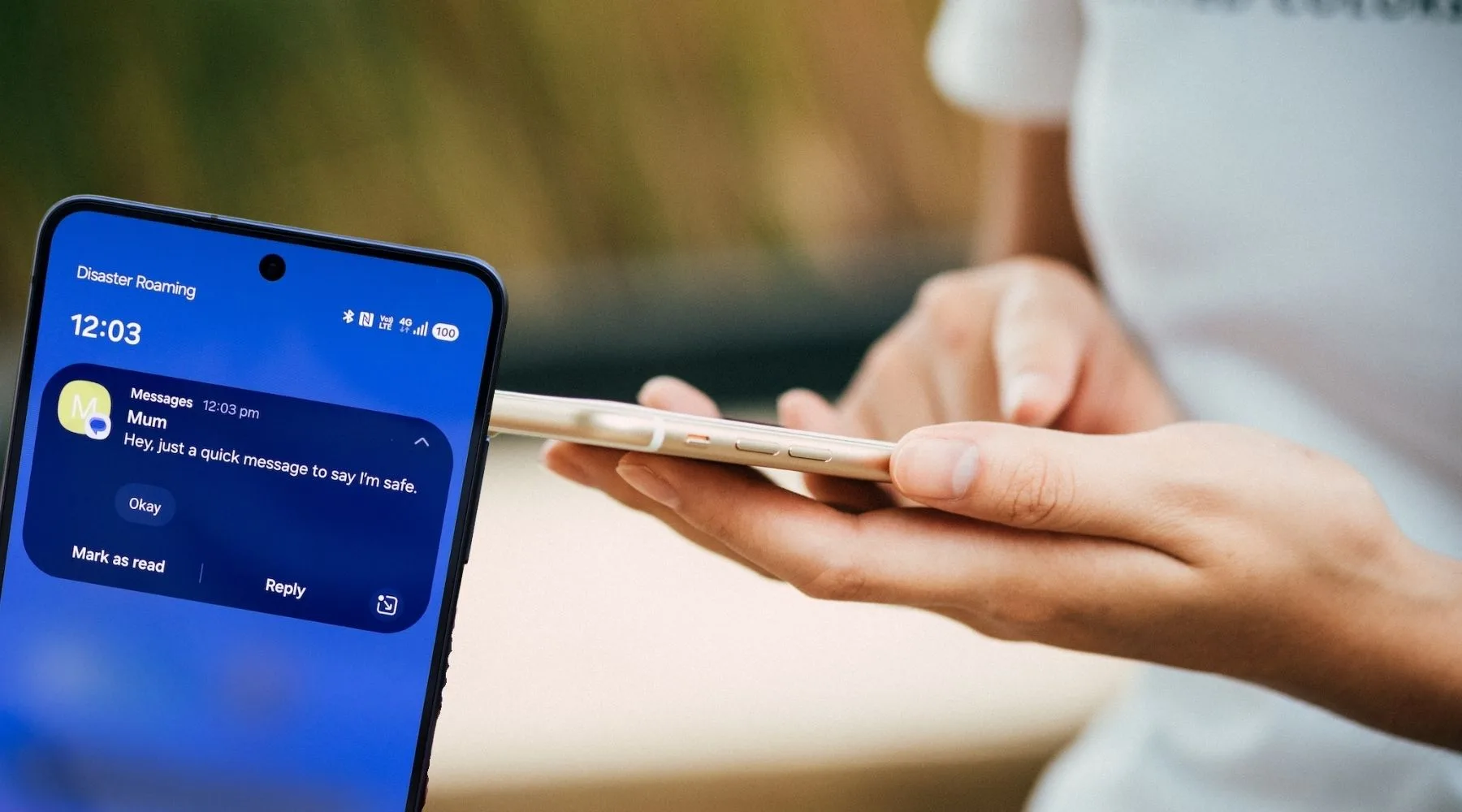
If TDR is active in your area and your own network is out, a compatible phone will connect to another carrier automatically, and your screen will show "Disaster Roaming" or the name of the network you've switched to.
In an ABC radio interview, Communications Alliance chief executive Luke Coleman said the service covers the basics: "You'll continue to be able to make phone calls, send text messages, and you'll have limited capacity data services."
Who decides when to turn on Temporary Disaster Roaming and where?
This is where consumer group ACCAN's concerns start.
TDR can run in no more than three disaster areas at once, each covering up to 15 mobile sites, and those areas have to be at least 400km apart.
It typically runs for around 24 hours at a time.
It also excludes metropolitan areas, doesn't work with medical alert devices, and may not be switched on at all during power outages, which the industry's own factsheet identifies as one of the most common causes of disruption in a disaster.
The bigger issue, according to ACCAN, is who's in charge.
Telstra, Optus and TPG decide between themselves when and where TDR gets switched on, and there's currently no benchmark or accountability framework to measure whether it's working, or to flag cases where roaming is delayed or not activated at all.
"Any arrangement that helps people stay connected in a disaster is better than none," ACCAN CEO Carol Bennett said.
But we are concerned that this model relies heavily on telco discretion, and this won't give many people confidence, with telecommunications the least trusted industry in the country according to Roy Morgan. Public safety cannot rest on voluntary arrangements that the telcos can choose to turn on and off.
What ACCAN wants next
ACCAN is pushing the Senate to go further than TDR altogether, calling for permanent domestic mobile roaming when Parliament returns this month.
Bennett pointed out that Australia already extends this kind of flexibility to visitors
"International visitors to Australia already roam automatically across all three networks. Australians can't. People in New Zealand, Canada and France have this protection, and there is no reason Australians should not have the same service."
"Our parliamentarians can guarantee Australians a connection in an emergency. We can do better, and we should."
Sources
Ask a question