Why is chocolate so expensive? The ACCC wants answers


Key takeaways
- The ACCC is investigating chocolate prices and supermarket margins, alongside 7 other grocery categories.
- Cocoa prices have fallen, but industry experts say higher manufacturing, freight and packaging costs are still flowing through.
- What next? Don't expect an instant price drop: the ACCC's first report isn't expected until early 2027, and cheaper cocoa can take time to reach supermarket shelves.
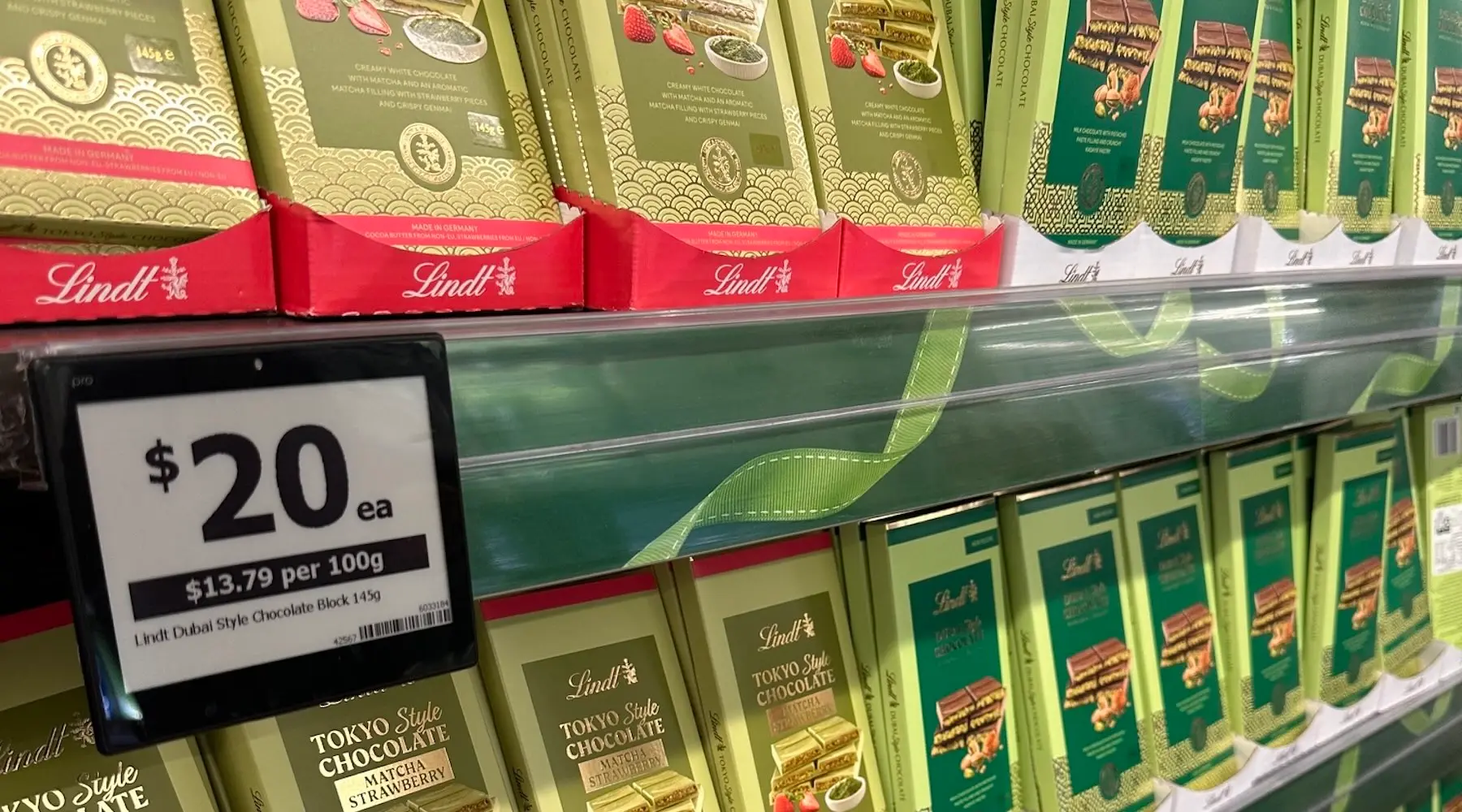
At the supermarket this week I was quite literally stopped in my tracks when I saw the price of Lindt chocolate.
A 145g block of their new Tokyo-style or Dubai-style chocolate was selling for $20.
That's equivalent to almost $138/kg!
So today, I wasn't surprised when I saw that chocolate prices are under the microscope, with the ACCC.
They've named chocolate as one of 8 grocery categories it will investigate for potentially excessive supermarket margins.
What is the ACCC investigating?
The ACCC will examine prices, costs and margins on chocolate blocks and snack bars sold by Coles and Woolworths, alongside 7 other products:
- potatoes
- limes
- chicken, bone-in
- unflavoured fresh milk
- bread rolls
- chocolate (blocks and snack bars)
- coffee
- kitchen sponges and scourers
Being on the ACCC's list doesn't mean the watchdog has found chocolate is being overpriced, but it's a signal that the category warrants closer scrutiny.
Industry insider Dion Waite said that as the price of cocoa dropped, prices at the supermarket should "theoretically" reflect that.
"In defence of chocolate pricing, the increase is a reflection of a perfect storm of higher cocoa costs, manufacturing, freight and packaging," he said.
"Cocoa prices have started coming back down, but it takes time for those reductions to flow through to supermarket shelves. Some companies would have purchased their cocoa on contracts, some of which would have been white cocoa prices were high."
When can we expect change at the supermarket?
The investigation comes after new excessive-pricing laws came into effect on 1 July.
These laws, which currently apply to Coles and Woolworths, allow the ACCC to investigate whether Australia's biggest supermarkets are charging excessive prices compared with their costs and a reasonable margin.
The ACCC's first report is expected in early 2027.
Ask a question