After today, rewards credit cards are even better value. Here’s why



Key takeaways
- Credit card surcharges are gone: From 1 October 2026, merchants can no longer add a card-payment surcharge on networks including Visa, Mastercard, eftpos and American Express.
- Big rewards offers are still available: Cards are still offering 100,000+ and, in some cases, 200,000+ bonus points, although some offers spread the bonus across two years.
- Rewards only work if you pay your balance in full: If you pay interest, the cost will quickly outweigh the value of your points and perks.
I've been using rewards credit cards for well over a decade.
It's how I've been able to fly first class to New York City on Emirates (a $20,000 journey!) and business class to Los Angeles (twice).
 It's afforded me a family holiday to Fiji, multiple domestic trips and an unforgettable experience for my husband during COVID, when we redeemed 200,000 points for him to fly over the Antarctic and back.
Today, credit cards in Australia are changing. The ban on credit card surcharges is now in effect, while new caps on interchange fees are also being introduced.
These changes are putting pressure on the economics of credit card rewards, and banks have responded by tweaking rewards card benefits.
But I'll still be using my Qantas rewards card every day, building up points and working towards my next goal: flights to Europe. Here's why.
1. The big bonus point offers are still around
The first thing I checked was whether banks had started pulling back on their big sign-up offers.
For the most part, they haven't. There are still cards offering up to 100,000 bonus points to new customers, sometimes even more.
There's a slight catch:
→ Some cards make you wait until the second year to receive part of the bonus. That's become more common over the past couple of years.
But for me, that doesn't kill the strategy if the numbers stack up.
The key is keeping track of annual fees, eligibility requirements and when you become eligible for another bank's bonus.
2. You no longer have to pay the surcharge
Before today, you could earn rewards points on a purchase and then immediately hand some of that value back to the merchant through a card surcharge.
Say you spend $2,000 a month on your card and the average surcharge was 1.5%.
That's $30 a month, or $360 a year, in surcharges. Not anymore!
Of course, businesses that previously relied on surcharges may adjust their prices to reflect their costs. But the specific credit card surcharge is now gone.
That removes one of the costs that could eat into the value of earning rewards points.
3. Rewards earn rates have changed – but there are still strong contenders
A bunch of credit cards have changed their points earn rates.
- Some cards earn fewer points per dollar than they used to.
- Others have introduced points caps.
- Many have different earn rates for different types of spending.
- Some cards are also changing their interest-free periods.
If you have a card, check: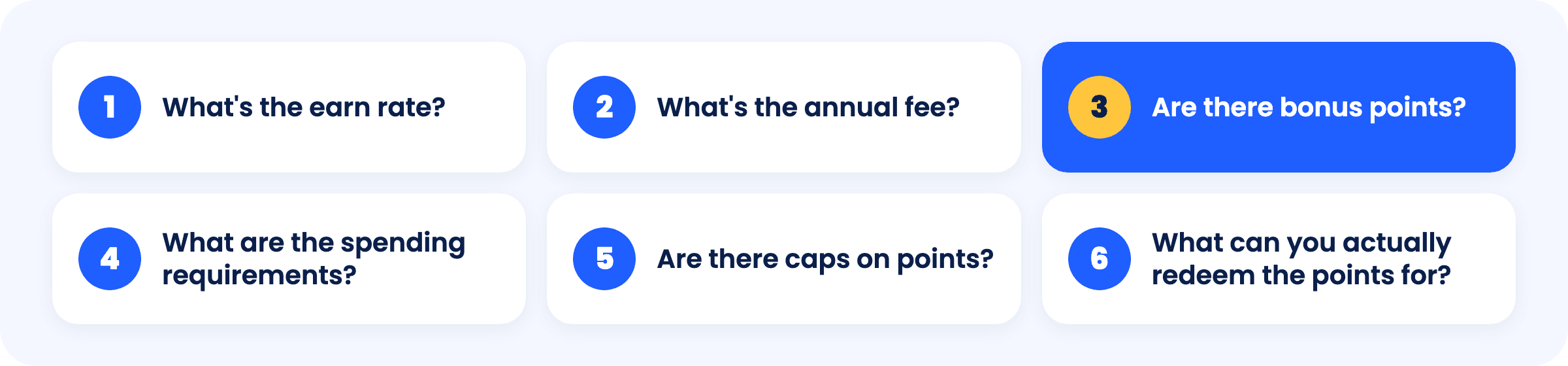
Remember: There's no point chasing a huge points balance if you're paying hundreds of dollars in fees to get there.
4. You can turn everyday spending into a holiday
With sign-up bonuses and points earned from everyday spending, plus the occasional bonus-points promotion, you can potentially earn enough points for a return international flight over the course of a year.
You're already buying groceries, paying for coffee and spending money on things you were going to buy anyway.
With the right card and a bit of planning, that spending can contribute towards a flight. Where else do you get rewarded for spending money you were already going to spend?
Warning: rewards credit cards don't suit everyone
My advice to anyone considering a rewards credit card remains the same: they only make sense if you can pay the balance in full every month.
Not the minimum amount due, which is usually around 3% of the outstanding balance.
You need to pay the full amount shown as the balance due on your statement by the due date.
If you don't repay it in full and carry a balance, you'll pay credit card interest, and the maths can fall apart very quickly.
Credit card interest can wipe out the value of your rewards, bonus points and any savings from avoiding surcharges.
If you know you're likely to carry a balance, I'd forget about chasing points and look for a low-rate credit card instead.
What's the best rewards credit card?
For those who have been using rewards cards successfully or are thinking about doing so, there's still plenty of value on offer.
With big bonus-point offers across Amex, Visa and Mastercard, rewards credit cards are an interesting proposition for people who can manage them responsibly.
Check out the best rewards credit cards in Australia with up to 200,000 bonus points now.
Sources
Ask a question