Samsung Galaxy Z Fold 8 review – The most convincing foldable yet


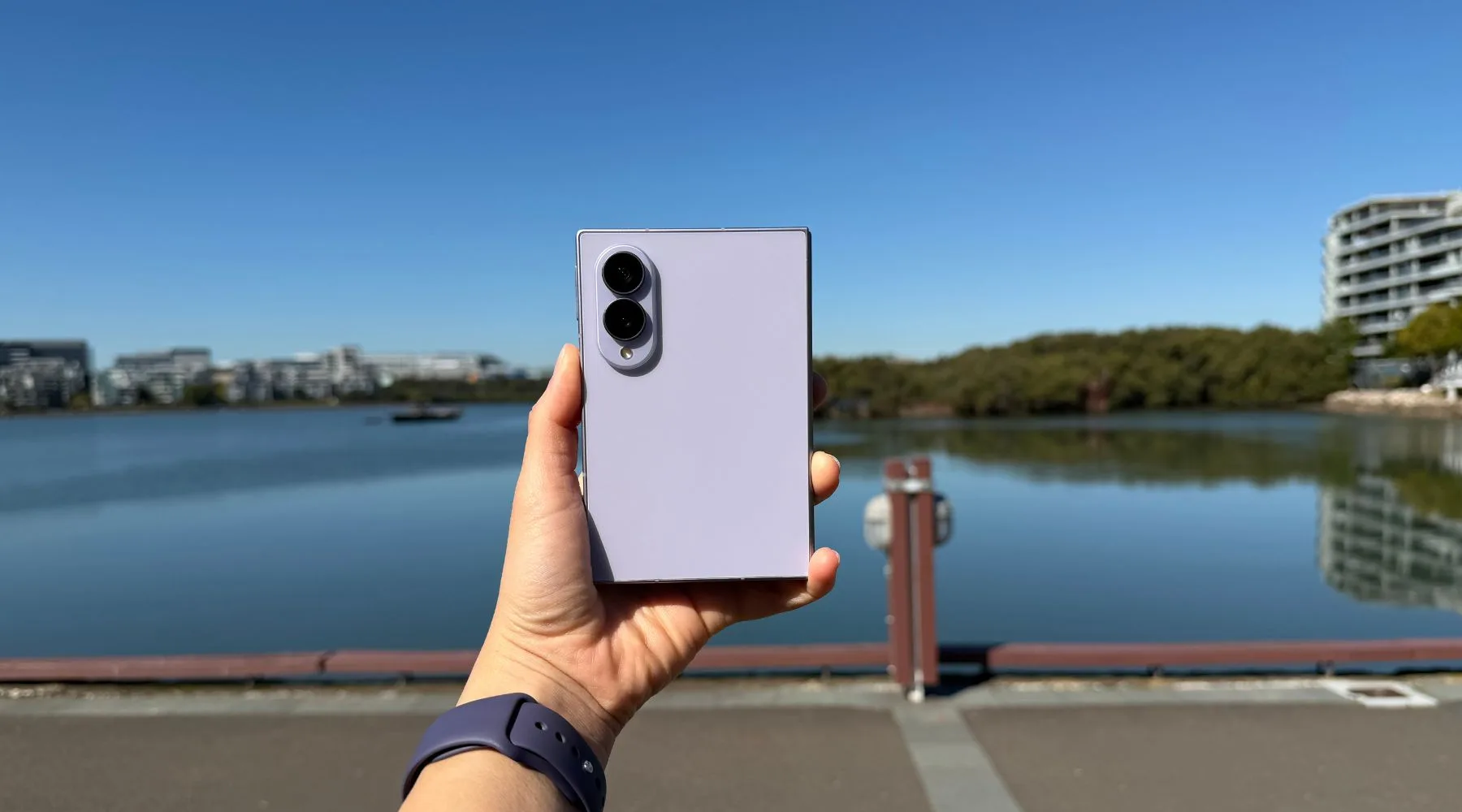
Samsung Galaxy Z Fold 8 – Verdict
I've spent the last two weeks with the Galaxy Z Fold 8 and I'm a little confused.
Because I never thought I'd want a foldable as my main phone. But now, I kind of do. And that's a weird feeling.
Samsung hasn't just made the Fold 8 faster or lighter. It's changed the one thing that always stopped me from wanting a foldable: the size and shape.
And that one change makes a bigger difference than any spec bump could.
It's not perfect and it's definitely not cheap, but it's the first Fold I've actually wanted to use every day, not just when I wanted a bigger screen.
If you've written foldables off before, this is the one that might change your mind.
The good stuff
- Lighter, wider design that's easy to use one-handed
- Bigger, brighter 7.6-inch inner screen
- Great performance and battery life
What we don't love
- No telephoto lens
- Still not dust resistant
- Expensive unless you get a good deal
I spent the last two weeks with the Galaxy Z Fold 8, and I'm a little bit confused because I never thought I'd want a foldable as my main phone, but now I kind of do, and that's a weird feeling. Samsung hasn't just made the Fold 8 faster or lighter. It's changed the one thing that's always stopped me from wanting a foldable: the size and the shape. For years, foldable phones have had this weird contradiction. When you open them, they're pretty great. You get a massive screen that feels like a mini tablet, and it's amazing for watching videos or getting work done. But most of the time, you're not doing those things. At least I'm not. You're just using your phone. And that's where foldables have always felt a little awkward. So, the first thing you'll notice with the Fold 8 is that it's wider and shorter than previous Galaxy Fold models.
It looks almost like a passport or mini notebook when it's shut. And while that might sound like a strange design choice, using it actually makes a lot more sense. I can't convince you enough to go into a store and hold it if you haven't already, because this is one of those phones where the difference is hard to explain until you actually feel it. At 201 grams, it's Samsung's lightest Galaxy Fold yet. The cover screen is 5.5 inches, but because it's wider, typing on it feels a lot more natural. I can easily manoeuvre the whole phone, including reaching the buttons on the side with one hand, typing, scrolling through social media, and searching things up without immediately feeling like you need to open the phone.
The only slightly annoying bit is that some of the content doesn't quite fill the screen. So, if you're doom-scrolling on TikTok, for example, videos can have some empty black space on either side because the display is wider than a typical phone. It's like watching The Odyssey in a normal cinema versus IMAX. But honestly, maybe that's not the worst thing. We're all trying to doom-scroll less, right? You get a 7.6-inch AMOLED inner display with a much wider shape than previous models.
I actually found myself opening it up more than I expected, especially for reading longer articles, watching YouTube, or catching up on shows, because it's actually pretty easy to hold without making your wrist ache. The display itself is also a big upgrade. It reaches up to 3000 nits and has an anti-reflective coating which makes it easier to see in brighter settings. Now, while the crease is still there, Samsung has made it less noticeable than previous generations, but you can still see it from certain angles and feel it when you run your fingers across the display. After a few days, it's pretty easy to ignore, so I wouldn't consider it a problem.
And while the design is the main thing that caught my attention, there's no arguing that the phone is fast and you are getting flagship-level performance. Whether you're gaming, jumping between apps, or using the bigger display for multitasking, it feels fast and smooth. Samsung's also managed to improve the battery setup while keeping the phone slim. You're still getting a 4800 milliamp-hour battery, but now it supports faster 45-watt charging. I'm not a heavy phone user day-to-day, but I comfortably made it through a day and a bit into the next before needing to charge.
The cameras are where you're going to start to see some compromises, though. The Fold 8 takes good photos, but this isn't Samsung's camera-focused foldable. You're getting a dual 50-megapixel wide and ultra-wide camera, but there's no telephoto lens. It does have some fun features like dual recording, which lets you capture what's in front of you and what's behind you at the same time. But if cameras are your number one priority, this probably isn't the fold I'd point you towards. If you want a foldable with a stronger camera setup and a bigger focus on productivity, that's where the Galaxy Z Fold 8 Ultra comes in.
So, final thoughts. There are still the usual foldable compromises. The Z Fold 8 is expensive unless you're getting a really good deal. It's still not dust-resistant, which is a bit disappointing in 2026, and you're still making some sacrifices compared to a traditional flagship phone, especially when it comes to cameras. If you're still thinking about buying one, the next question is how you want to pay for it. You can buy it outright and pair it with a SIM-only plan or spread the cost through a phone plan with providers like Telstra, Optus, or Vodafone. There's no right answer here, really. It really comes down to the deals available at the time. A plan might make sense if there's a good discount, trade-in offer, or bonus included, while buying outright could work out better if you find a cheaper handset price and pair it with a good SIM-only deal. The best thing to do is just run the numbers and see which option works best for your budget. You can check out the link in the description to see what deals are available right now.
Design and display
For years, foldable phones have had this weird contradiction.
When you open them, they're great.
You get a massive screen that feels like a mini tablet, perfect for watching videos or getting work done.
But most of the time you're not doing those things. You're just using your phone. And that's where foldables have always felt a little awkward.
So the first thing you'll notice with the Fold 8 is that it's wider and shorter than previous Galaxy Fold models.
It looks almost like a passport or mini notebook when it's shut. That might sound like a strange design choice, but using it actually makes a lot more sense.
I can't convince you enough to go into a store and hold it if you haven't already, because this is one of those phones where the difference is hard to explain until you actually feel it.
At 201g, it's Samsung's lightest Galaxy Z Fold yet.
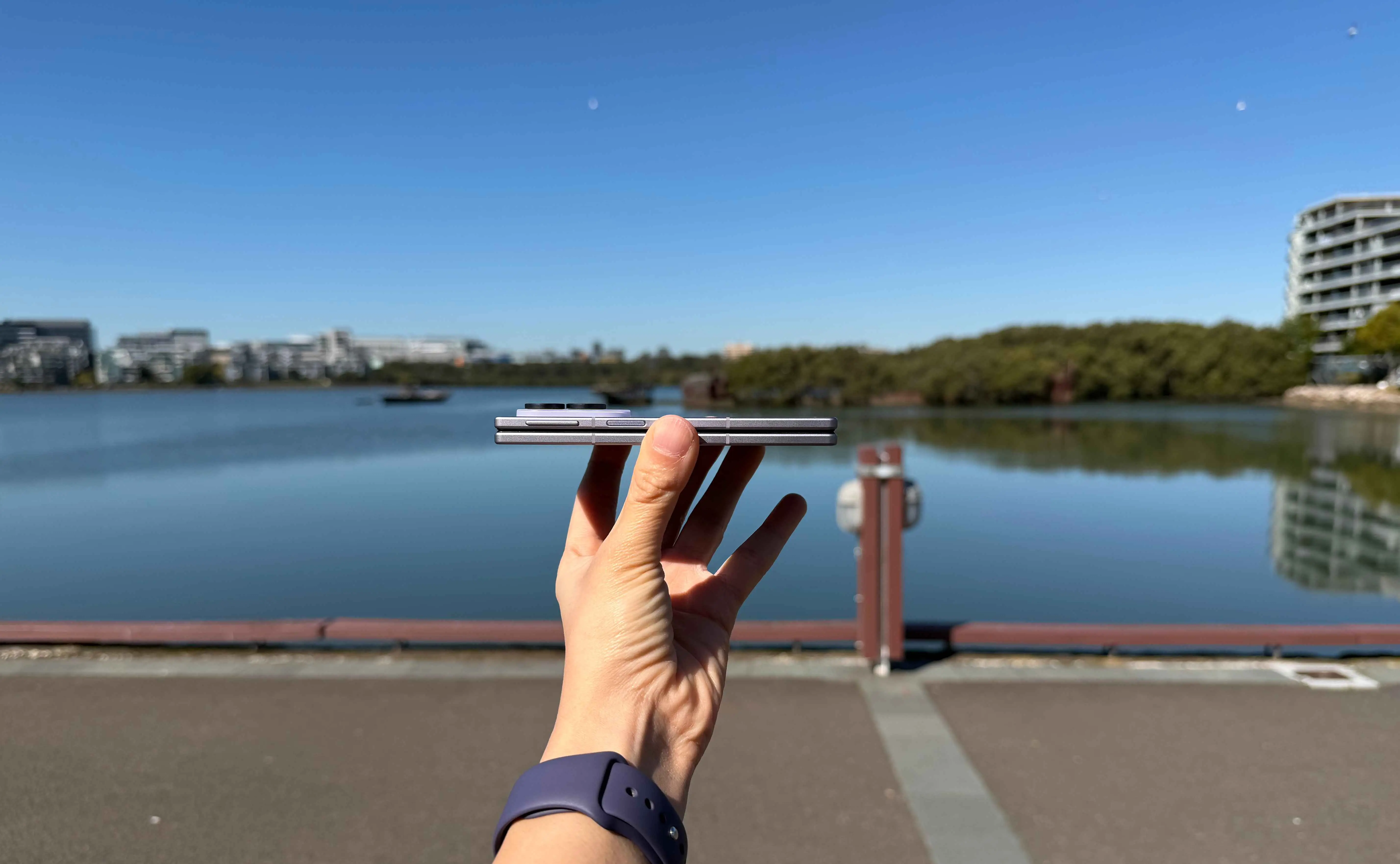 Image: Mariam Gabaji/Finder
The cover screen is 5.5 inches, but because it's wider, typing on it feels much more natural.
I can easily manoeuvre the whole phone with one hand, reach the buttons on the side, type, scroll through social media and look things up without immediately feeling like I need to open it.
The only slightly annoying bit is that some content doesn't quite fill the screen.
If you're scrolling on TikTok, videos can have some empty black space on either side because the display is wider than a typical phone.
It's like watching a film in a normal cinema versus IMAX. Honestly though, maybe that's not the worst thing.
We're all trying to doomscroll less, right?
And then you open it up, and this is where the Fold 8 feels quite fun.
You get a 7.6-inch AMOLED inner display with a much wider 4:3 shape than previous models.
I found myself opening it up more than I expected, especially for reading longer articles, watching YouTube or catching up on shows, because it's actually pretty easy to hold without making your wrist ache.
Both screens run at a smooth 120Hz and hit up to 2,600 nits, so scrolling feels slick and the display stays readable outdoors.
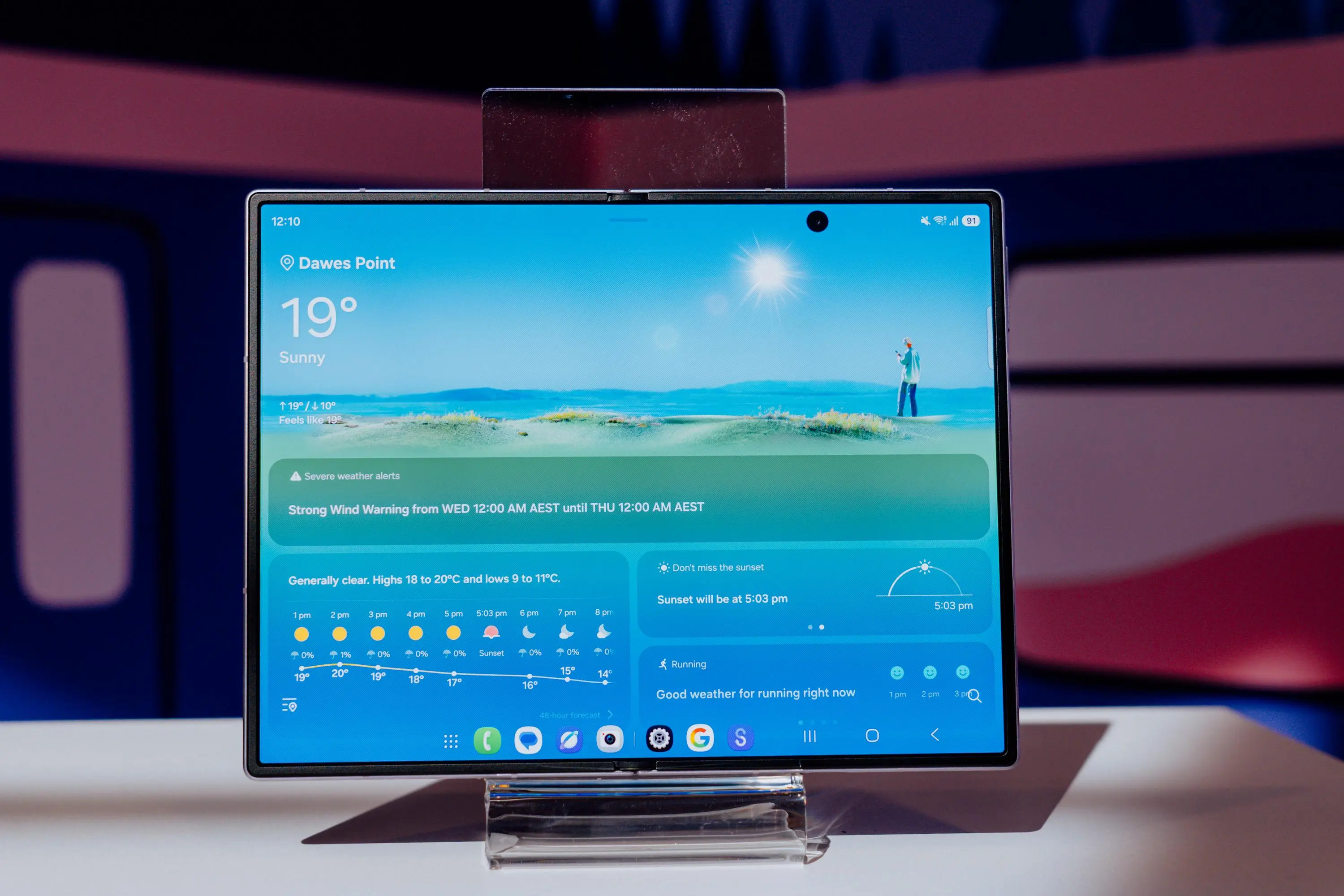
Samsung has also added a dual layer of titanium underneath the main screen for a bit more strength.
The crease is still there. It's not completely gone.
Samsung has made it less noticeable than previous generations, but you can still see it from certain angles and feel it when you run your finger across the display. After a few days, it's pretty easy to ignore.
It comes in Graphite, Cream and Lavender, plus a Pistachio shade that's exclusive to Samsung's own online store.
Camera
The Fold 8 takes good photos, but this isn't Samsung's camera-focused foldable.
You're getting dual 50MP wide and ultra-wide cameras and a 10MP selfie camera, but there's no telephoto lens.
It does have some fun features, like Dual Recording, which lets you capture what's in front of you and what's behind you at the same time.
This can be handy if you're filming a reaction or a piece to camera.
But if cameras are your number one priority, this probably isn't the Fold I'd point you towards.
If you want a foldable with a stronger camera setup and a bigger focus on productivity, that's where the Galaxy Z Fold 8 Ultra, Samsung's higher-end foldable, comes in.
 Image: Mariam Gabaji/Finder
 Image: Mariam Gabaji/Finder
 Image: Mariam Gabaji/Finder
 Image: Mariam Gabaji/Finder
 Image: Mariam Gabaji/Finder
 Image: Mariam Gabaji/Finder
 Image: Mariam Gabaji/Finder
 Image: Mariam Gabaji/Finder
 Image: Mariam Gabaji/Finder
 Image: Mariam Gabaji/Finder
Performance and battery life
There's no arguing this phone is fast, as you'd expect from Samsung.
The Galaxy Z Fold 8 runs on the Snapdragon 8 Elite Gen 5 for Galaxy chip, so you're getting flagship-level performance.
Whether you're gaming, jumping between apps or using the bigger display for multitasking, it feels fast and smooth. It's paired with 12GB of RAM on the 256GB and 512GB models, stepping up to 16GB on the 1TB version.
Samsung has also managed to improve the battery setup while keeping the phone slim.
You're getting a 4,800mAh battery, rated for up to 26 hours of video playback, and it now supports faster 45-watt wired charging along with wireless and reverse wireless charging.
I'm not a heavy phone user day to day, but I comfortably made it through a full day and a bit into the next before needing to charge.
It ships with Android 17 and Samsung's One UI 9, and adds newer connectivity like Wi-Fi 7 and satellite connectivity for staying reachable when you're off the grid.
So should you buy the Samsung Galaxy Z Fold 8?
I've found it to be one of the most convincing foldables I've reviewed to date.
But there are the usual compromises.
The Galaxy Z Fold 8 starts at $2,699 for 256GB, $2,999 for 512GB and $3,599 for 1TB.
It's an expensive phone, so a lot comes down to how much you value the new shape and that big inner screen, and if you're getting a good deal.
It's still not dust-resistant, which is a bit disappointing in 2026. And you're still making some sacrifices compared to a traditional flagship phone, especially when it comes to cameras.
So you'll just need to weigh up the pros and cons before making a decision.
All opinions expressed in this review are based on the author's own experience with the phone. Use this review for informational purposes only.
How to buy the Samsung Galaxy Z Fold 8 on a plan
You can sign up for a 12-, 24- or 36-month phone repayment plan with Optus, Telstra or Vodafone.
Ask a question