2 in 3 kids are saving money: Now, we need to teach them investing



Key takeaways
- 65% of Aussie kids have a savings account, up from 58% 5 years ago.
- 1 in 10 kids have an investing account and 67% of parents have talked to their kids about investing.
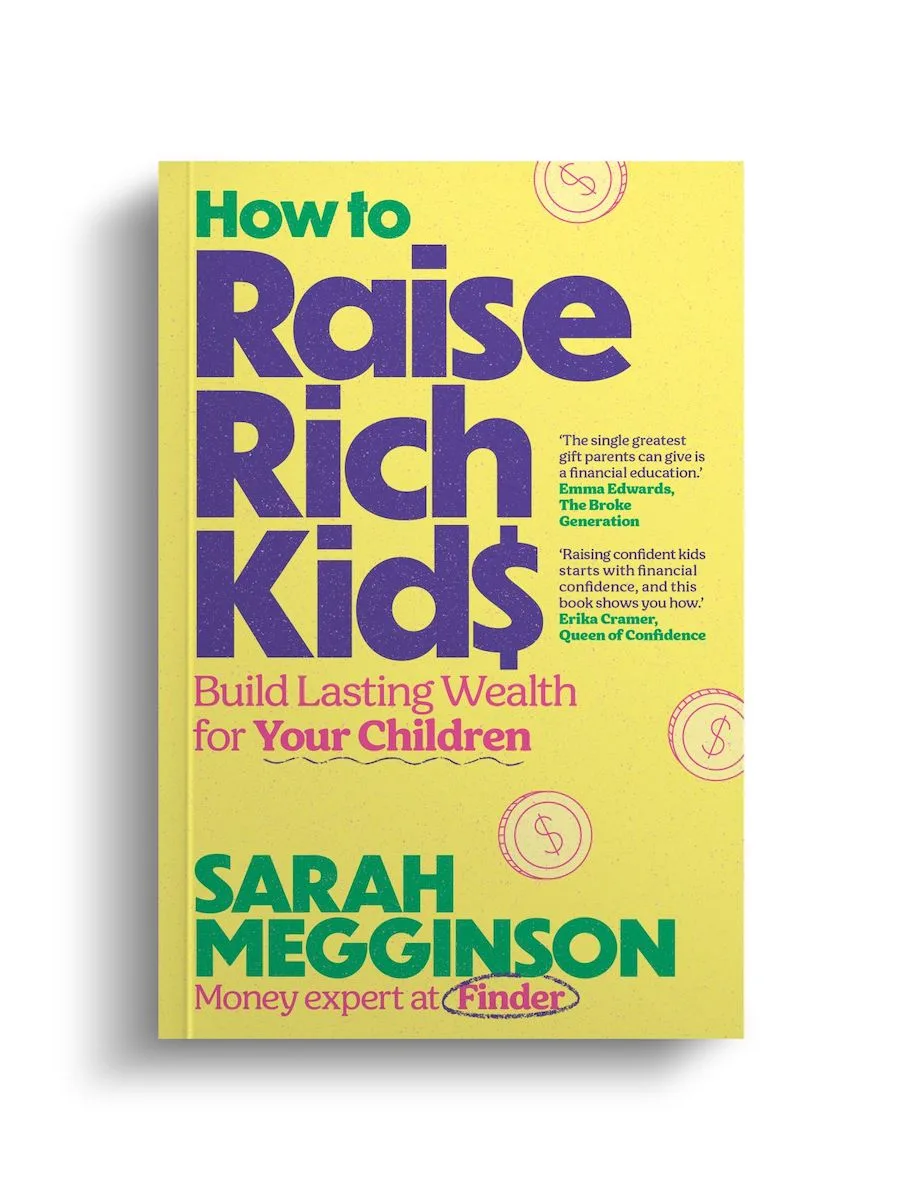
- A new book, How to Raise Rich Kids, gives parents a practical roadmap to create wealth in the real world.
When I was a kid, 'investing' wasn't a thing I knew anything about.
It felt like something that happened in the top floors of skyscrapers, where people wore tailored suits and perched on $10,000 Eames chairs, and spoke about derivatives and headwinds across heavy boardroom tables.
Kids had piggy banks.
Adults had investments.
And even then, it was only the really fancy, educated, rich adults that were investing.
That's not the case anymore.
According to Finder's 2026 Parenting Report, 65% of Australian children have a high-interest savings account and 67% of parents have spoken to their kids about investing.
And 1 in 10 kids have an investing account.
This is really encouraging news! When we did this research back in 2021, only 58% of kids had a savings account and just 7% an investment account.
It suggests that many parents are introducing concepts that can genuinely build long-term wealth.
But there's still a big gap
 That's the gap between talking about investing and actually doing it.
Which is why I wrote my book, How to Raise Rich Kids.
I talk about teaching our kids how to save and how to spend, and also how to invest. Saving is the foundation, but investing is what helps money grow.
Not so we can raise the next generation of multi-millionaires, but because, well:
We all want our children to lead 'rich' lives, right?
Rich in adventure, in relationships, in opportunity and adventure. By giving them the tools to set themselves up for prosperity, we also give them the chance to build lives abundant in choice, opportunity and freedom.
So while our report shows that many families are comfortable discussing investing, this book aims to show you how to take practical steps to create wealth in the real world.
The earlier we introduce our kiddos to long-term thinking, the more time those lessons have to work in their favour.
Teaching them how money grows could be life-changing – for you and for them!
Not much of a reader?
If you don't have the time or don't want to read the book, here are 3 things you can do today to help your children understand concepts like compound growth and interest:
- Open a high interest savings account. You can open the account online, but take them into the bank to make their first deposit if you can, so they connect with the idea of the bank "safe-keeping" their cash.
- Set up a direct deposit. Automating savings habits is the key to success. Even just $5 a week can compound over time. A friend did this for her God-son and gave him a $3,000 gift for his 18th birthday – he was wrapped!
- Involve your kids in grocery shopping. However works for you: they can add items to your trolley online, go to the grocery store with you, or run through your grocery list checking needs vs wants. The supermarket is a beautiful place to develop life-skills about spending and value.
Sources
Ask a question