This is what COVID-19 did to your electricity bills



Despite households consuming more energy in 2020, this year has seen a decline in electricity bills – with the potential of $200 per year in savings if Australians shop around.
Households are consuming 10% more electricity since the pandemic hit Aussie shores, resulting in bills rising by 7% in 2020. But things are looking up according to the Australian Competition and Consumer Commission (ACCC).
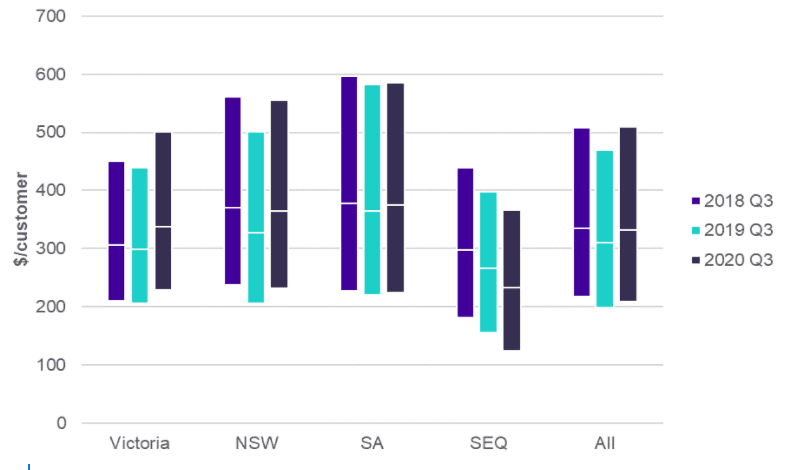
The consumer watchdog's latest electricity markets report, released 24 June, believes 2021 will see lower electricity bills due to 2 important movements.
"COVID-19 had a major effect on electricity use last year. Many households that were already experiencing financial difficulty had higher electricity bills to pay," ACCC Chair Rod Sims said.
We expect 2021 to be a better year for households and small businesses as large reductions in the wholesale cost of electricity continue to flow through to people's bills.
"The ACCC is currently investigating a number of electricity retailers' prices to see if recent wholesale price reductions [by 50% between mid-2019 and early 2021] are being passed on to consumers, as required by law."
How to save $200 on your electricity bills
The ACCC report shows 7% of households are still on expensive standing offers. Sims said he was worried because standing offers were 18% more expensive than market offers in 2020.
Just by switching, the ACCC chair said Aussies could save a solid $200 in electricity bills per year.
Here's a quick overview of how the 2 offers differ if the jargon is throwing you off.
If you're wondering how you got on a standing offer in the first place, the simplest explanation is that your market offer expired and you're no longer getting any discounts or incentives.
"Standing offers were originally intended to be a safety net for customers to get a basic service at a reasonable price, but over time they became some of the highest-priced plans," he said.
The best thing to do to potentially bring down the cost of your energy bill is to compare energy prices and make a switch.
To start shopping around, make sure you have your electricity bill in hand. You'll need your usage data to compare prices. We have a guide to help you make sense of your energy bill.
Early solar adopters also reaping benefits
The report also reveals differences in electricity costs for both solar and non-solar households.
Interestingly, 2020 saw solar owners pay 29% less than non-solar homes, after accounting for any feed-in tariffs. This is credit that customers receive for any unused electricity that their solar power system sends back to the power grid.
It meant solar owners were saving $94 per quarter on their electricity bills, or $376 for the year.
You can check out electricity plans for solar panels to see if you're getting the best bang for your buck and saving big too.
Find the right gas, electricity, solar and green retailers in Australia for you.
Ask a question